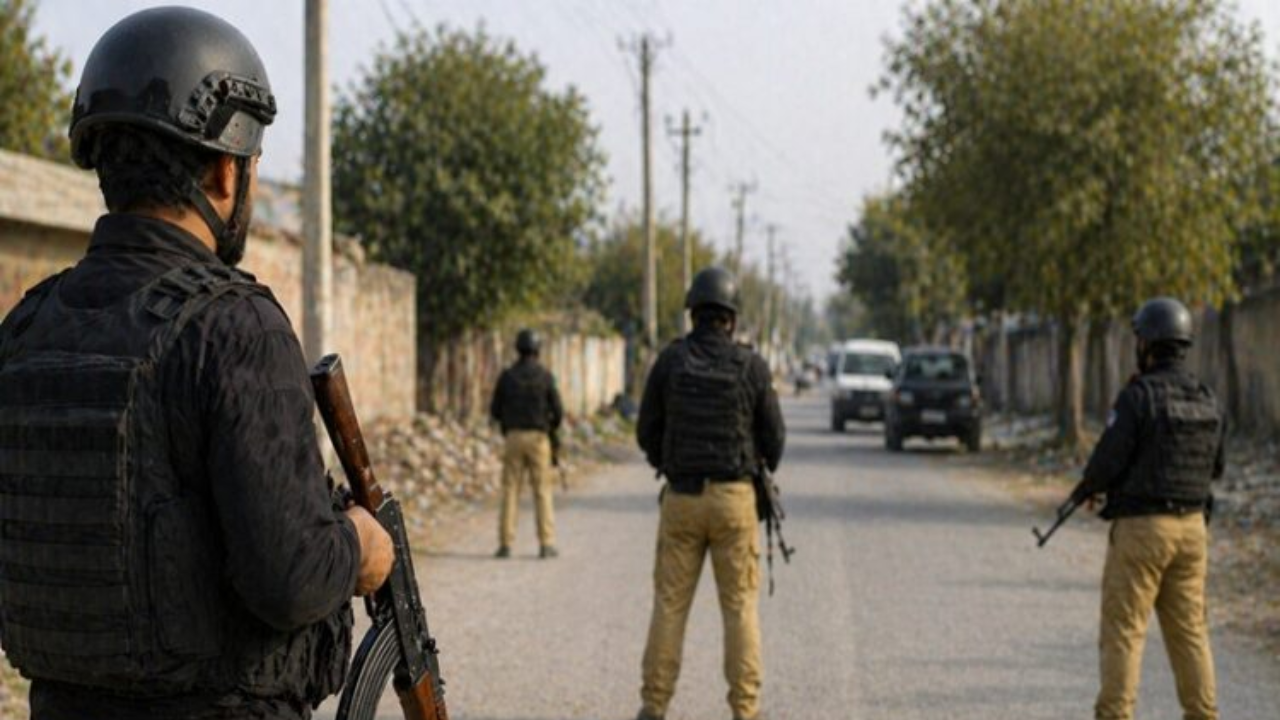
The evening air in Peshawar usually carries the scent of roasted meat and diesel exhaust, a thick, familiar blanket that settles over the city as the sun dips behind the Hindu Kush. But on a Tuesday that started like any other, the rhythm of the street was shattered by a sound that has become the grim metronome of the region. A series of sharp, metallic cracks. Then, the heavy, ringing silence that follows a sudden death.
Sheikh Yousaf Afridi did not see the end coming. He was a man who moved within the tight, disciplined inner circle of Hafiz Saeed—the founder of Lashkar-e-Taiba and the architect of the Jamaat-ud-Dawa. In the high-stakes chess match of South Asian militancy, Afridi was more than just a name on a ledger. He was a trusted confidant, a keeper of secrets, and a pillar in an organization that the world views through the lens of terror, but which its members see as a holy vanguard.
He died in the dust. Unidentified gunmen, appearing like phantoms from the urban sprawl, intercepted him. They didn't miss.
The Geography of a Hit
To understand why a shooting in a Pakistani neighborhood matters to someone thousands of miles away, you have to look at the invisible map of the region. This wasn't a random act of street crime. It was a surgical removal. When a figure like Afridi is erased from the board, it sends a pulse through the entire ecosystem of the Pakistani deep state and the militant groups it has historically nurtured.
Think of an old, intricate clock. Afridi was one of the smaller, hidden gears that kept the larger hands moving. When that gear is smashed, the clock doesn't just stop; it begins to grind. The tension in the air following his assassination isn't just about grief. It is about the terrifying uncertainty of who pulled the trigger.
The list of potential suspects is a labyrinth. It could be a rival faction within the fractured world of extremist groups, settling an old score over territory or resources. It could be the work of a foreign intelligence agency, executing a "deniable" operation to weaken the leadership of a group long blamed for the 2008 Mumbai attacks. Or, perhaps most unsettling for those still in the inner circle, it could be an internal purge—the revolution eating its own.
The Human Toll of an Ideology
We often talk about these men as symbols or statistics. We see the grainy photos, the long beards, and the stern eyes. But consider the reality of a life lived in the crosshairs. Afridi’s world was one of constant vigilance, of varying routes to the mosque, and of eyes constantly checking the rearview mirror. It is a life where the "human element" is stripped away, replaced by the cold requirements of survival and the rigid demands of an extremist doctrine.
His death leaves a vacuum. In the homes of those who followed him, there is the immediate, visceral sting of loss—the empty chair at the dinner table, the children who will grow up in the shadow of a father’s violent legacy. In the corridors of power, however, the sentiment is far colder. There, he is a lost asset. A security breach. A liability that has been neutralized.
The irony of the situation is thick. Groups like the one Afridi served have spent decades perfecting the art of the ambush. They transformed the motorcycle-borne hit into a signature of regional warfare. Now, that same tactic is being turned back upon them with a relentless, mechanical precision.
A Pattern in the Blood
Afridi is not the first. In recent months, a string of similar assassinations has claimed the lives of several high-ranking militants across Pakistan. Paramjit Singh Panjwar, Zahoor Mistry, Abu Qasim—the names change, but the methodology remains eerily consistent. They are targeted in broad daylight. The killers vanish. The Pakistani authorities issue standard statements about "unknown attackers" and "ongoing investigations," but the streets know better.
This pattern suggests a fundamental shift in the security landscape. For years, these figures lived with a degree of perceived immunity, shielded by their organizations and, some argue, by elements of the state. That shield has shattered.
Imagine standing in a crowded marketplace, knowing that someone, somewhere, has already decided you are no longer useful. That the very streets you helped radicalize have become your hunting ground. It is a psychological warfare that transcends the physical act of the shooting. It breeds a corrosive paranoia. Who can be trusted? Which shadow is just a shadow, and which one holds a 9mm pistol?
The Geopolitical Ripple
The death of a close aide to Hafiz Saeed is a message written in lead. For the international community, particularly India and the United States, the weakening of the Jamaat-ud-Dawa leadership is a development watched with bated breath. These organizations are not merely local nuisances; they are regional disruptors capable of shifting the foreign policy of nuclear-armed neighbors.
But there is a danger in the silence. When the old guard is picked off one by one, who fills the void? Nature, and militancy, abhor a vacuum. The death of a "moderate" extremist—if such a contradiction can exist—often paves the way for a younger, more radical, and less predictable generation. The men who killed Afridi may have solved one problem, but they might have inadvertently planted the seeds for a dozen more.
The investigation into Afridi's death will likely yield nothing. The files will be shelved, the bullets will be logged as evidence in a case that never sees a courtroom, and the city of Peshawar will continue to breathe its heavy air.
But the silence in the wake of the gunfire remains. It is a silence that speaks of a shifting tide, of a world where the hunters have become the hunted, and where the debt of a violent life is finally being called in. The gunmen who rode away into the Peshawar twilight didn't just kill a man. They signaled the end of an era of untouchability.
The blood on the pavement dries quickly in the heat, but the stain it leaves on the political landscape of Pakistan is permanent. It is a reminder that in the world of shadows, the light eventually finds everyone. Usually, it arrives as a flash from a muzzle.