Power usually wraps itself in the illusion of permanence. Men who command rooms, write laws, and direct the machinery of empires often behave as though time itself is subject to an executive order. They wake up, swallow a handful of vitamins, board private aircraft, cut deals, and assume tomorrow is merely a carbon copy of today. Until the phone rings in the dark.
Consider what happens when the architecture of that illusion cracks. You might also find this connected coverage useful: The Fragile Truce is Breaking As Houthi Escalation Threatens Total War.
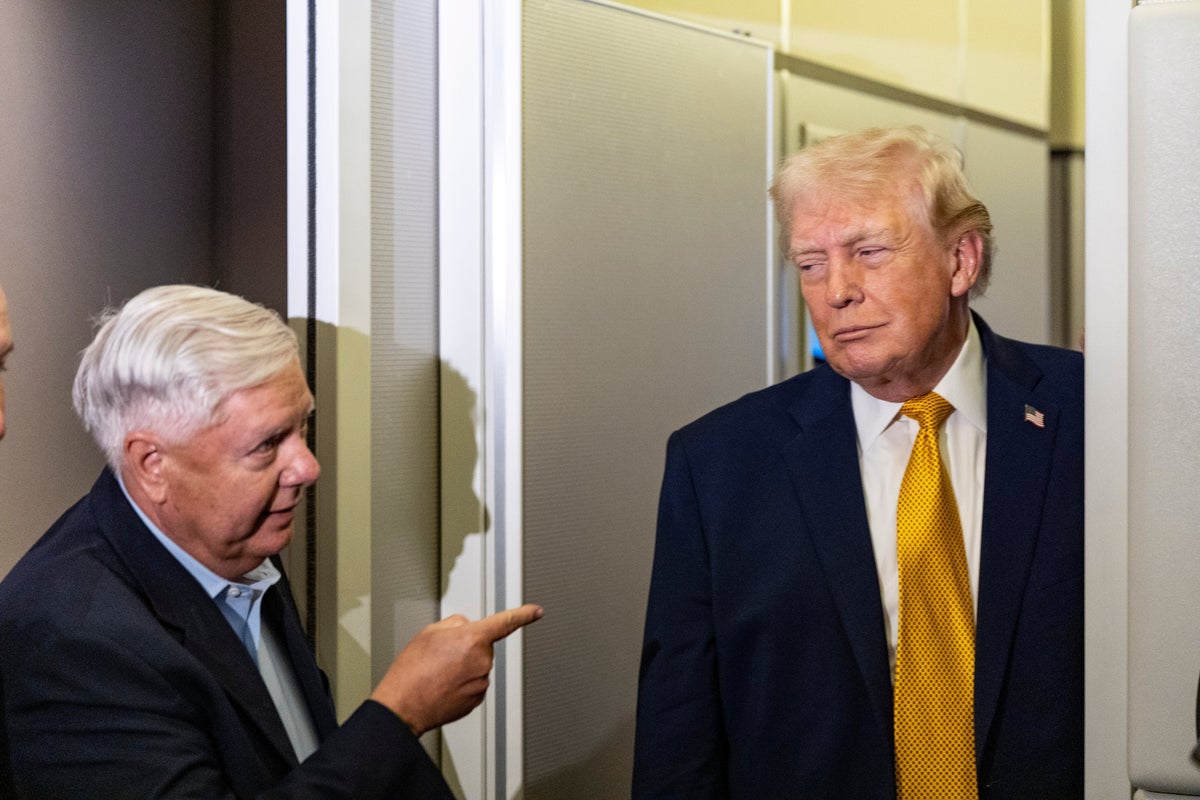
In the wake of the sudden death of Senator Lindsey Graham at age seventy-one, a quiet, uncharacteristic chill settled over Mar-a-Lago and the inner circles of Washington. Donald Trump, turning eighty, found himself staring into a mirror he usually preferred to avoid. Graham was not just a political fixture or a frequent golf partner; he was a fixture of the ecosystem, a man who had shared late-night phone calls, strategic maneuvers, and decades of legislative trench warfare. When an anchor drops abruptly from a ship you are tied to, the vessel lurches.
Friends whisper that the president has begun to muse aloud about the final curtain. It is a jarring departure from the relentless projection of invulnerability that defines modern political branding. Age in high office is rarely addressed with honesty. It is hidden behind stage makeup, carefully angled photographs, and aggressive denials. Yet, mortality has a way of cutting through the theater. When a peer vanishes overnight from a ruptured aorta, the abstract concept of getting old transforms into an immediate, breathing reality. As extensively documented in recent coverage by NPR, the effects are worth noting.
Think about the psychological weight of accumulation. By eighty, a man has buried his parents, his siblings, his earliest campaign managers, and now, his most adaptive political allies. The roster of people who remember the world before the current era grows thinner by the month. Every obituary is a ghost chapter written into the margins of one's own biography. Trump spent a lifetime treating relationships as transactional instruments, yet men like Graham occupied a rare category: they were witnesses. They remembered the raw history. Losing them leaves a vacuum that no amount of rally applause or media coverage can fill.
The political implications of these private reckonings ripple outward. When a leader begins to contemplate the finite nature of their clock, decision-making shifts. The urgency changes. Long-term grudges either harden into granite or dissolve into irrelevance. The obsession with legacy—what remains when the microphones are switched off and the television screens go dark—takes center stage. For a man accustomed to dominating every news cycle, the ultimate adversary is not a rival political party or a hostile press corps. It is the calendar.
History is replete with potentates and presidents who spent their twilight years fighting the inevitable, wrapping themselves in ceaseless motion to outrun the silence. They build towers, sign sweeping executive actions, and demand absolute loyalty, all to convince themselves that time has made an exception just for them. But death remains the great equalizer, indifferent to polling numbers, constitutional powers, or historical status.
A sudden medical emergency in a colleague's home on Capitol Hill is a rude awakening. It strips away the pomp of motorcades and state dinners, reducing a life to a quiet hospital corridor and a grieving family. For Trump, the loss of Graham serves as an uninvited guest at the feast, whispering a reminder that the final act approaches for everyone, regardless of title.
The room grows quiet. The television plays in the background, but nobody is really watching.
The clock keeps ticking.
Trump Reacts After Lindsey Graham's Sudden Death At 71
This archival footage captures the immediate national reaction and political fallout following the sudden passing of Senator Lindsey Graham.
http://googleusercontent.com/youtube_content/1