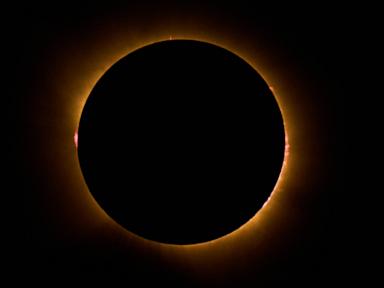
Millions of citizens spilled onto the asphalt of Madrid, Barcelona, and Valencia, turning concrete boulevards into open-air observatories. For the first time in over a century, a total solar eclipse cut a dark swath across the Iberian Peninsula. The moon swallowed the sun, plunging the nation into a midday twilight. Millions cheered. Streetlamps flickered on. The temperature dropped sharply.
Beneath the planetary spectacle, however, lay a massive, high-stakes operational stress test. Also making waves recently: Inside the Boeing 737 MAX Legal Reckoning That Shook the Aviation Industry.
Major metropolitan transit networks nearly seized under the weight of astronomical tourism. Electrical grids balanced on a knife-edge as photovoltaic generation plummeted to zero within minutes. Emergency services confronted unprecedented gridlock.
This was not merely a celestial event. It was a rigorous stress test of national infrastructure, revealing precisely how vulnerable modern urban centers remain to sudden, profound disruptions in natural cycles. More information regarding the matter are explored by NPR.
The Power Grid Balancing Act
Modern Spain runs on sunshine. Solar power forms a cornerstone of the national energy mix, supplying vast percentages of domestic and industrial electricity on any given afternoon.
When the eclipse began, solar generation dropped off a cliff.
Grid operators faced a staggering loss of photovoltaic output in real time. Backup fossil fuel plants and hydroelectric reserves had to ramp up instantly to cover the sudden deficit. Engineers managed the transition with remarkable precision, preventing blackouts that could have crippled hospitals, transport, and communication systems.
Yet the event exposed the fragility of an over-reliance on single-source renewables without adequate storage buffers.
Energy strategists watched nervously as the sky darkened. The math was unforgiving. Demand remained high while generation plummeted, forcing a frantic reliance on imported energy from neighboring European markets through interconnected transmission lines.
The successful navigation of this blackout window offers critical lessons for a continent shifting toward green energy transitions. Without massive investments in battery storage, sudden atmospheric interventions can trigger cascading system failures.
Mass Tourism and the Municipal Strain
Hotels in central Spain booked out eighteen months in advance. Rental cars vanished. Airfares spiked threefold.
The economic windfall for the hospitality sector was undeniable. Millions of international visitors flooded restaurants, cafes, and rooftop bars, injecting billions of euros into local economies still recovering from years of uneven growth.
Municipal governments, conversely, faced a logistical nightmare.
Sanitation departments scrambled to manage mountains of plastic waste and abandoned solar filter glasses. Public transit authorities suspended standard schedules to deploy emergency capacity, yet platforms remained dangerously overcrowded for hours.
Local police forces struggled to maintain order as spontaneous street parties blocked critical ambulance corridors.
Urban infrastructure is built for daily commuting rhythms, not for sudden influxes of millions of transient spectators converging on historic city centers simultaneously. City planners learned a hard truth. When an entire country shifts its focus to the sky, municipal management shifts into survival mode.
The Science of Public Safety and Misinformation
As the countdown to totality approached, digital platforms flooded with conflicting advice regarding eye safety.
Counterfeit solar glasses dominated online marketplaces. Unverified claims circulated widely, suggesting that ordinary sunglasses offered sufficient protection or that smartphones could safely capture the corona without specialized filters.
Public health authorities launched urgent countermeasures. Ophthalmologists deployed across national media to warn against permanent retinal damage, citing a spike in emergency consultations from spectators using uncertified viewing devices.
The discrepancy between verified scientific guidance and viral digital noise highlighted a persistent modern vulnerability.
When extraordinary events occur, the public square becomes a battleground for attention. Reliable information often travels slower than sensationalized shortcuts. The medical fallout could have been catastrophic without aggressive intervention by professional scientific bodies.
Infrastructure Resilience Moving Forward
Spain survived its grand celestial rendezvous. The lights stayed on, the trains eventually cleared, and the tourists went home with memories of a darkened afternoon.
The true test, however, lies in how national planners interpret the data collected during those few shadowed minutes.
Urban planning must evolve. Energy grids must modernize. Emergency protocols must adapt to the reality of mass population shifts driven by natural phenomena.
Nature will always dictate the terms. Human infrastructure must simply learn to keep pace when the sun goes dark.