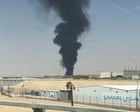
The coffee goes cold on the kitchen table in Tehran, untouched, while the television murmurs an anxious cadence of warnings. Across the ocean, in carpeted corridors of power that smell faintly of old paper and ozone, maps are pinned to corkboards, and flight paths are recalculated by men who will never see the dust of the streets they target.
We talk about geopolitics as if it were a game of celestial chess. We move little plastic flags across a flat blue sea. We quote defense budgets and talk about deterrence thresholds, as though a nation were nothing more than a column on a quarterly spreadsheet. But behind every diplomatic cable and every terse announcement from state television lies a simpler, heavier truth: the stomach-churning dread of a mother listening to the midnight wind, wondering if this is the night the sky tears open.
The tension currently gripping the Middle East is not a sudden eruption. It is a slow-burning fuse that has been wet with kerosene for decades. Recently, that fuse began to spark with alarming speed. Tehran has raised its voice, alleging that the United States is actively preparing to renew a targeted bombing campaign across the region—a claim met in Washington with the usual practiced mix of strategic ambiguity and stern denials. Yet, whether the rhetoric matches the immediate reality on the ground, the psychological architecture of war is already fully erected. Fear does not wait for a formal declaration. Fear arrives first.
To understand why this moment feels so knife-edge sharp, we have to step away from the abstract vocabulary of strategists and look at the geometry of escalation. Imagine two people standing in a dark room, each holding a lit match. Neither wants to burn their fingers, and neither wants to drop the flame. But as the wax melts down, their hands begin to tremble. Every sudden movement looks like an attack. Every cough sounds like a threat.
That is where the region stands today.
For months, the region has existed in a precarious equilibrium—a fragile web of proxy engagements, naval posturing, and cyber skirmishes. It is an uneasy peace defined by the fact that both sides know the catastrophic cost of total war. Yet history teaches us a brutal lesson: nations rarely stumble into major conflicts because they desire them. They stumble into them because they miscalculate each other's restraint. When one side claims that a massive air campaign is being quietly assembled in the hangars and flight decks of its adversaries, even if that claim is exaggerated for domestic political consumption, it alters the math of survival.
Consider what happens next in the minds of military planners. If you believe your adversary is preparing a preemptive strike, your own doctrine shifts from defense to preemption. You cannot afford to absorb the first blow. And so, radar systems hum a little louder. Missiles are fueled. Readiness levels shift from green to amber, then to red. The machinery of war has a momentum all its own. Once you wind the clock, it is remarkably difficult to keep the gears from turning.
I remember standing near a border zone years ago, watching the horizon turn the bruised, violet color of a summer storm. The locals didn't look at the clouds; they looked at the border posts. They knew the signs. The subtle shift in the cadence of radio traffic. The way the baker stops stocking flour for the week and starts buying dry goods. War does not begin with an explosion. It begins with preparations that everyone pretends are just routine exercises, until the day they aren't.
The Iranian assertions regarding a renewed U.S. bombing campaign tap directly into this deep reservoir of historical trauma. The region has scars that have never truly closed. The echoes of past campaigns—the shock and awe, the midnight sirens, the shattered glass swept from dusty sidewalks—remain vivid in the collective memory. When reports surface of increased carrier group movements in the Persian Gulf or long-range bomber deployments in the Indian Ocean, those memories are not treated as history. They are treated as weather forecasts.
And this is where the human cost becomes absolute, even before a single bomb leaves a bay.
In the alleyways of major cities across the region, young people scroll through their phones, reading translated headlines from Western news outlets alongside local state broadcasts. They are trying to calculate their own futures through a haze of propaganda and conflicting intelligence. Do they exchange their savings for gold? Do they stock up on water? Do they cancel the wedding planned for next month? These are the micro-tragedies of statecraft. Every escalation steals the future from millions of people who just want the right to grow old in a quiet house.
The United States, for its part, finds itself trapped in its own strategic logic. Having committed decades of blood and treasure to maintaining a dominant footprint in the Middle East, Washington cannot simply walk away without inviting challenges from rival global powers. Every threat must be met with a counter-threat. Every hostile action by an aligned militia must be traced back to its source in Tehran, demanding a proportional response. It is a closed loop of action and reaction, fueled by the fear of looking weak on the world stage.
Yet strength is often mismeasured. True strength in a crisis is not found in the volume of the threat, but in the discipline of the pause.
As the diplomatic channels fray and the rhetoric grows sharper, the margin for error shrinks to the width of a razor's edge. A stray drone, a miscommunicated naval warning, or a poorly timed cyberattack could easily transform these dark predictions into front-page reality. The danger is not merely that a bombing campaign might happen; the danger is that everyone involved has begun to act as though it is inevitable.
And when a population believes the worst is inevitable, the psychological armor they put on changes the political climate entirely. Moderation starts to look like cowardice. Compromise is rebranded as betrayal. The hawks on all sides find themselves feeding on a diet of mutual suspicion.
We are left watching a slow-motion collision, shouting warnings at a screen that cannot hear us. The coffee on the table in Tehran stays cold. The pilots across the water lace up their flight boots. The machinery waits for a signal that may or may not come, while millions of ordinary lives hang suspended in the heavy, electric air between what has already happened and what might still be avoided if, just for a moment, someone decides to let the match go out.