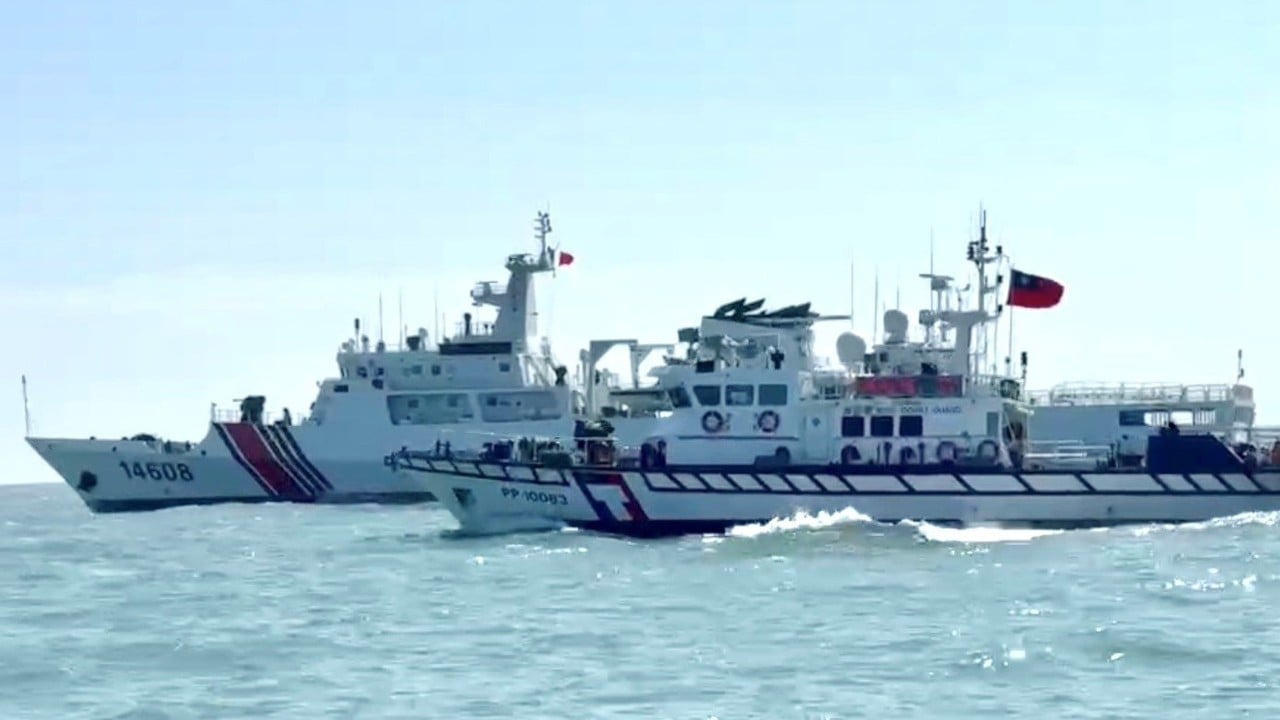
Salt sits on the tongue before dawn even breaks over the water. If you have ever stood on the bridge of a small patrol vessel at four in the morning, listening to the low thrum of diesel engines and the slap of dark swell against steel plates, you know how heavy time feels out there. Hours stretch out like wet rope. Nothing happens, until something almost happens.
Watchers on shore call it a routine patrol. Reporters write a brisk headline about Beijing ramping up maritime patrols around Taiwan and Taipei shadowing the ships, then move on to the next wire alert. Yet when you zoom in past the diplomatic shorthand, you find human beings staring at glowing radar screens, drinking lukewarm coffee, and calculating distances in yards rather than miles. Meanwhile, you can read similar events here: What the UN Staffer Death in Houthi Custody Actually Means for Aid Workers in Yemen.
To make sense of what happens in those waters without getting lost in acronyms, consider a hypothetical officer I will call Lieutenant Lin—a composite character modeled on the real coast guard and naval crews who spend weeks at a time on station. Lin is not a movie hero or a caricature villain. He is someone with a mortgage in Keelung, a toddler who asks why daddy smells like saltwater and engine oil, and a radio channel that crackles with calm, practiced voices trading polite warnings that carry sharp edges.
Why a White Hull Feels Different at Dawn
Color matters at sea. When a gray naval warship approaches, everyone knows the grammar of the encounter: guns are uncovered or covered, radar sweeps at predictable intervals, rules of engagement sit thick and clear in a binder on the captain's desk. To understand the complete picture, check out the recent article by NPR.
White hulls blur that grammar. Over the past several years, China's coast guard has expanded dramatically, fielding large, well-built cutters painted in bright white with red-and-blue stripes—vessels that look on paper like law-enforcement ships, yet carry heavy water cannons, high-end sensors, and displacements rivaling frigates of other navies. When these ships push closer to Taiwan's restricted or prohibited waters, or weave near outlying islands like Kinmen and Matsu, they create what analysts call the gray zone.
Think of the gray zone like a game of touch football played on a frozen pond. Nobody is swinging a hockey stick, so calling a foul feels dramatic. Still, if someone shoves you hard enough near thin ice, the lack of a whistle does not make the cold any less real.
A metaphor helps clarify the stakes here, though I want to be explicit: this is a metaphor, not a literal description of military doctrine. Imagine two neighbors sharing a narrow driveway. One decides to park a large van just inches past the property line every morning, idling the engine and leaving the hazard lights blinking. It is not a break-in. Calling the police for every minute of idling could look like overreaction, while ignoring it slowly turns a shared space into someone else's habit.
In maritime terms, habit is power. When patrol vessels show up week after week, month after month, what once looked like an extraordinary surge starts looking like background weather. That shift—from shock to routine—is often the quietest goal of persistent maritime pressure.
The Exhaustion of the Shadow
Shadowing a ship sounds cinematic if you have never done it for twelve straight hours in a six-foot sea. In reality, it is a grind of fuel burn, sleep debt, and steady nerves.
When Beijing steps up maritime patrols around Taiwan, Taipei's coast guard and navy do not have the luxury of ignoring the movement. Every contact has to be tracked, verified, and matched at an appropriate scale so an approaching vessel cannot claim a free pass or manufacture an incident unchallenged. A smaller patrol boat may be assigned to hold station a few hundred yards off a much larger hull, matching speed, reading intentions from subtle rudder shifts, and keeping watch for surprises.
I have spent enough time around maritime operations—and talking with people who live near working ports—to know how fatigue creeps into a crew. After three or four days of choppy seas, noise never truly leaves your ears. Even when you lie down in a narrow bunk, your body braces for the next roll. Small errors become more likely when everyone is tired: a misheard bearing, a delayed call on the bridge, a moment of irritation when a loudspeaker crackles across the water.
Here is where I have to admit something honest, even if it makes a neat story messy. No outside observer—and honestly, often not even the junior officer on the bridge—can see the full chessboard in real time. Signals get jammed or spoofed. Transponders get switched off or altered. Rumors travel faster than verified facts. Sometimes the scariest part of maritime tension is not a grand master plan; it is confusion meeting pride at close range.
Consider another hypothetical figure to keep the human scale in view: Mei-hua, a fictionalized fish buyer working near a harbor on Taiwan's southwest coast. Her livelihood does not depend on carrier strike groups or think-tank white papers. It depends on whether local boats can go out safely, whether shipping lanes stay predictable, and whether nervous markets spook buyers and insurers. When patrol activity spikes, fishermen sometimes hear radio chatter they do not understand or see unfamiliar silhouettes on the horizon. Even when no shots are fired, uncertainty taxes daily life like a hidden surcharge.
Narrow Waters, Wide Ripples
Why do a few dozen square miles of ocean between the mainland and Taiwan draw eyes from Washington, Tokyo, Manila, and Brussels? Geography gives a blunt answer.
The Taiwan Strait is one of the busiest commercial corridors on Earth. Roughly half of the global container fleet passes through it each year, carrying electronics, machinery, auto parts, energy, and consumer goods that keep factories humming from Stuttgart to Austin. If you want an intuitive picture of why choke points matter, think of a single two-lane bridge connecting a bustling suburb to the main highway. Even a fender-bender on that bridge backs up traffic for miles and makes everyone late.
Beyond trade, there is the question of precedent. Historically, maritime powers have tested boundaries incrementally—establishing a new patrol track, normalizing closer approaches, probing how defenders react—long before any crisis reaches a breaking point. Political scientists often study how states signal resolve without crossing a line that triggers full-scale war. Ships moving slowly through blue water are a physical way of sending a message: we are here, we have endurance, and we can shape what is normal.
Yet signaling is a two-way street. When Taipei dispatches its own vessels to shadow incoming ships, it sends a counter-message just as clear: presence does not equal consent, and pressure will not go unremarked. Every time Taiwanese crews hold their line calmly and professionally, they reinforce a quiet deterrent built on discipline rather than bluster.
| Dimension of the Standoff | What Headlines Often Show | What Happens on the Water |
|---|---|---|
| Vessel Type | Generic "ships" or "patrols" | White coast guard cutters alongside gray naval hulls and smaller shadow craft |
| Pace of Action | Sudden spikes and press releases | Repetitive, grueling hours of station-keeping, radio checks, and fuel management |
| Primary Risk | Full-scale invasion or dramatic clash | Miscalculation, collision, or bad weather turning a routine tail into a crisis |
| Broader Impact | Distant geopolitical rivalry | Commercial shipping jitters, local fishing caution, and sustained defense strain |
Notice how unglamorous the real risk looks in that table. Wars in history textbooks often begin with grand declarations. Real-world crises at sea far more often start with something small: a gust of wind, a misjudged turn, a tired watchstander, or a command decision made with incomplete information.
Reading Between the Wake Lines
When you read about Beijing ramping up maritime patrols around Taiwan and Taipei shadowing the ships, what should you actually look for? Skip the loudest outrage on either side for a moment and watch the pattern.
First, look at frequency and duration. A one-day spike often ties to a political speech, a holiday, or a diplomatic visit. A multi-week pattern of persistent patrols points to something deeper: training for prolonged blockades or quarantines, testing response times, or wearing down smaller forces through sheer operational tempo.
Second, look at how close the vessels come. Operating in broad international waters is very different from edging inside sensitive zones or crowding smaller boats. Proximity shrinks reaction time. At close quarters, a ship going fifteen knots covers ground fast, leaving seconds rather than minutes to read intent.
Third, look at restraint. Restraint rarely makes a splashy headline because nothing explodes. Yet restraint—keeping engines steady, answers measured, tempers cooled—is the thread holding fragile stability together on nights when radar returns crowd the screen and nerves run thin.
But the real problem lies elsewhere when people stop paying attention altogether. Apathy is a strange accomplice in maritime standoffs. When a story repeats itself enough times, readers tune out, thinking nothing changed because nothing broke. In reality, steady pressure changes the baseline underneath our feet, often long before anyone notices the shift.
Back on that hypothetical bridge at dawn, Lieutenant Lin checks the chart table one more time. Outside, pale light begins to separate gray sky from darker sea, turning white foam into silver ribbons along the hull. Another patrol vessel holds position off the port quarter, matching course, matching speed, waiting out the watch.
Down below, on a tiny shelf beside a bunk, a photo of a smiling child sits wedged against the bulkhead—a reminder that every blip on a screen belongs to someone who wants to come home safely when the tide turns.
Out on the open water, there are no dramatic speeches, no musical swells, just the steady pulse of engines and two crews watching each other through the mist, hoping tomorrow looks just like today.