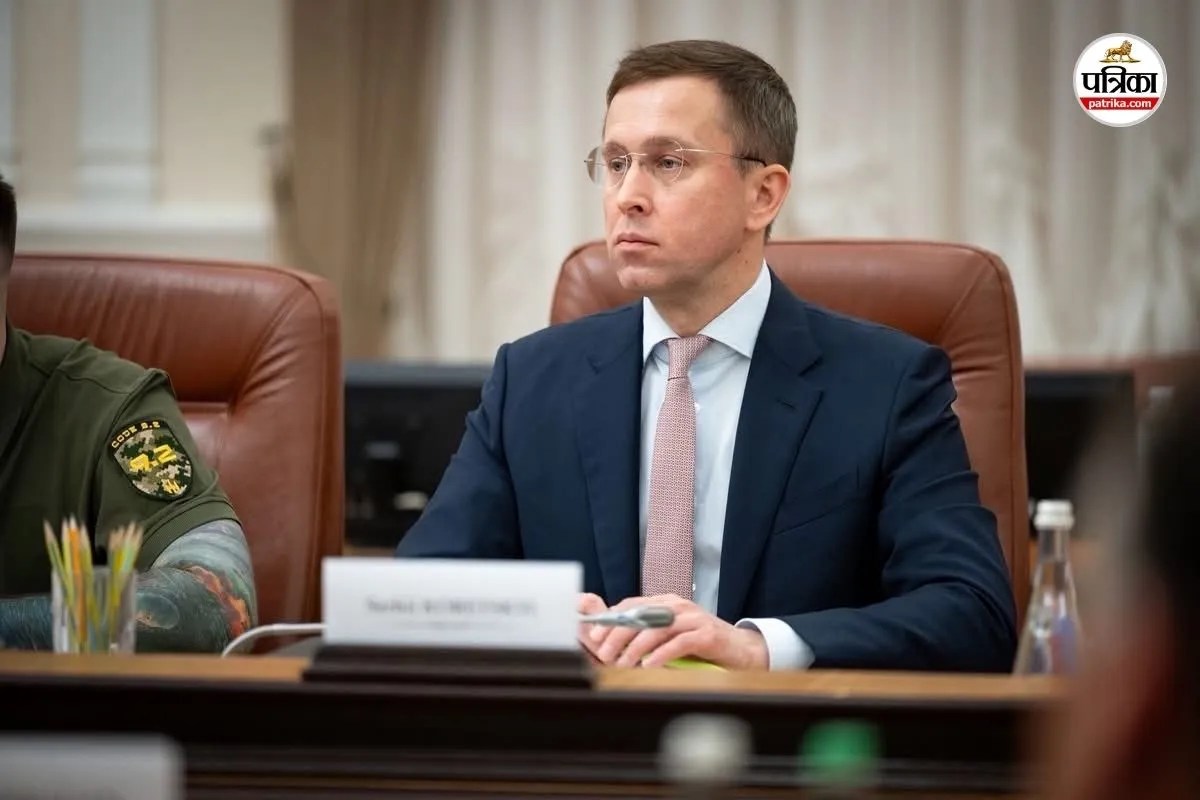
The mainstream media is currently swooning over Kyiv’s latest political reshuffle. The Ukrainian parliament has rubber-stamped Volodymyr Zelenskyy’s pick, Naftogaz CEO Serhiy Koretsky, as the country’s new Prime Minister.
The lazy consensus writes itself: "A battle-tested corporate titan takes the wheel to streamline Ukraine’s war economy, fight corruption, and bring private-sector efficiency to a bloated state apparatus." Meanwhile, you can find related events here: The Anatomy of Minilateral Alignment: Deciphering the India-Japan Joint Statement and Pakistan's Strategic Pushback.
It is a neat, comforting narrative. It is also dangerously naive.
Running a nation-state under active, existential bombardment is not a corporate turnaround. You cannot lay off citizens to improve quarterly margins. You cannot pivot to a new product line when your supply chains are literally being hit by cruise missiles. To see the bigger picture, check out the recent article by BBC News.
By treating the premiership like a distressed asset buyout, Ukraine is falling into a classic trap: believing that technocratic efficiency can substitute for raw political mobilization.
The Naftogaz Illusion: Corporate Profit is Not National Resilience
Proponents of Koretsky point to his tenure at Naftogaz and Ukrnafta as proof of his capability. They cite rising revenues, restructured debts, and the aggressive purging of old corrupt networks.
But let’s look at the mechanics of that success.
Under Koretsky, Naftogaz operated under a highly specific, state-sanctioned monopoly. Managing a state-owned energy giant in wartime is essentially an exercise in triage backed by foreign aid and emergency Western loans. It is relatively easy to show "efficiency" when the international community underwriting your liquidity guarantees you cannot fail.
Managing a national economy is a completely different beast.
- Corporate KPIs vs. Human Survival: A CEO’s job is to optimize capital allocation. A wartime Prime Minister’s job is to manage catastrophic risk, distribute scarce resources equitably, and maintain social cohesion.
- The Extraction Fallacy: In business, if a division is bleeding money, you cut it. In a war economy, the "divisions" bleeding money are critical public services, frontline logistics, and civilian infrastructure. You cannot apply a cost-benefit analysis to defending Kharkiv's power grid.
I have spent years watching private-equity minds try to reform public sectors in transition economies. The result is almost always the same: they optimize for balance sheets while the social fabric frays.
The Bureaucracy Always Wins (Especially in Wartime)
There is a fundamental misunderstanding of how power works in Kyiv right now.
Optimists believe Koretsky will bring a "lean startup" mentality to the Cabinet of Ministers. This ignores the stubborn reality of Ukrainian state bureaucracy. Ukraine’s state apparatus is not a corporation waiting for a charismatic leader to align its incentives; it is a complex web of entrenched regional interests, wartime military administrations, and overlapping security agencies.
Corporate Turnaround           Wartime State Management
--------------------           ------------------------
Direct chain of command        Overlapping military & civilian authorities
KPIs tied to profit/efficiency KPIs tied to sheer survival and sovereignty
Sovereign control over assets  Heavy reliance on volatile foreign aid
A CEO operates with a board of directors and a clear mandate. A Prime Minister in wartime operates under the shadow of the Office of the President, the General Staff, and international donors who hold the purse strings.
Koretsky’s corporate instincts will tell him to centralize, streamline, and cut red tape. But in a country fighting for its life, "red tape" is often the only thing preventing total institutional collapse or unchecked executive overreach. When you bypass established bureaucratic channels in the name of speed, you don't just cut waste—you cut accountability.
The Donor Dependency Trap
The real audience for Koretsky's appointment isn't the Ukrainian public; it is the IMF, the World Bank, and G7 donors.
The Ukrainian government needs to show its Western backers that it is serious about reform, anti-corruption, and fiscal discipline to keep the financial lifeline open. Appointing a clean, English-speaking, market-friendly executive is the ultimate signal.
But this creates a massive paradox.
To satisfy international donors, Koretsky will be pressured to implement market reforms, manage inflation, and curb public spending. Yet, to survive the war, Ukraine needs massive, highly inefficient state spending to support its military and sustain its displaced population.
You cannot run a neoliberal economic playbook while fighting a total war.
History shows that successful war economies—from Great Britain in 1940 to South Korea in the 1950s—relied on massive state intervention, price controls, rationing, and nationalization. They did not rely on market forces or corporate optimization. Trying to balance the books to please foreign bankers while your industrial heartland is a combat zone is a recipe for internal destabilization.
The Risk of Single-Point Failure
When you centralize economic power under a "super-manager," you create a single point of failure.
If Koretsky fails to stabilize the energy sector this winter, or if the distribution of Western financial aid stutters, the blame will land squarely on the "corporate savior" narrative. The political blowback won't just hurt the administration; it will erode public trust in the state's economic competence at the worst possible moment.
Wartime governance requires political consensus-builders, not top-down executives. It requires leaders who can negotiate with trade unions, regional mayors, and military commanders on equal footing—not bosses who issue directives from a high-rise office in Kyiv.
Stop celebrating the corporate takeover of the Ukrainian state. The boardroom is a terrible model for the trenches.