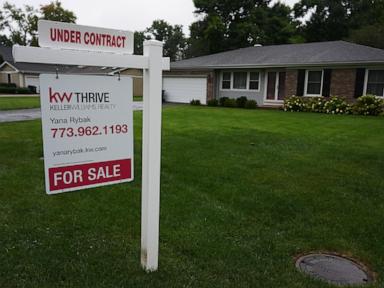
If you only looked at the top-line data for September, you would think the American housing market finally found its footing. Existing-home sales ticked up by 1.5% to a seasonally adjusted annual rate of 3.99 million units. Sounds like a recovery, right? Don't let headline numbers fool you. Behind that modest monthly bump lies a grinding slowdown, a sharp drop in forward-looking contracts, and a market where buyers and sellers are playing an expensive game of chicken.
The reality is that September existing-home sales were still down 2.2% compared to the exact same month a year prior. More importantly, pending home sales—which measure signed contracts and serve as a reliable crystal ball for future closings—dove by a staggering 7.3% for the month. That forward-looking indicator proved that September wasn't a breakout moment. It was a temporary speed bump before a steeper slide.
The Mortgage Rate Trap That Stalled Buyers
Let's talk about why activity is sluggish. Average 30-year fixed mortgage rates hovered near 6.86% in September, creeping back up from summer lows and squeezing borrowing power until it hurt. When you combine those borrowing costs with a median existing-home price of $417,500—marking the 39th consecutive month of year-over-year price gains—the math simply stops working for ordinary buyers.
The Housing Affordability Index dropped to 105.4. Buyers aren't disappearing because they don't want houses. They are stepping back because monthly payments on a typical home are roughly 6% to 7% higher than they were a year ago. Renting doesn't look much cheaper either, but taking on a high-rate mortgage with home prices resting near all-time highs feels like catching a falling knife to many prospective purchasers.
Sellers Are Finally Getting the Memo
For years, sellers held all the cards. September flipped the script in subtle ways. Total housing inventory crept up to 1.60 million units, representing a 4.8-month supply. That inventory growth is changing behavior on the ground.
Price cuts are surging. National data shows that roughly 20.8% of listings experienced a price reduction in September, hitting multi-year highs for the autumn season. If you're a seller listing a property right now, pricing it like it's 2021 is a fast track to sitting on the market indefinitely. Buyers have choices again, and they are using their newfound negotiating power to demand concessions, inspection repairs, and price drops.
Where the Market Is Cracking First
Real estate is hyper-local, and national averages hide brutal regional divergences. The slowdown isn't hitting every city equally.
In the West and the South, inventory pressures and affordability walls hit pending sales hard. Markets in Texas and parts of the Sun Belt saw notable corrections as builders and individual sellers competed for a shrinking pool of qualified buyers. Conversely, certain Midwestern and Northeastern pockets held steady because baseline prices were lower to begin with, though even those regions felt the chilling effect of higher rates.
Investors stepped up their activity slightly, accounting for 20% of September transactions. Cash-heavy buyers and institutional players are circling properties where individual sellers are forced to drop prices, snapping up inventory while everyday families stay locked out by financing constraints.
How to Navigate This Weird Market
If you are trying to buy or sell a home right now, standard playbook rules won't help you.
Sellers need to price ahead of the market, not behind it. If your home has been sitting for three weeks without an offer, the market is telling you your price is wrong—don't wait for rates to drop to fix it. Clean up deferred maintenance, offer rate buydowns as a seller concession, and meet the buyer where they are.
Buyers have leverage they haven't seen in years, but high monthly payments mean you shouldn't stretch your budget to the absolute limit just to secure a set of keys. Look for homes that have lingered on the market, because those sellers are far more likely to negotiate on price or cover closing costs. Stop trying to time the mortgage rate peaks and focus strictly on whether the monthly payment makes sense for your actual bank account today.