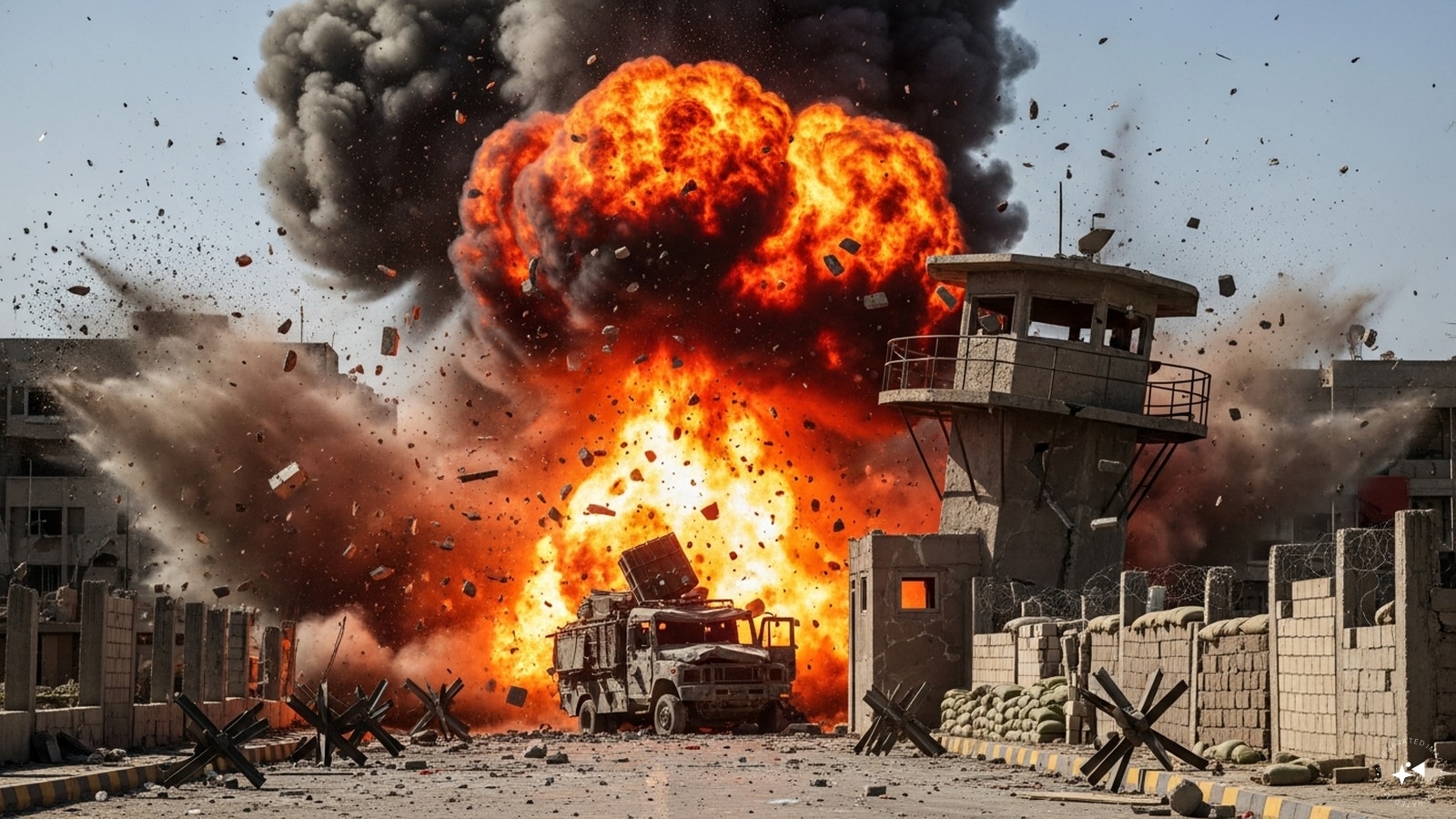
Terrorism doesn't sleep in Khyber Pakhtunkhwa. Early this morning, a coordinated assault involving a suicide bomber and a team of gunmen left three Pakistani police officers dead in the northwest region of the country. This isn't just another headline. It’s part of a violent surge that’s been building for months. If you’ve been tracking the security situation in Pakistan, you know the border regions with Afghanistan are becoming a pressure cooker.
The attack targeted a security checkpoint in the Lakki Marwat district. This area has long been a flashpoint for militant activity. According to local police officials, the attackers didn't just fire from a distance. They used a suicide vest to breach the perimeter before engaging in a direct shootout. It’s a brutal tactic designed to maximize casualties and spread panic among the front-line forces who are frankly under-equipped for this level of warfare.
The Reality of the Lakki Marwat Attack
We need to look at how this went down. The militants struck under the cover of darkness. That’s their standard playbook. They used a combination of improvised explosive devices (IEDs) and automatic weapons. When the suicide bomber detonated, it created the chaos necessary for the gunmen to move in. Three officers lost their lives immediately. Several others are fighting for their lives in nearby hospitals.
This isn't an isolated incident. Lakki Marwat and the surrounding districts like Bannu and Dera Ismail Khan have seen a massive spike in targeted killings. The police are the primary targets because they represent the state's first line of defense. When you kill a cop in these rural districts, you aren't just taking a life. You're telling the local population that the government can't protect them. That’s the real goal here.
Who is Behind the Violence
While no group immediately claimed responsibility for this specific hit, the fingerprints of the Tehreek-e-Taliban Pakistan (TTP) are all over it. The TTP is often called the Pakistani Taliban. They share an ideology with the Afghan Taliban but operate as a separate entity focused on overthrowing the Pakistani state. Since the Afghan Taliban took Kabul in 2021, the TTP has felt emboldened. They have better weapons now. They have safe havens across the border. They have a renewed sense of purpose.
Groups like the Islamic State-Khorasan (IS-K) also operate in these hills, but the TTP remains the most consistent threat to the police. They’ve moved away from large-scale bombings in major cities and shifted toward "hit-and-run" tactics in the northwest. This makes them much harder to track. You can’t fight a ghost with a tank. You need intelligence, local trust, and high-speed response units. Right now, the Pakistani police are struggling with all three.
The Border Problem
The Durand Line—the border between Pakistan and Afghanistan—is a mess. Pakistan spent years building a massive fence to stop militants from crossing. It hasn't worked as well as they hoped. Militants still find gaps. Or they just bribe their way through. More importantly, the political tension between Islamabad and the Taliban government in Kabul has reached a breaking point. Pakistan accuses the Taliban of harboring TTP leaders. The Taliban denies it. Meanwhile, officers in Lakki Marwat pay the price for this diplomatic failure.
Why the Police are Sitting Ducks
I’ve looked at the equipment these officers carry. Most of them have outdated rifles. Their body armor is often expired or non-existent. They’re patrolling in unarmored vehicles that offer zero protection against IEDs or high-caliber sniper rounds. It’s a miracle they stay on the job at all.
There's also the issue of intelligence. The "intelligence-based operations" (IBOs) the military brags about often don't trickle down to the local precinct level. By the time a warning reaches a checkpoint in the northwest, the attackers are already at the gate. The disconnect between the high-level military strategy and the boots-on-the-ground reality is wide. It’s a gap you could drive a truck through.
The Economic Cost of Instability
You might wonder why a shooting in a remote corner of Pakistan matters to the rest of the world. It’s about the economy. Pakistan is currently in a desperate struggle with inflation and debt. They need foreign investment. But nobody wants to build a factory or invest in infrastructure when police stations are being blown up.
The China-Pakistan Economic Corridor (CPEC) runs through these sensitive areas. If the state can't secure a small checkpoint in Lakki Marwat, how can they secure multi-billion dollar energy projects? The insecurity in the northwest acts as a massive brake on the country's development. It keeps the region in a cycle of poverty, which, in turn, provides a fresh crop of recruits for the militants. It’s a vicious loop that nobody seems to know how to break.
Misconceptions About the Conflict
People often think this is just a religious war. That’s too simple. It’s about power, land, and tribal dynamics. Many of these militants are local men who feel sidelined by the central government. They use religious rhetoric to justify their actions, but the roots are often much more secular and grounded in local grievances. Ignoring the political side of this insurgency is a mistake the Pakistani state keeps making.
What Happens From Here
Don't expect this to settle down anytime soon. The Pakistani military will likely launch a retaliatory strike in the coming days. They’ll clear a few villages, arrest some suspects, and declare victory. Then, a month later, it’ll happen again. The cycle is predictable because the underlying issues—border security, lack of police funding, and the diplomatic rift with Kabul—aren't being fixed.
The police need better gear. They need night-vision goggles. They need armored transport. Most of all, they need a government that prioritizes their safety over political infighting in Islamabad. Until the state treats the security of the northwest as a top-tier crisis rather than a regional nuisance, the body count will keep rising.
If you're following these events, watch the border. Watch the rhetoric coming out of Kabul. The next few months will determine if Pakistan can contain this "new wave" of terror or if it will spiral into the kind of chaos we saw a decade ago. Stay informed by looking past the official press releases. The truth is usually found in the small, dusty districts like Lakki Marwat where the thin green line is getting thinner every day.
Keep an eye on regional reporting from local journalists in Peshawar and Quetta. They often have the details that the national media misses. Support organizations that provide medical aid to the families of fallen officers. These families are often left with nothing once the cameras go away. Demand transparency from the security establishment regarding where the defense budget is actually going.

