The alarm rings at 6:30 AM on a Tuesday in mid-January. Outside the window, the world is a monochromatic void of deep, uncompromising ink. Inside, every muscle in your body feels as though it has been filled with wet cement. Your eyes burn. Your brain feels wrapped in layers of damp cotton. You drag yourself to the kitchen, turn on the overhead lights, and instantly wince.
It feels wrong. Your body is screaming that this is night, regardless of what the digital numbers on the microwave say.
For generations, we treated this dragging winter misery as a personal failing. We called it a lack of discipline. We blamed the holiday diet, or the cold weather, or the existential dread of another grueling year. But the truth is far more profound, rooted in an ancient evolutionary survival mechanism that we are only just beginning to decode.
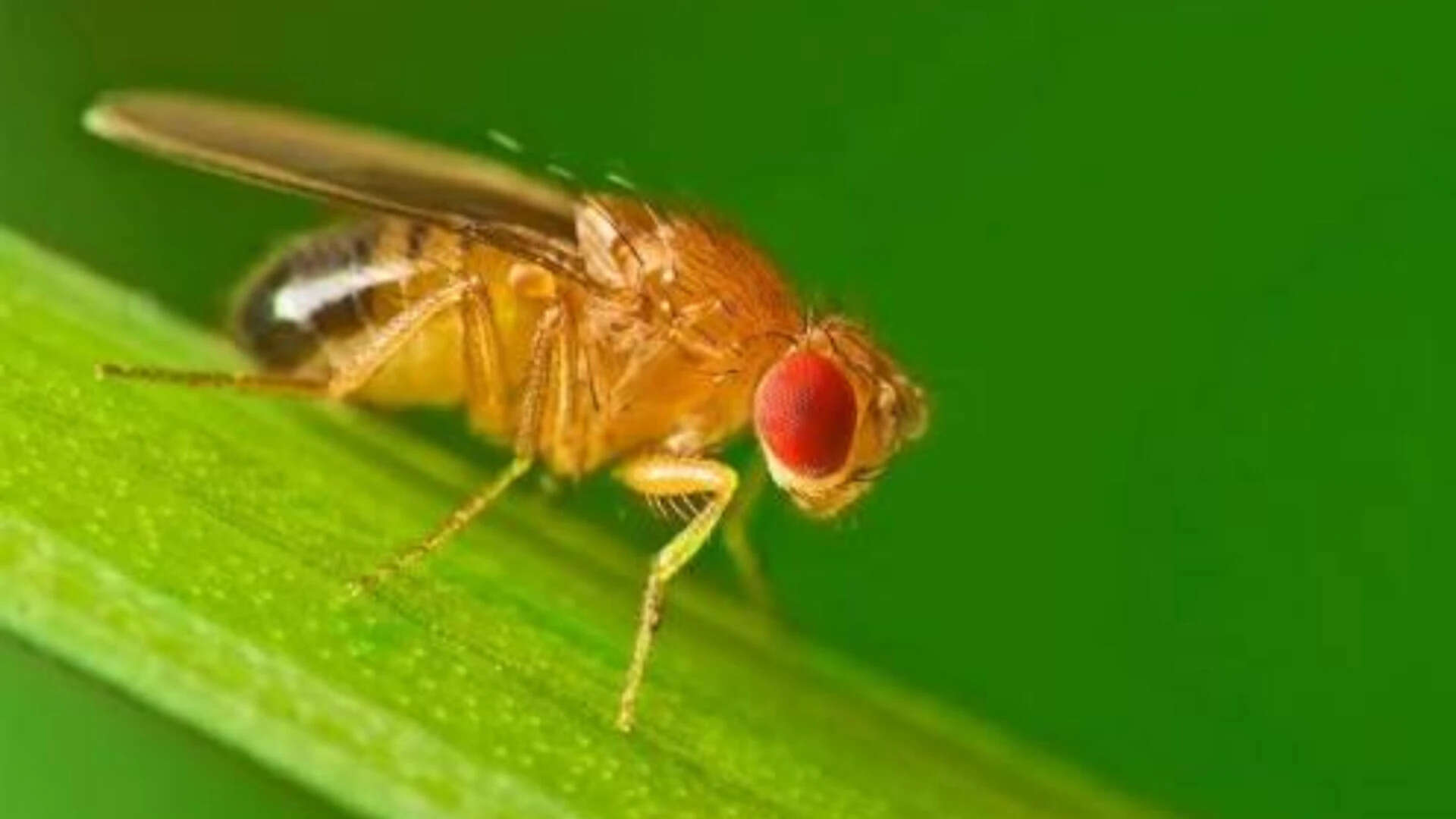
To understand why your winter mornings feel like an uphill battle against your own biology, you have to look at a creature that weighs less than a single grain of sugar.
The humble fruit fly.
The Master Clock on the Wall
Deep inside the brain of every living creature sits a cluster of neurons responsible for keeping time. In humans, it is the suprachiasmatic nucleus. In the fruit fly, Drosophila melanogaster, it is a tight-knit network of about 150 neurons. For decades, scientists looked at this internal timepiece as a rigid pendulum. Tick, tock. Twenty-four hours. A stubborn, unyielding metronome that kept the organism synchronized with the spinning of the Earth.
But nature is rarely rigid. Rigidity in the wild means death.
Consider a hypothetical neuroscientist named Elena. For years, Elena has spent her afternoons peering through microscopes in a climate-controlled basement laboratory, watching these tiny insects dance to the rhythm of light and dark. In the peak of July, the flies are hyperactive in the morning, rest during the heat of the midday sun, and burst into a frantic second wave of activity as dusk approaches. It is a perfect, optimized routine for survival.
Then the artificial solstice arrives.
Elena shifts the laboratory conditions. The lights stay on for only eight hours instead of fourteen. The temperature drops.
If the biological clock were merely a static watch, the flies would simply experience a form of permanent jet lag. They would struggle, stumble, and mistime their behaviors, constantly out of sync with their shortened window of light.
Instead, something miraculous happens. They rebuild the clock.
Plasticity in the Dark
The shift is not subtle. It is a complete structural overhaul.
Recent breakthroughs in chronobiology have revealed that when the days shorten, the neurons inside the fly’s brain physically change how they communicate with one another. Think of it as a bustling metropolitan train system. During the high-volume summer season, the express trains run constantly, connecting major hubs to keep the city moving at a frantic pace. But when winter arrives, the transit authority completely tears up the tracks, rerouting the lines into a totally separate seasonal mode.
The chemical signals change. The synapses shift their alignments.
This is not just a passive reaction to the cold. It is an active, genetically programmed transformation. The fly’s brain recognizes that a summer clock is useless in a winter world. A summer clock demands early morning foraging when the world outside is still freezing and lethal.
So, the brain adapts. It shifts its peak activity windows, dampens certain neural pathways, and amplifies others. It builds a winter clock from the raw materials of the summer one.
We used to think our internal clocks were carved into our DNA like ancient stone tablets. We were wrong. They are made of clay, constantly being reshaped by the hands of the sun.
The Human Shadow
It is easy to dismiss this as an interesting quirk of insect biology. Flies are flies; humans have built cities, heated homes, and artificial lighting that can turn midnight into high noon at the flick of a switch.
But we cannot outrun our ancestry.
Every piece of machinery that drives the fruit fly's seasonal shift has a counterpart in the human body. Our brains still monitor the subtle shortening of daylight. We still track the changing angle of the sun, even through the double-paned glass of an office window.
When winter hits, your brain tries to do exactly what the fly's brain does. It attempts to rebuild its clock.
But here is where the modern human tragedy occurs: we do not let it.
Imagine the friction this creates. Your biological systems are trying to transition into a slower, energy-conserving winter mode. The chemical tides in your bloodstream are pulling you toward longer nights and delayed morning activity. But the modern world demands absolute, unyielding consistency. The corporate calendar does not care that the sun did not rise until 8:00 AM. Your school schedule does not adjust for the winter solstice.
We force our bodies to run a summer schedule on a winter chassis.
No wonder we are exhausted. No wonder millions of people experience the profound, debilitating dip of Seasonal Affective Disorder every single year. It is not a mental glitch. It is a structural mismatch between our evolutionary programming and our modern lives.
Living in the Shift
The realization that our biological clocks are dynamic structures is both terrifying and liberating. It means that the winter blues are a real, physical manifestation of our brains trying to rewrite their own wiring.
So how do we navigate this invisible seasonal migration?
We have to provide our brains with clearer signals. In the absence of natural sunlight, our internal timekeepers become confused, trapped in a gray zone between the seasons. By deliberately exposing ourselves to bright, high-intensity light first thing in the morning, we give our changing neural networks a firm anchor. We tell the shifting clock exactly where the day begins.
Conversely, we must allow ourselves the grace of the season.
We cannot expect the same explosive, frantic energy in the depths of December that we naturally possess in the warmth of June. The fruit fly rests. It recalibrates. It survives the winter by honoring the rewritten rules of its own brain.
The next time you find yourself staring at the ceiling in the dark of a winter morning, listening to the wind howl outside, remember the tiny flies in Elena's lab. Your brain is not breaking. It is merely trying to rebuild itself for the dark days, waiting for the light to return so it can tear down the tracks and start all over again.