History is rarely written in sweeping declarations. More often, it hinges on mundane failures, missed connections, and seconds lost in transit.
When American Airlines Flight 11 struck the North Tower of the World Trade Center on the morning of September 11, 2001, it triggered a catastrophic sequence of events that would claim thousands of lives. Yet within that geometry of destruction, survival frequently came down to microscopic anomalies. A ringing phone, a delayed elevator, or a misplaced file folder carved an invisible line between those who walked away and those who did not.
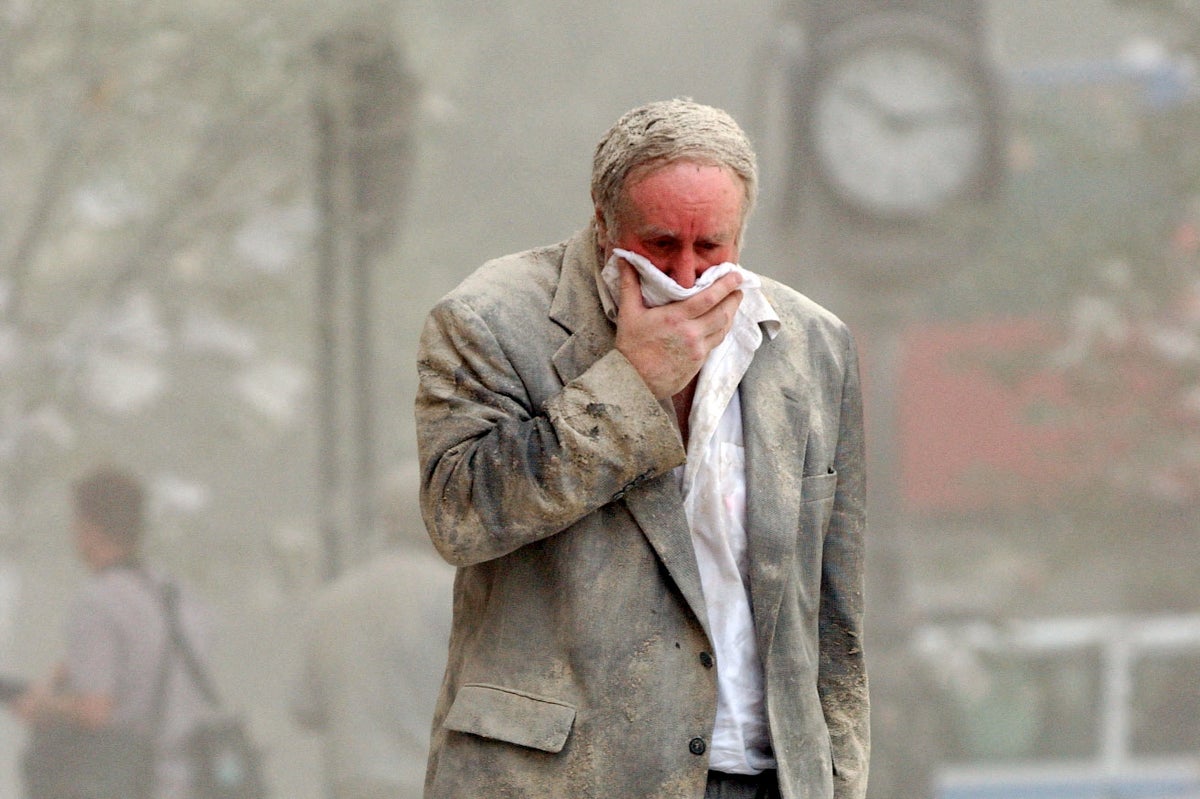
Consider the case of Edward Fine. Standing on the 79th floor of the North Tower, Fine was moments away from boarding an express elevator that would have carried him to an 87th-floor meeting. He missed that car by seconds. That single delay meant he was stranded in a transitional corridor when the jetliner tore through the upper floors, obliterating the very elevator shafts he would have occupied.
The image of Fine staggering through the Manhattan ash, clutching a black leather briefcase, became one of the defining visual artifacts of the disaster. Plastered across international magazine covers, the photograph captured the surreal intersection of corporate routine and absolute catastrophe. To the public, the briefcase was a symbol of corporate persistence amid ruin. To Fine, it remained a physical anchor to a life that had fractured in an instant.
The Architecture of Randomness
To understand how ordinary citizens navigated the vertical labyrinth of the World Trade Center, one must examine the fatal physics of the towers' core design. The buildings relied on a centralized core housing elevators, stairwells, and utility lines, surrounded by an open-plan office layout. When commercial airliners penetrated the steel structures, they severed primary evacuation pathways, turning structural logic into a trap.
Those trapped above the impact zones faced impossible choices. In the South Tower, office worker Brian Clark and his colleagues initially attempted to descend Stairwell A, unaware that it was the only functional escape route left intact across the entire upper third of the building. When a toxic wall of smoke forced them to hesitate on an 81st-floor landing, a split-second decision to investigate a muffled cry for help led Clark away from a group that ultimately headed upward to their deaths.
Every survivor's account reveals a terrifying margin of error. The difference between survival and tragedy was rarely a matter of physical fitness or preparedness. It was stochastic. It was a colleague calling in sick the night before. It was stopping to tie a shoelace, checking an email, or lingering by a coffee machine.
The Persistence of Relics
Decades later, the physical objects carried out of the wreckage carry a haunting weight. Fine preserved the suit he wore that morning, along with the scuffed briefcase. In interviews given years after the event, he noted that keeping these items was an intentional rejection of erasure. They are tangible proof of an ordinary Tuesday morning that mutated into an enduring historical epoch.
This preservation of mundane objects speaks to a psychological coping mechanism unique to trauma survivors. In the face of overwhelming loss, physical artifacts become totems of agency. They represent the stubborn insistence of routine against the void of sudden destruction.
We look for grand narratives in historical disasters because they offer comfort. We prefer to think that survival is earned through quick thinking, moral clarity, or inherent resilience. The reality is far more uncomfortable. The architecture of fate on that morning was completely indiscriminate, sparing the hesitant and consuming the decisive with equal indifference.
The dust has long since settled over lower Manhattan, and the steel skeletons have been replaced by monuments of light and reflection. Yet the micro-histories remain etched into the concrete record. They stand as a quiet reminder of how fragile our engineered certainties truly are, and how easily the course of a human life can be redirected by a missed elevator car.
Watch an interview with 9/11 survivor Brian Clark
This video provides a firsthand account of the split-second decisions made inside the towers on September 11.