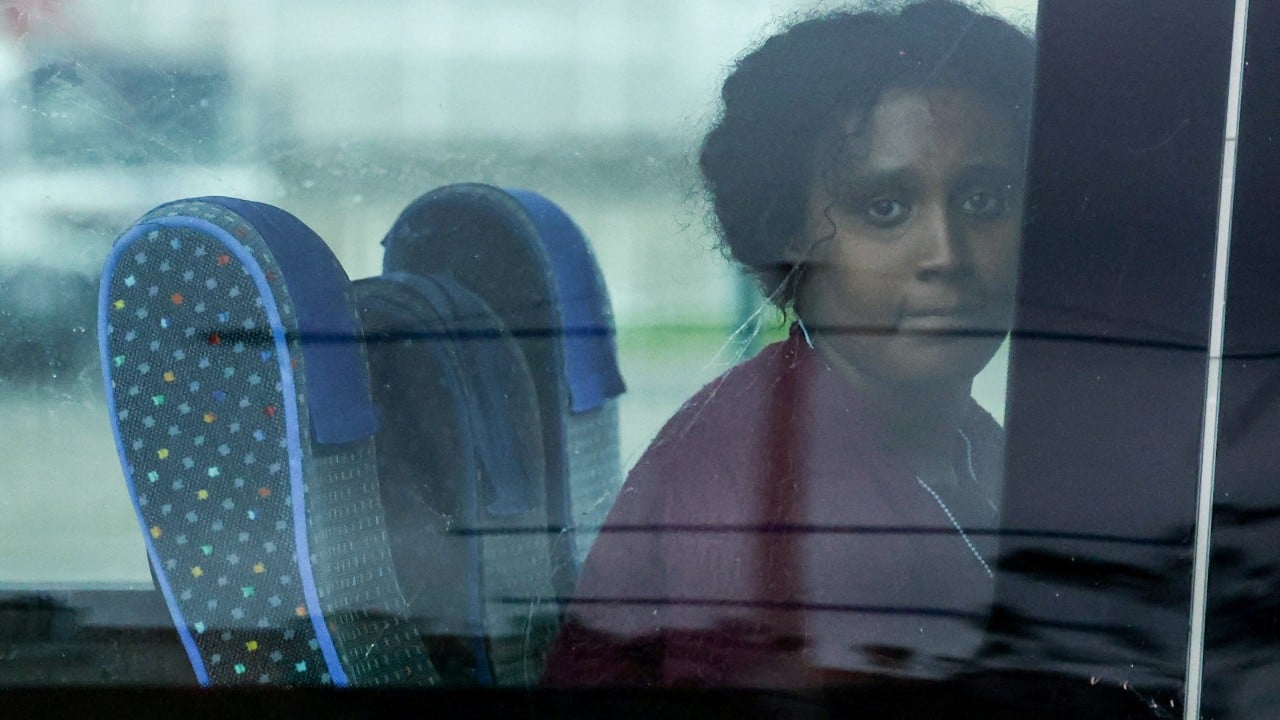
The water does not care about borders. It does not look for passports, or papers, or the small rubber seams hastily glued together in the dark of a warehouse. It only looks for weight. It looks for air.
Cold. It is always cold. Even in the middle of summer, the English Channel retains an ancient, biting chill that strips the breath from a human chest in seconds. Imagine standing on a beach at three in the morning. The wind is a knife. The salt stings your eyes. Behind you, the invisible ghosts of a life abandoned—a warm kitchen, a familiar language, the smell of dust on a concrete street—fade into the blackness of France. Ahead of you lies twenty-one miles of open water, some of the busiest shipping lanes in the world, separating survival from the arbitrary lottery of geography.
In the predawn hours, when the world is quietest, small vessels push off into that blackness. They are weighted down. Far beyond any safe capacity. Overloaded rubber tubes, straining against the tide, carrying human cargo willing to gamble everything on a single, desperate roll of the dice.
Then, the hull gives way.
Water rushes in. Panic, sharp and absolute, takes over. There are no lifejackets worth the name—only thin foam wrappers that offer false hope. In the chaos of sinking, amidst the shouts and the violent thrashing of freezing limbs, three lives slipped beneath the surface. A child. Two women. Crushed and drowned in the frantic scramble for survival as their boat collapsed off the coast of northern France.
News reports will call it an incident. They will use dry statistics. They will talk about migrant crossings, policy debates, diplomatic friction between London and Paris, and coastguard response times. They will wrap the tragedy in bureaucracy.
We must strip away the paperwork. We must look at the human cost.
Consider what it takes to step into a sinking dinghy with a child in your arms. You do not do this on a whim. You do not risk your life, and the life of the person you love most, because of a casual desire for a change of scenery. You do so because the alternative—remaining where you are—is a slow, certain erasure. War, poverty, systemic persecution, or the quiet violence of hopeless stagnation leave only one door open. And that door leads straight to the water.
The journey from France to the United Kingdom has become one of the most perilous maritime corridors on Earth. Year after year, the numbers climb. So do the death tolls. Every time a vessel capsizes, politicians issue statements expressing profound sorrow. They promise crackdowns on smuggling rings. They pledge tighter security, more drones, higher fences, and stricter patrols along the French shoreline.
Yet the boats keep launching.
Why? Because desperation is an engineer. As long as the pressure behind people remains intolerable, no wall is high enough, and no channel is wide enough to stop them. When the ground beneath your feet is burning, you will walk into the fire, or onto the waves, simply to breathe.
The mechanics of these crossings are brutally simple, orchestrated by ruthless networks that profit from human misery. For thousands of euros, desperate families are packed into unseaworthy vessels with engines too small and fuel too scarce. They are told the journey takes hours. They are told they will make it. But the English Channel is unforgiving. Changing weather patterns, hidden currents, and towering container ships slicing through the dark make these waters a graveyard for the unprepared.
When the overloaded boat off the French coast splintered under the pressure, it was not an accident of nature. It was the predictable outcome of a system built on exclusion. When legal pathways to safety are slammed shut, people turn to illegal ones. When you block every door, people build ladders out of desperation. And when those ladders fail, lives are lost in the dark.
We read these headlines over morning coffee. We scroll past them on our phones between weather updates and sports scores. The distance between our comfort and their catastrophe feels infinite. But it is not. It is only twenty-one miles of water.
The child who did not survive the night had a name, a favorite toy, a voice that once filled a room with laughter. The two women who perished alongside them had hopes, fears, and futures stolen by the tide. They were daughters, mothers, human beings seeking the fundamental right to exist without fear.
The sea remains. It rises with the moon. It falls with the dawn. And tomorrow night, as the tide turns and the wind dies down, another group of people will walk onto a freezing beach in France. They will look out at the dark water. They will feel the chill. And they will step into the boats.


