We have never had more windows into other people's lives. Yet we are shivering in the dark.
Think about the last time you stared at a streaming menu. The rows stretch out infinitely, glowing with the sterile promise of infinite distraction, while your cold pizza sits on the counter. You scroll. You sigh. You pick something safe, or you turn the TV off entirely. The paradox of choice leaves us paralyzed. We crave a story that cuts through the noise, something that demands to feel real. You might also find this similar coverage insightful: Why The Super Mario Galaxy Movie Will Ruin Nintendo's Best Asset.
Salvation rarely arrives in a neat little package. Sometimes it drops quietly onto our screens disguised as pop culture, nostalgia, or a chaotic Tuesday night release schedule.
Consider what happens next: a collection of cultural anchors drops all at once, offering an accidental map for our weekend. As discussed in recent coverage by Variety, the effects are significant.
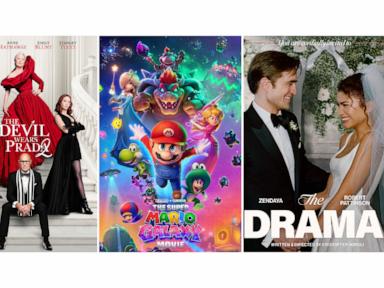
The Devil Still Wears Prada and Time Still Marches On
Fashion is never just about clothes. It is armor. It is a shield worn against a world that constantly tries to categorize us.
When word broke that Miranda Priestly and Andy Sachs were stepping back into our lives for a sequel, the collective internet let out a sharp gasp of recognition. We remember the frostiness. We remember the clacking of heels on polished marble floors. We remember the terrifying power of a single compressed-air sigh.
Meryl Streep built an empire out of a silver wig and a lowered voice. She taught a generation that competence does not need to shout.
*
Now, facing the reality of a continuation, we have to ask ourselves a harder question: Can lightning strike twice in the exact same cerulean sweater? Sequels built on decades of nostalgia walk a dangerous tightrope. Lean too hard into the past, and you are trapped in a museum. Veer too far away, and you break the sacred contract made with the audience who memorized every line.
The invisible stake here isn't box office receipts. It is our collective memory. We protect our favorite fictional characters the way we protect old photo albums. When the screen lights up again, we aren't just watching a movie; we are checking to see if the people we used to be still exist somewhere inside the frame.
The Sound of Our Own Discontent
Music operates on a completely different frequency. It bypasses logic, slipping straight through the ribs to wrap itself around the heart.
Ariana Grande knows this magic intimately. Her voice is an instrument of astonishing, almost architectural precision. Yet, behind the whistle notes and the glossy pop production lies a messy, very human vulnerability.
Imagine sitting in a parked car at two in the morning, the rain drumming a frantic rhythm against the roof, while a track loops softly through the speakers. That is where pop music actually lives. Not on the charts, not in the stadium lights, but in the private wreckage of our personal histories.
When a major artist drops new work, culture shifts a fraction of an inch. We use their lyrics as shorthand for our own unspoken griefs and triumphs. We hold up their melodies as mirrors, searching our own faces for signs of who we have become since the last album dropped.
Gravity and Gold Dust
Escapism requires a vehicle. Sometimes that vehicle is a pair of ruby red stilettos, and sometimes it is a starship shaped like a friendly cat, hurtling through an impossible galaxy.
Video games like Super Mario Galaxy do something cinema and music can only dream of. They hand you the steering wheel.
Think back to the first time you left solid ground and drifted into zero gravity, watching tiny stardust particles swirl around a plumber in overalls. It wasn't just a mechanic; it was a physical sensation of freedom translated into code.
Games bridge the gap between observation and agency. They tell us that no matter how vast the darkness gets, there is always another platform waiting just within reach if you time your jump correctly.
We turn to these digital kingdoms not to escape reality, but to find the missing pieces of our courage.
The Detroit Blueprint
Storytelling loses its soul if it refuses to look the real world in the eye.
Enter the gritty, street-level tenacity of shows like Diarra from Detroit. Glossy reboots and cosmic adventures have their place, but there is an electric, raw electricity that comes from watching ordinary people chase down extraordinary truths in neighborhoods that look and feel like actual zip codes.
Diarra doesn't wear designer couture. She doesn't wield magic powers or command starships. She is armed with wit, stubbornness, and a fierce refusal to be ignored.
We need these gritty anchors. They remind us that mystery and adventure are not reserved for the elite or the supernatural. They happen on front porches, in neighborhood diners, and down cracked concrete alleys.
The Glow of the Glass
Friday night arrives whether we are ready or not.
The screens glow in living rooms across the world, casting blue shadows against drawn curtains. We sit together in the dark, separated by miles, yet tethered by the exact same flickering images.
We search for something to watch because we are looking for a reflection. We want to know that someone else has felt the cold snap of an unforgiving boss, the sweet sting of a broken heart, the dizzy thrill of an impossible jump, or the gritty determination to find the truth when everyone else has turned away.
The remote control rests on the arm of the couch.
Choose wisely. The night is still young, and the dark is full of stories waiting to pull us back to life.