Power has a weight. We tend to measure it in executive orders, market caps, or geopolitical leverage, but sometimes the weight of power is physical, measurable in metric tons and thermal exhaust.
For half a century, the ritual was identical. A pristine rectangle of Kentucky bluegrass, manicured to the millimeter by National Park Service groundskeepers, would wait under the Washington sun. Then came the rhythm of the rotors. The iconic green-and-white Sikorsky VH-3D Sea King, a machine whose design traces its lineage back to the Vietnam War era, would descend. A Marine crew would march onto the grass, lay down a single protective sheet of metal, and the pilot would stick the landing. It was a delicate dance of tradition, military precision, and institutional memory.
But tradition eventually collides with engineering.
When the military finally delivered the next-generation fleet of presidential helicopters—the VH-92A Patriot—the old dance broke down. The new aircraft were a marvel of modern defense contracting. More armor. More range. Massive, undeniable capability. They possessed the kind of raw power that modern security theater demands.
They also had a design flaw that no one noticed until it was too late.
The exhaust vents on the Patriot point straight down. When the engines revved to keep the massive bird hovering over the White House lawn, the downward blast emitted an intense, concentrated torrent of heat. It did not just discolor the turf. It ripped it out. Chunks of historic sod were flung toward the doors of the Oval Office. The South Lawn was being systematically scorched by the very machines built to protect the executive branch.
Consider the bureaucratic absurdity of the situation. The United States military had spent decades and billions of dollars developing a cutting-edge aircraft to transport the commander-in-chief, only to realize the machine could not actually land at the president's house without burning the yard to a cinder. For months, the shiny new fleet sat largely sidelined from White House duty, while the aging, 45-year-old Sea Kings were kept on life support just to handle the short hop from the South Lawn to Andrews Air Force Base.
It was a stalemate born of technological overreach. The solution required an aggressive pivot from preservation to heavy construction.
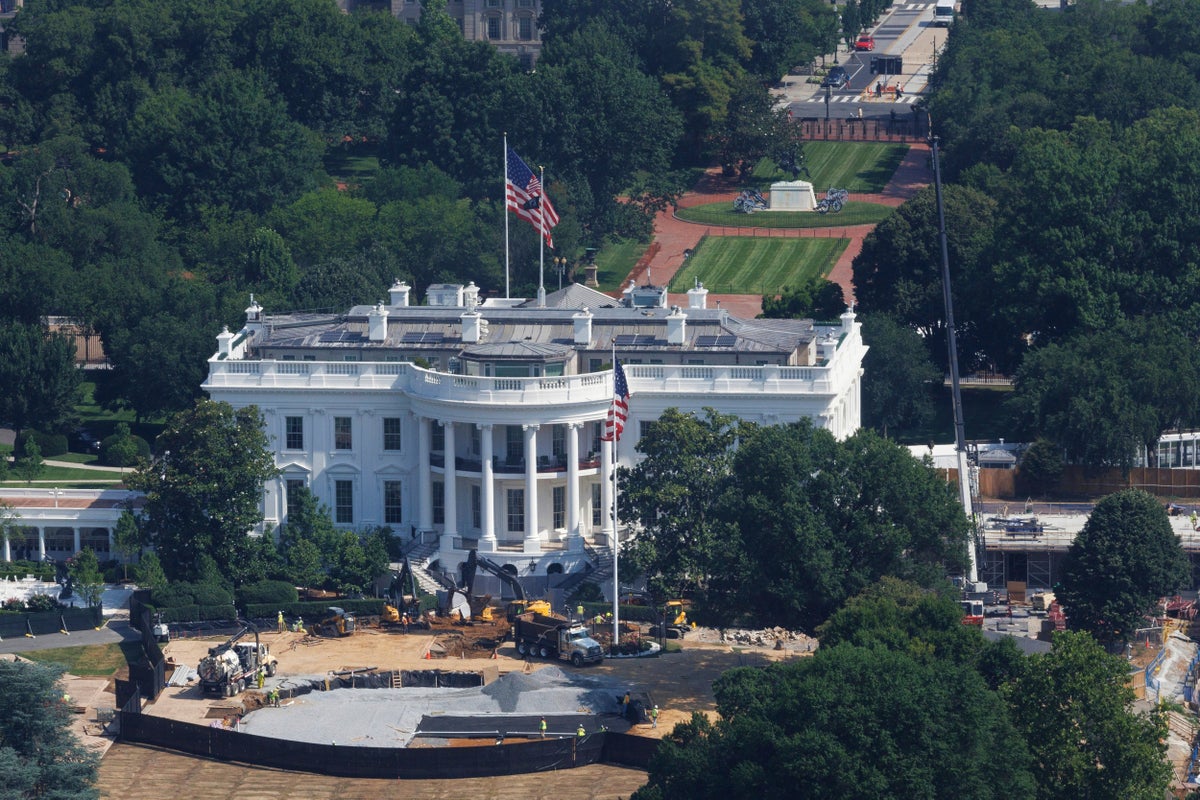
Crews have already begun tearing into the South Lawn, working behind security fencing to reshape the historic grounds. The era of landing on wet, soggy grass is over. In its place, workers are laying down a massive, permanent helipad crafted from carved granite.
Granite is not a subtle choice. It is a stone that boasts a compressive strength of 35,000 pounds per square inch and a lifetime that outlasts empires. At the center of this structural monolith, artisans are carving the White House seal directly into the stone. The project is being accelerated under an intense 24/7 work schedule, with crews scrambling to hit a strict mid-September completion deadline ahead of a high-stakes state visit from Chinese President Xi Jinping.
The optics are unmistakable. Where there was once a rolling green lawn that symbolized the agrarian roots of an early republic, there will now be a hardened, tactical launchpad.
The financial logistics of the build are equally telling. The project carries a price tag estimated between $5 million and $6 million, with an additional $875,000 tacked on just to fund the round-the-clock labor required to meet the accelerated deadline. Yet, the American taxpayer is not footing the bill for the core structure. Instead, Sikorsky Aircraft, the Lockheed Martin subsidiary that built the lawn-scorching helicopters, is covering the entire cost via a targeted donation to the Trust for the National Mall.
Corporate guilt is rarely a line item in a defense budget, but when a contractor delivers a multi-billion-dollar fleet of aircraft that cannot land on the most famous lawn in the world, a certain level of institutional embarrassment settles in. Paying for the granite pad is the ultimate corporate apology note.
This transformation is more than a quick fix for a mechanical oversight. It marks a permanent shift in how the presidency interacts with its immediate environment. For generations, the lack of a permanent landing pad was a deliberate choice, a visual statement that the American president was a civilian leader residing in a home, not a military dictator operating from a fortified compound. Previous administrations consistently rejected the idea of a permanent helipad, choosing to preserve the iconic, uninterrupted sweep of the South Lawn.
But the physical reality of modern security and heavy engineering has a way of grinding down historical sentimentality.
When the granite is polished and the construction fences are pulled back, the South Lawn will look fundamentally different. The new pad will serve a dual purpose, functioning as a durable stage for outdoor press conferences and formal events. The old Vietnam-era Sea Kings will finally head to a quiet retirement, replaced by a fleet that no longer has to worry about missing its mark on a temporary sheet of metal.
The White House is an evolving canvas, constantly being remodeled to reflect the temperament and technological realities of the era. The new granite pad is a testament to that truth. It is a monument to the compromise between historic preservation and the relentless, downward blast of modern machinery.