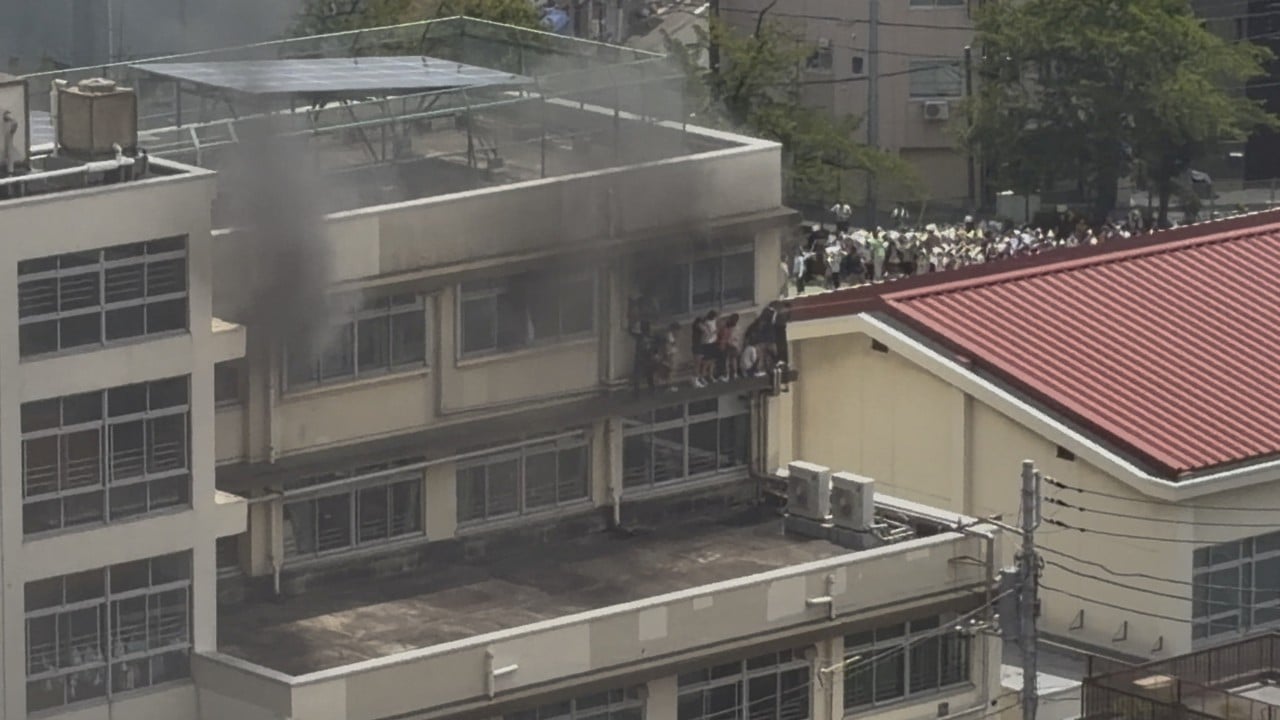
Ten minor injuries and three hundred panicked children running out of a Japanese primary school isn't a tragedy. It is a loud, flashing red warning light about the absolute failure of modern institutional risk management.
When a fire breaks out, the immediate media reaction is a predictable mix of horror and relief. "It was scary," the headlines scream, quoting terrified eyewitnesses while praising the "swift evacuation response." The public nods along, satisfied that the protocols worked because everyone got out alive.
They are wrong. The fact that ten people were injured during a routine evacuation of only three hundred students is an indictment of the system itself.
I have spent fifteen years auditing corporate and institutional crisis responses. I have watched organisations burn through millions of dollars drafting dense, unreadable safety manuals that do nothing but protect executives from liability. When a real emergency hits, these heavy-handed protocols regularly break down, transforming a predictable physical hazard into a chaotic psychological stampede.
We are training human beings to panic efficiently, rather than teaching them how to maintain situational awareness.
The Myth of the Flawless Evacuation
The mainstream narrative surrounding school emergencies relies on a comforting lie: that rigid compliance equals absolute safety.
Look closer at the data. In the vast majority of structural fires in modern, concrete-and-steel institutional buildings, the structural risk is highly localized. Modern building codes, fire-rated doors, and localized sprinkler systems are designed to contain incidents. Yet, our emergency response playbook remains completely unchanged since the industrial era: trigger a loud siren, induce immediate adrenaline spikes, and force hundreds of people to bottleneck through narrow stairwells simultaneously.
What happens? People trip. They crush each other. They suffer smoke inhalation not because they were trapped by flames, but because they ran directly through smoke-filled corridors to reach a designated "exit" that their compliance checklist told them to use.
In safety science, this is known as the Compliance Trap. We prioritize blind adherence to a pre-determined route over active, dynamic risk assessment.
A Lesson from High-Risk Aviation: Pilots do not use rigid, linear checklists during an inflight emergency until they have stabilized the aircraft using basic airmanship. Why? Because blindly following a script in a rapidly changing environment will kill you.
The Physics of Crowds vs. The Psychology of Panic
To understand why a 300-person evacuation results in ten injuries, you have to look at the fluid dynamics of human crowds.
When a fire alarm sounds, the physiological response is immediate:
- Heart rate spikes past 130 BPM.
- Fine motor skills deteriorate.
- Auditory exclusion sets in (people literally stop hearing verbal instructions).
- Tunnel vision focuses entirely on the nearest visible exit.
When you pack hundreds of developing children into this physiological state and force them into a confined corridor, you are creating a high-pressure human hydraulic system. The friction between bodies increases exponentially. A single trip creates a structural blockage. The injuries reported in these incidents are rarely from the fire itself; they are mechanical injuries caused by the evacuation process.
We are actively creating secondary hazards to escape a primary hazard that, in many cases, was already being mitigated by the building's engineering.
Stop Teaching Fire Drills, Start Teaching Tactical Calm
The current institutional obsession with speed is killing us. Schools and corporate offices brag about clearing a building in under three minutes. That is a vanity metric.
A rapid evacuation filled with falling bodies and screaming children is infinitely more dangerous than a controlled, phased egress that takes six minutes. We need to completely dismantle the traditional fire drill and replace it with Dynamic Hazard Mitigation.
1. Abolish the Universal Alarm
Mass sirens cause mass panic. Modern buildings should utilize localized, multi-stage alerting systems. If a fire starts in a second-floor chemistry lab, the third floor needs a specific directive to hold position or move to an alternative stairwell, not a deafening horn that triggers a blind rush toward the danger zone.
2. Decentralize Leadership
In a crisis, a centralized command structure fails instantly. Teachers and floor wardens shouldn't be looking at a clipboard to see what "Phase 2" dictates. They need the autonomy to make immediate, tactical decisions based on the air quality and visibility in their immediate vicinity. If the designated emergency exit is smoky, they must have the authority—and the confidence—to lock down in a safe room and seal the doors.
3. The Downside of Decentralization
Let's be clear about the trade-off. Giving individuals tactical autonomy means accepting the risk of human error. Someone might make the wrong call. But relying on a centralized, rigid script guarantees systemic failure when the environment changes. I will take localized human error over systemic institutional blindness every single day.
The Flawed Questions We Keep Asking
Whenever these incidents hit the news cycle, the public asks the same useless questions. Let's dismantle them.
- "How can we make evacuations faster?"
Wrong question. Speed is the variable that introduces chaos. The correct question is: How can we make evacuations more deliberate? - "Did the staff follow the protocol perfectly?"
Irrelevant. If the protocol requires three hundred children to rush down a stairwell simultaneously while panicking, the protocol itself is a hazard. The question should be: Did the protocol adapt to the real-time conditions of the building?
Imagine a scenario where a school experiences a small kitchen fire. The smoke triggers the main alarm. Under current protocols, the entire student body runs out into a rainstorm or freezing temperatures, creating hypothermia risks and logistical chaos on the streets for emergency responders. A tactical, phased response would isolate the kitchen, keep the students calm in their classrooms, and clear the building zone by zone. But we don't do that, because executives are terrified of the liability of not triggering the big red switch.
The Exploitation of "Safety"
The safety-industrial complex has turned disaster preparedness into a compliance checking exercise. Companies buy expensive software, insurance firms mandate standardized drills, and schools sacrifice education time to practice running out of buildings in straight lines.
It is an illusion of control designed to satisfy lawyers, not to save lives.
The Japanese school incident should not be viewed as a success story just because the building didn't burn to the ground with people inside. It must be analyzed as a systemic failure of crowd management and stress inoculation. Until we stop treating human beings like cattle that need to be herded at the first sign of smoke, we will continue to see people injured by the very systems designed to protect them.
Fix the psychology, stop obsessing over the stopwatch, and burn the compliance manuals.


