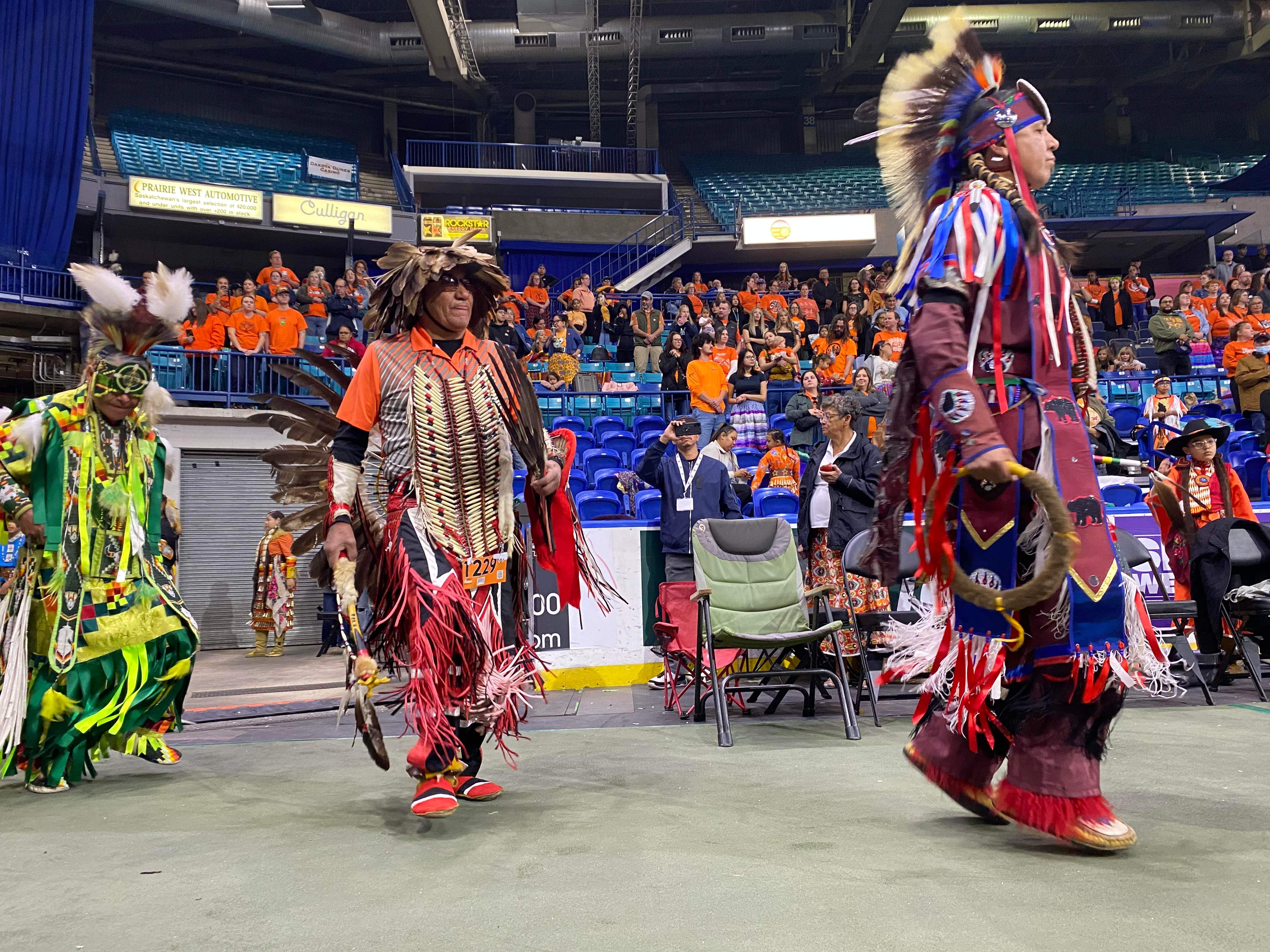
The sound of the drum hits your chest before you even step onto the floor of the SaskTel Centre. It is heavy. It vibrates through the concrete and settles deep in your bones. Hundreds of orange shirts flood the arena, turning the massive venue into a sea of shared memory, grief, and survival.
This isn't a quiet museum exhibit. It is loud, colourful, and relentlessly alive.
When the Saskatoon Tribal Council hosts its annual Truth and Reconciliation Powwow, thousands show up. They don't come just to watch. They come because residential school history isn't tucked away in old textbooks here. It lives in the families walking the concourse, the elders holding court in the stands, and the young dancers stepping rhythmically to ancient beats.
If you think National Day for Truth and Reconciliation is just another statutory holiday for retail sales and three-day weekends, you are missing the entire point.
Beyond the Orange Shirt
A shirt is cloth. It fades in the wash. What happens when the cameras pack up on October first? That is the real question.
For generations, Canadian institutions tried systematically to erase Indigenous culture, language, and family structures through residential schools. Children were stolen from their homes. They were punished for speaking their mother tongue. The trauma didn't stay in the past; it rippled outward through decades of broken child welfare systems, underfunded infrastructure, and systemic indifference.
That is why an event like the Saskatoon powwow carries such immense weight. It acts as a public reclamation. Dancers travel from various First Nations to participate, turning the floor into a space where ancestors are honoured directly. When a fourteen-year-old puts on regalia and dances for her relatives who survived residential schools, she is performing an act of defiance. She is proving that the assimilation project failed.
People often talk about healing as if it's a straight line. It isn't. Healing is messy, cyclical, and exhausting.
Talk to anyone working the circuit or watching from the bleachers, and you will hear a common refrain. They come for community. They come because sharing space with thousands of people who understand the exact same generational pain lightens the load. You don't have to explain your trauma when everyone around you is carrying a piece of it.
Dismantling Common Misconceptions
A lot of well-meaning Canadians believe that reconciliation is something the government handles through policy papers and commission reports. They think if politicians apologize on television, the ledger zeroes out.
That is a comfortable fiction.
True reconciliation requires ordinary citizens to unlearn comfort. It demands that people stop viewing Indigenous communities through the lens of tragedy or pity. Indigenous cultures are not defined solely by residential school trauma; they are defined by enduring brilliance, complex governance systems, artistic mastery, and deep environmental stewardship.
Another frequent mistake is treating reconciliation as a spectator sport. People read articles, wear a shirt on September thirtieth, feel a brief pang of sadness, and go back to business as usual. They assume Indigenous issues belong exclusively to Indigenous people to solve.
That mindset shifts the burden right back onto the victims of state-sponsored abuse. If you live on Treaty land—which includes Saskatoon and vast portions of Western Canada—reconciliation is your responsibility too. You share the treaty obligations. You inherit the benefits of the land, which means you share the duty to make things right.
What Actual Engagement Looks Like
You don't need to grandstand on social media to participate in meaningful reconciliation. In fact, performative allyship often causes more fatigue than silence. Real change happens through quiet, stubborn consistency.
Start with education that goes beyond the basics. Read the Truth and Reconciliation Commission's 94 Calls to Action. Do not just skim them; look at which ones remain stalled or ignored in your province. Understand the specific history of the treaties signed where you live. Who were the original signatories? What promises were made, and how were they broken?
Support Indigenous economies directly. Patronize Indigenous-owned businesses, artists, restaurants, and writers. Buy authentic art from creators who get paid fairly for their labour, rather than cheap mass-produced knockoffs from souvenir shops. Economic sovereignty builds community resilience.
Listen before you speak. When Indigenous leaders, elders, or organizers talk about land rights, water protection, or systemic reforms, put down your assumptions. Resist the urge to offer quick solutions or defensive counter-arguments. Most of the time, the answers are already articulated clearly by the people experiencing the problem.
Attend local public events when invited. Go to community gatherings, art shows, and cultural celebrations open to the public, such as community powwows and educational sessions at cultural centres like Wanuskewin. Show up with humility. Respect protocol. Understand that as an outsider, your primary job in those spaces is to witness, learn, and respect the boundaries of a culture that survived centuries of attempts to break it.
The Work Ahead
The arena lights at SaskTel Centre eventually dim. The drums stop echoing against the rafters. The vendors pack up their booths, and people return to their homes across the province.
The banners come down, but the work remains.
Reconciliation is not a destination you arrive at once a neat checklist is completed. It is an ongoing daily practice of honesty, accountability, and structural change. It requires breaking old habits of ignorance and choosing discomfort over willful blindness.
Every time you choose to learn a hard truth about Canadian history, every time you support an Indigenous initiative, and every time you demand better from your elected officials, you shift the needle. The drums in Saskatoon fade out, but the rhythm of accountability has to keep beating long after September ends.