Silence.
In an emergency ward operating beyond the edge of collapse, silence is never a sign of peace; it is the terrifying prelude to the next impact, the heavy breath held by a hundred lungs waiting to see if the ceiling will hold.
To understand what happens when an airstrike hits a hospital in Gaza, you cannot begin with geopolitical talking points, military press releases, or sterile casualty counts. You have to begin with the smell of antiseptic mixed with powdered concrete. You have to start with a stethoscope resting against a child’s ribs one second, and buried beneath three tons of shattered rebar the next.
A brief wire report crossed the desks of editors around the world recently: an Israeli strike on a Gaza hospital killed six people, including a doctor, according to the Health Ministry. Six lines of text. A routine update in a relentless cycle of attrition. Readers scrolled past it over morning coffee, their eyes skimming the numbers before moving on to weather forecasts and market updates.
Numbers anesthetize us. Six is small enough to fit on the fingers of two hands, yet large enough for the human brain to file away as a statistic rather than a universe of extinguished lives.
Consider what happens next when a single physician dies in a war zone.
The Invisible Arithmetic of a Lost Doctor
Imagine—and let us be entirely transparent that this composite portrait is built from the documented realities of medical workers operating inside Gaza’s besieged facilities—a thirty-eight-year-old trauma surgeon named Dr. Tariq. He has not slept for more than ninety minutes at a stretch in three weeks. His scrubs are stiff with dried saline and sweat because the hospital’s industrial laundry lost power months ago. In his pocket, he carries a cracked phone displaying a photograph of his daughters, whom he has not seen since sending them south in search of a safety that proved illusory.
When the strike hits the hospital compound, killing six people, the immediate ledger records six fatalities.
That ledger is a lie.
In a healthcare system already stripped of anesthesia, clean gauze, and functioning ventilators, a surgeon is not an individual employee; he is load-bearing infrastructure. Think of a hospital under siege like a wooden bridge spanning a canyon during a flood. You can lose a few planks and still cross. You can lose a railing and cling to the center. A trauma doctor is the central support beam. When that beam snaps, the entire structure plunges into the gorge, taking everyone waiting on the bank with it.
Who stitches the artery of the teenager brought in twenty minutes after the explosion? Who makes the agonizing triage decision between two patients sharing one oxygen tank? Who trains the exhausted medical students pressed into service months before graduation?
The five other people killed in that strike—perhaps a nurse checking an IV drip, an elderly patient too frail to be moved from a corridor cot, a father holding his wounded son’s hand—each represented an irreplaceable center of gravity for an entire family. Yet the death of the doctor ripples outward across thousands of strangers who will never know his name, dying days or weeks later from infections that could have been cleaned, fractures that could have been set, and hemorrhages that could have been stopped.
The Architecture of Sanctuary
Why do strikes on hospitals provoke a visceral shudder that cuts deeper than almost any other news from a battlefield?
Because human civilization rests on a fragile, unwritten truce with its own capacity for violence. For centuries, across cultures and continents, we agreed that certain spaces must remain sacred if we are to call ourselves human at all. The Geneva Conventions did not invent the neutrality of the hospital; they merely codified an ancient instinct. Even in the brutal, mud-choked trenches of the First World War, where armies used poison gas and artillery barrages that reshaped the topography of Europe, the red cross painted on a canvas tent meant something.
It meant: Here, the war stops. Here, we mend what we have broken.
When a missile pierces the roof of a medical ward, it does more than destroy concrete and flesh. It detonates the very concept of sanctuary.
Ask yourself what happens to the human mind when there is literally nowhere left to go. In almost every disaster—whether a hurricane bearing down on a coastline or a fire sweeping through a neighborhood—people run toward the flashing lights of the hospital. Those lights are our secular cathedral, the place where fear is handed over to competence, where pain is met with mercy.
Now flip that equation upside down. Imagine being wounded, bleeding into your shirt, and realizing that walking through the doors of the emergency room might actually increase your chances of being killed. Imagine being a mother cradling a feverish infant in a tent camp, weighing the terror of a raging infection against the terror of a bomb falling on the pediatric ward.
That psychological trap is the invisible stake of every hospital strike. It turns healing into a gamble and transforms caregivers into targets.
The Fog of Accountability
If you have followed this conflict closely, you have likely felt a familiar, exhausting confusion whenever these headlines appear. On one side, the Gaza Health Ministry releases casualty figures and descriptions of the aftermath—figures that, while compiled under catastrophic conditions by civil servants working amid rubble, have historically aligned closely with later United Nations and independent assessments. On the other side, the Israeli military frequently states that militant groups embed fighters, command centers, or weapons caches inside or beneath medical facilities, stripping those buildings of their protected status under international law, or disputes the origin and exact target of the strike.
It is okay to feel unsettled by the competing narratives. Honesty requires admitting that from thousands of miles away, staring at a screen, separating truth from wartime messaging is agonizingly difficult.
Yet we do not need classified satellite imagery to grasp the fundamental human equation playing out on the ground. Under international humanitarian law, the principle of proportionality and precaution is unambiguous: even if an adversary abuses a civilian structure, an attacking force bears an affirmative duty to protect civilians, provide effective advance warning, and ensure that the foreseeable harm to innocent lives is not excessive in relation to any concrete military advantage.
Try explaining military proportionality to a nurse trying to evacuate premature babies from incubators after the backup generator fails.
I remember speaking once with a veteran emergency physician who had worked in conflict zones from Aleppo to Mosul. He described the sensory disorientation of a hospital under fire—how the brain refuses to process the sound of glass shattering inside an operating theater because your training tells you that operating theaters are sealed, sterile bubbles insulated from the chaos outside. He told me that the hardest part wasn't the immediate terror of the blast; it was the moment ten minutes later when you looked at your shaking hands and realized you still had to hold a scalpel steady while listening to the hum of drones overhead.
That is what lived experience looks like behind a six-word headline. It is not an abstract debate over legal definitions. It is human beings trying to perform miracles with their bare hands while the sky falls in.
The Slow Collapse of a System
To understand why a strike killing six people carries such catastrophic weight today, you have to look at the timeline of cumulative exhaustion. A hospital does not die all at once; it dies by degrees.
First go the supply chains. Border closures and damaged roads choke off shipments of insulin, surgical steel, and sterilization fluid. Doctors begin rationing antibiotics, saving the last vials for patients with the highest statistical chance of survival.
Next goes the infrastructure. Fuel shortages force administrators to shut down non-essential wings. Elevators stop working, forcing orderlies to carry heavy trauma patients up four flights of stairs on canvas stretchers. Dialysis machines sputter and go dark, turning chronic kidney disease into a quiet death sentence.
Then go the walls themselves. Repeated concussions from nearby blasts crack the foundations, shatter windows, and fill hallways with choking dust. Displaced families, having lost their homes, pitch tarps in the hospital courtyards and sleep shoulder-to-shoulder in the stairwells, believing the emblem on the roof will shield them. The hospital swells to five times its capacity, ceasing to be a clinic and becoming a crowded, desperate city within four crumbling walls.
By the time a strike lands directly on the compound, the margin for error has already reached zero. There is no neighboring hospital ten minutes away to absorb the overflow. There is no fleet of ambulances waiting with fresh paramedics. Every bed lost is gone forever. Every doctor killed leaves a void that cannot be filled for a decade.
What We Lose When We Look Away
There is a dangerous temptation, when confronted with relentless tragedy, to let numbness take over. Psychologists call it compassion fatigue—the brain’s defense mechanism against feeling overwhelmed by suffering it cannot immediately fix.
We start reading the news like a box score. Six dead here. Twelve dead there. A clinic damaged. A convoy delayed.
Fight that numbness.
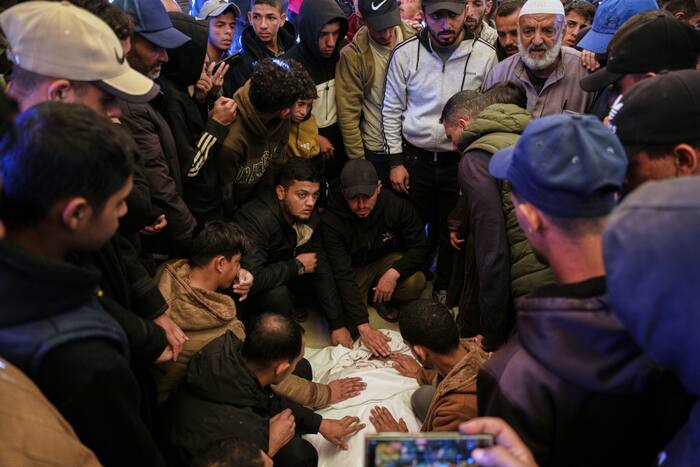
Pay attention to the ordinary details that the headlines strip away. Think about the medical textbooks stacked on a corner desk, pages dog-eared by a young resident who dreamed of specializing in pediatrics. Think about the plastic chairs in the waiting room, melted by fire. Think about the colleagues who had to wrap a fellow doctor in a white shroud in the morning, wipe the dust from their own faces, and walk straight back into the trauma bay because another ambulance was already backing up to the doors.
History judges eras not merely by the wars they fought, but by what they permitted to become normal. When the bombing of hospitals stops provoking outrage and starts registering as background noise, a boundary inside all of us quietly erodes. We begin to accept that mercy is optional, that sanctuary is a myth, and that some lives are simply collateral in someone else's strategy.
Late that evening, after the smoke had cleared from the courtyard and the rubble had been combed by flashlight for survivors, someone found a pair of eyeglasses resting near a shattered doorway, one lens cracked neatly down the center, waiting for a face that would never return to claim them.