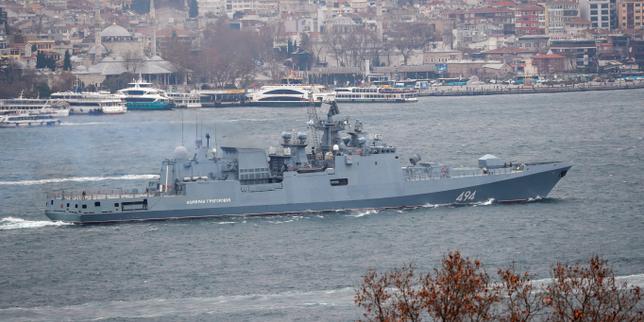
A Russian frigate firing warning shots at a British civilian yacht just miles from the UK coast sounds like a bad Tom Clancy plot. But it just happened. The Admiral Grigorovich opened fire in the English Channel, targeting a private vessel named the Bright Future.
London wants you to believe everything is totally under control. The Ministry of Defence quickly swept the matter under the rug, calling it an isolated incident. They claims it has zero connection to the ongoing war in Ukraine or skyrocketing regional tensions.
Don't buy the official narrative. This was not a routine maritime misunderstanding. When a heavily armed combatant vessel unloads small arms ammunition near civilians in one of the busiest shipping lanes on earth, the global security environment has shifted. Here is what really went down near the Isle of Wight and why the official explanations fall flat.
What happened near the Isle of Wight
The encounter unfolded roughly twenty nautical miles south of the Isle of Wight. This puts the entire drama just outside British territorial waters but deep within the UK's exclusive economic zone.
According to the Kremlin, the Bright Future was maneuvering dangerously close to their warship. The Russian Ministry of Defence claimed they tried using flares and audio signals to warn the boat away. When the yacht closed the distance to under 150 meters, the Russian commander ordered troops to open fire with small arms.
The British version offers a slightly different perspective on the distance. UK defense sources report the Admiral Grigorovich sat about 450 meters from the yacht. No matter which distance you believe, the outcome was identical. Bullets hit the water, the civilian crew panicked, flipped their helm, and fled.
The Royal Navy patrouilleur HMS Tyne eventually closed in to conduct a safety check on the traumatized yacht crew. Miraculously, nobody was injured, and the boat sustained no major damage.
The ghost fleet context London is ignoring
The British government is working overtime to downplay the incident because the timing is incredibly embarrassing. Just forty-eight hours prior, British commandos executed a high-stakes nighttime raid in the exact same channel.
Helicopter-borne troops rappelled down ropes in total darkness to seize the Smyrtos, a massive oil tanker suspected of operating within Vladimir Putin's illegal shadow fleet. The captain of that tanker, Ajay Pant, was promptly hauled before a court in Southampton to face charges for violating maritime sanctions.
The UK wants everyone to believe the Admiral Grigorovich incident has nothing to do with the Smyrtos seizure. That strains credulity. Russia uses its navy to protect these shadow tankers, which funnel billions back to Moscow to fund the invasion of Ukraine.
Military experts tracking the English Channel know Russian warships frequently loiter in these waters to monitor Western movements and signal defiance. Western commandos stepping onto a Russian-linked hull is a massive escalation. A Russian warship firing weapons in the same area two days later looks less like an isolated mistake and more like a direct middle finger to the Royal Navy.
Why a drifting warship is a dangerous warship
An understated detail from British defense intelligence reveals the real danger of this encounter. The Admiral Grigorovich was apparently drifting rather than moving under its own propulsion when the confrontation began.
When a warship sits dead in the water in semi-hostile territory, the crew gets incredibly paranoid. They feel vulnerable to modern surface drones, suicide vessels, and surprise boarding actions. Ukraine has spent the last few years destroying Russia's Black Sea fleet using small, fast civilian-style hulls packed with explosives.
Every single Russian captain is terrified of low-profile boats approaching their perimeter. If a private British yacht wanders too close to a stationary Russian frigate, the Russian crew is not going to assume it is a friendly vacationer. They are going to assume it is a threat and react with immediate, overwhelming force.
The G7 connection
The shooting also perfectly coincided with world leaders gathering at the G7 summit in Evian, France. The primary agenda on the table was finding fresh ways to squeeze the Russian economy and cripple its war machine.
Moscow loves using asymmetric actions to distract Western leaders during high-profile diplomatic summits. Firing live rounds inside the English Channel sends a clear message to the international community. It proves Russia can disrupt Western shipping lanes and project force directly into Europe's backyard whenever it pleases.
Your next steps for maritime safety
If you navigate private vessels anywhere near Western Europe, the old rules of the sea no longer apply. The English Channel is actively transforming into a low-intensity geopolitical friction point.
You need to completely change how you plan your routes.
- Check military notices daily. Consult the latest notices to mariners and avoid any areas with reported foreign military transits.
- Maintain a massive buffer zone. If you spot a warship on your radar, do not clear them by a standard mile. Give them a wide berth of at least three to four miles, especially if they appear stationary.
- Keep your radio active. Ensure your marine radio monitors Channel 16 constantly. If a foreign military hull tries to hail you, respond instantly and state your civilian intentions clearly.
- Expect aggressive reactions. Understand that foreign crews are operating under extreme stress. They will treat any ambiguous civilian approach as a potential drone strike.
The British government will keep calling these events isolated to prevent domestic panic and avoid a direct military confrontation with a nuclear power. But for anyone using these waters, the reality is undeniable. The war in Ukraine has officially spilled into the English Channel.