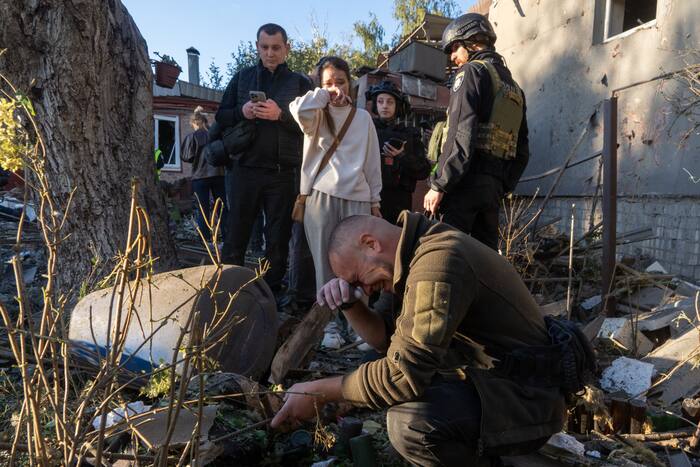
When the morning commute turns into a gridlocked nightmare across the Dnipro River, you know the rules of engagement have shifted. For years, the sprawling capital of Ukraine relied on its critical river arteries to keep millions of citizens moving, trading, and surviving despite relentless aerial bombardments. Now, Moscow has altered its playbook. By shifting focus toward precision strikes on vital transport lines like Kyiv's Northern and Southern bridges, the Kremlin is launching a calculated campaign to sever the city's left and right banks and paralyze everyday urban existence.
You don't need a military degree to understand the objective here. Choke off the crossings, and you fracture the logistics of an entire metropolis.
The Evolution of the Strategy
Early campaigns against Ukraine's capital relied heavily on mass drone swarms and high-altitude cruise missiles aimed broadly at energy grids and municipal heat networks. While those strikes caused immense suffering, the city's defense systems and emergency repair crews adapted with remarkable speed. Transformers were shielded, substations were decentralized, and power was restored with surprising resilience.
Moscow's military planners realized that broad infrastructure bombing wasn't delivering a knockout blow fast enough. They needed a more concentrated, crippling angle.
Enter the upgraded ballistic missiles equipped with advanced optical and radar guidance systems. These aren't the imprecise weapons of the early invasion. Reports from defense analysts show that modified Iskander systems now use terminal-phase radar scanning to adjust their trajectories seconds before impact, bypassing electronic jamming and punching straight into narrow structural targets.
When multiple ballistic missiles slammed into Kyiv's Northern Bridge and Southern Bridge in coordinated overnight raids, they weren't just looking for a loud explosion. They were exploiting the structural vulnerabilities of aging Soviet-era and post-independence concrete spans. Even if a bridge doesn't collapse entirely, closing it for emergency repairs, structural integrity checks, and overhead trolleybus line replacement creates an immediate, cascading logjam across the entire urban layout.
What Happens When the Dnipro Splits
Kyiv is a city defined by water. The Dnipro River cuts the capital cleanly in half, separating the historic right bank from the sprawling residential districts on the left bank. Hundreds of thousands of workers cross those bridges daily.
When the crossings close, the impact is instant and brutal.
- Public transit routes like the metro's Green Line get slashed, forcing aboveground sections to halt entirely.
- Commuters find themselves stranded, walking miles across open spans or waiting hours for severely diverted buses.
- Traffic tailbacks snake through alternate routes like the Darnytskyi and Podilskyi bridges, turning a twenty-minute drive into an all-day ordeal.
- Essential supply chains face severe bottlenecks, slowing the delivery of goods, medical supplies, and municipal maintenance crews.
It's a psychological squeeze as much as a logistical one. The strategy aims to wear down the civilian population by making daily life exhausting, uncertain, and painfully slow.
The Broader Context of Cross-River Warfare
This bridge-targeting tactic isn't happening in a vacuum. It mirrors a broader tit-for-tat escalation where critical transit links have become primary targets on both sides of the front lines. While Kyiv's northern crossings take direct hits from upgraded Russian munitions, Ukrainian forces have simultaneously targeted vital supply lines in Russian-occupied territories, including high-profile strikes on the Kerch Bridge connecting Crimea to the Russian mainland.
Yet, the pressure on Kyiv carries a uniquely heavy psychological weight. Urban residents who thought they had found a semblance of a routine—cafes open, children in schools, trams running—are suddenly reminded that total war is never far away.
Municipal authorities are already scrambling to adapt. Infrastructure planners have accelerated designs for backup river crossings and temporary pontoon logistics, though permanent fixes take time that a wartime economy rarely has in abundance. City repair crews work around the clock, patching asphalt, stringing new power cables for electric transit, and assessing concrete pillars before allowing even limited traffic to trickle back across.
The reality on the ground remains harsh. Moscow's shift toward targeted bridge disruption is designed to grind Kyiv down one commute at a time. But if history of the past few years has proven anything, it is that civilian resilience in the capital tends to outlast the strategic calculations behind these missile barrages. Keep watching the crossings; they remain the true pulse of the city.