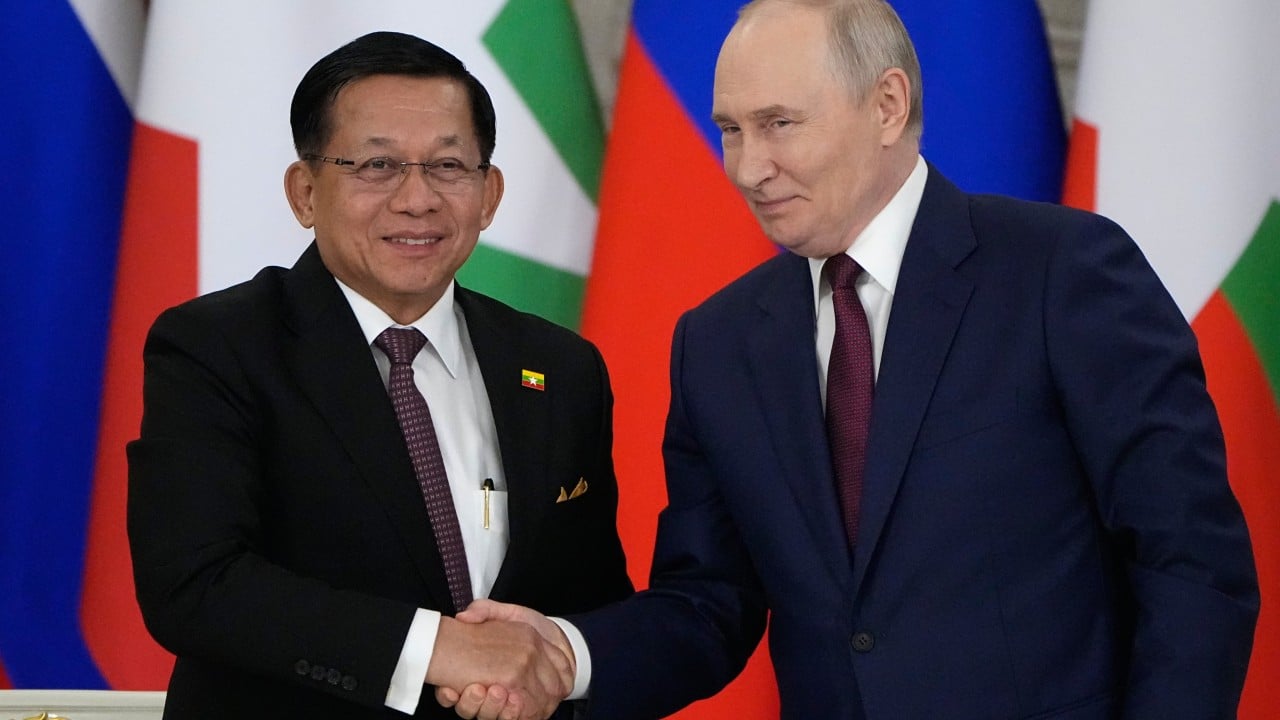
International isolation has a funny way of making strange bedfellows. When Vladimir Putin hosted Myanmar's military leader Min Aung Hlaing at the Kremlin, the main item on the agenda wasn't diplomatic pleasantries. It was oil, refineries, and nuclear power.
If you look past the standard diplomatic handshakes, this meeting exposes a major shift in how sanctioned states do business. Let's break down what's actually happening behind closed doors and why these energy projects matter. Learn more on a connected issue: this related article.
The Reality of Russia-Myanmar Energy Talks
Myanmar's economy has faced severe strain since the 2021 military coup and the subsequent civil war. Power outages are frequent, fuel imports are costly, and domestic refining capacity remains minimal. Enter Moscow.
During the recent Kremlin talks, Putin explicitly highlighted ongoing discussions regarding the construction of a new oil refinery inside Myanmar. They also touched on hydrocarbon exploration along Myanmar's continental shelf and potential liquefied natural gas shipments. More journalism by Associated Press explores related views on the subject.
Why does Moscow care about a southeast Asian nation wracked by internal conflict? For Russia, finding new export markets and partners outside Western influence is vital. For Min Aung Hlaing, securing reliable energy supplies and diplomatic backing from a veto-wielding UN Security Council member is a lifeline.
Beyond Oil: The Nuclear Factor
It isn't just about fossil fuels. Russia and Myanmar have already laid groundwork for nuclear cooperation, moving forward with plans tied to small-capacity nuclear power plants via Rosatom.
Critics point out that these agreements function as geopolitical tools rather than pure economic ventures. Energy dependence creates long-term political alignment. But for a regime struggling to keep lights on in major cities, long-term strategic concerns often take a backseat to immediate survival.
The cooperation isn't happening in a vacuum. Trade volumes between the two nations have climbed significantly over recent years, supported by bilateral pacts spanning military coordination, economic technical assistance, and now heavy industry.
What This Means for Regional Stability
邻国 (neighbors) like China already hold massive economic sway in Myanmar, but Moscow's growing footprint adds a new layer to the geopolitical puzzle. By positioning Russian state entities at the center of Myanmar's upcoming energy infrastructure—from refineries to potential power plants—the Kremlin is cementing a long-term presence in southeast Asia.
Whether these ambitious blueprints transform into operational refineries and power grids depends heavily on security conditions on the ground in Myanmar. Until then, expect both governments to keep talking up energy projects as a symbol of mutual endurance against Western sanctions.
Myanmar's Deepening Relationship with Russia
This video provides additional context on the growing security and political alignment between Russia and Myanmar's military government.
http://googleusercontent.com/youtube_content/1