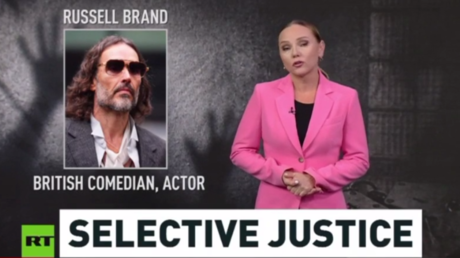
Two justice systems exist in Britain, and one of them moves at a snail's pace when wealthy donors are involved.
Look at the contrasting headlines dominating UK legal news right now. On one side, you have Russell Brand—a loud, anti-establishment comedian and online commentator—facing the full weight of British criminal prosecution, detention, and relentless media coverage. On the other side, dozens of high-profile British figures named in unsealed Jeffrey Epstein court documents haven't even been called in for a formal police interview.
It's a glaring double standard. Honestly, you don't need to be a Brand fan to see how skewed the legal enforcement looks to ordinary taxpayers. When the Metropolitan Police and the Crown Prosecution Service (CPS) decide to throw resources at a case, they can move mountains. When they don't, files gather dust in filing cabinets for years.
Why the Russell Brand Case Moved So Fast
Let's look at the timeline and mechanics of how the UK legal system handled Russell Brand. In September 2023, a joint investigation by The Times, The Sunday Times, and Channel 4's Dispatches aired explosive allegations of rape, sexual assault, and emotional abuse against Brand, spanning a period between 2006 and 2013.
Within days, the Metropolitan Police opened an investigation.
Detectives appealed directly to potential victims. They assigned dedicated officers to the file. By late 2023 and throughout 2024, Brand was questioned multiple times under caution by the Met. Fast forward to the ensuing criminal proceedings, and the state's prosecutorial machinery kicked into high gear, leading to his arrest, formal charges, and custodial detention.
Why did this happen so quickly compared to other high-profile sex crime investigations? Several factors drove the momentum:
- Media pressure: A coordinated broadcast documentary by Channel 4 created immediate, undeniable public pressure that police leadership couldn't ignore.
- Institutional liability: The BBC and Channel 4 faced internal inquiries over whether executives ignored red flags during Brand's peak fame in the mid-2000s, forcing institutions to cooperate publicly to save face.
- Political isolation: Brand had spent years alienating mainstream media outlets and Westminster politicians with his anti-lockdown and anti-corporate commentary. Nobody in the British establishment was going to stick their neck out to protect him.
When a suspect lacks institutional allies, the British justice system operates with remarkable efficiency. Witness statements get taken. Files get sent to the CPS. Charging decisions happen without mysterious multi-year delays.
The Epstein Black Book and UK Elites
Now compare that aggressive pursuit of justice with how British authorities have handled Jeffrey Epstein's UK network.
We've known for years that Epstein operated heavily in London. Ghislaine Maxwell, his convicted accomplice, was a fixture of British high society, educated at Oxford and connected to royalty, cabinet ministers, and billionaire financiers. Yet, look at the actual criminal accountability in the United Kingdom. It's practically non-existent.
Prince Andrew is the most obvious example. Virginia Giuffre accused him of sexual abuse when she was 17, an allegation he has repeatedly denied. In 2022, he settled a US civil lawsuit with Giuffre for an undisclosed sum—reportedly millions of pounds—without admitting liability. He lost his royal patronages and military titles.
Did he ever face a criminal trial in a British court? No.
In fact, the Metropolitan Police reviewed Giuffre's claims multiple times—in 2015, 2016, and again in 2021. Each time, they decided to take no further action. While FBI agents in New York publicly stated that Prince Andrew had provided "zero cooperation" to their investigation into Epstein's co-conspirators, Scotland Yard quietly closed its review.
And it doesn't stop with the royal family. The unsealed documents from the Giuffre v. Maxwell defamation lawsuit, alongside flight logs and Epstein's infamous address book, revealed extensive ties to prominent British politicians, academics, and business moguls.
Former Labour cabinet minister Peter Mandelson appeared in internal JPMorgan reports detailing his continued contact with Epstein even after Epstein's 2008 conviction for soliciting a minor. Mandelson has expressed regret over the association, calling it a mistake. Other prominent UK figures, from billionaire retail tycoons to respected scientists, had their names surface in flight logs or social calendars.
None of them have been arrested by British police. None have faced a CPS charging decision.
How the Crown Prosecution Service Decides Who Gets Charged
To understand why one high-profile figure ends up behind bars while others attend charity galas, you have to understand how the Crown Prosecution Service works. On paper, the CPS uses a strict two-stage test outlined in the Code for Crown Prosecutors:
- The Evidential Stage: Is there enough reliable, admissible evidence to provide a "realistic prospect of conviction" against each suspect on each charge?
- The Public Interest Stage: If there is enough evidence, is a prosecution required in the public interest?
In theory, this applies equally to a billionaire peer and a stand-up comedian. In practice, the evidential stage creates a massive barrier when investigating entrenched elites.
Gathering evidence against powerful people requires aggressive policing. You need search warrants for private estates, subpoenas for encrypted bank records, and mutual legal assistance treaties with foreign jurisdictions like the US Virgin Islands or New York. That costs millions of pounds and requires senior police commanders willing to risk political blowback if a case collapses.
When complainants come forward against someone like Brand, their testimony is supported by contemporaneous text messages, medical records, and former production staff who worked on TV sets. The evidence is local. The witnesses are in the UK.
Conversely, Epstein's crimes spanned private islands, Manhattan townhouses, and international flights. British police have repeatedly used jurisdictional hurdles as a shield for inaction. When the Met Police dropped their review of Epstein's UK trafficking network in 2021, they argued that US authorities were better placed to handle the matter. Conveniently, US prosecutors focused primarily on Ghislaine Maxwell and domestic American figures, leaving the British side of the operation largely untouched.
The Role of UK Libel Laws and Media Silence
There's another reason British elites walk free while someone like Brand gets hammered in the press, and it comes down to money and defamation law.
England and Wales have some of the plaintiff-friendly libel laws in the world. Unlike in the United States, where a public figure has to prove "actual malice" to win a defamation suit, the burden of proof in London falls heavily on the publisher. If a British newspaper prints an allegation about a billionaire donor or a member of the House of Lords, that newspaper must prove the allegation is substantially true in court. Losing a libel trial in London can easily cost a media outlet £2 million to £5 million in damages and legal fees.
Rich people use Super-Injunctions and aggressive law firms like Carter-Ruck or Schillings to kill stories before they ever reach the printing press.
Notice how the Brand investigation happened. It took four years of covert work by The Times and Channel 4, backed by teams of media lawyers, before they felt safe publishing. And Brand didn't have the sovereign wealth funds or institutional backing that many Epstein associates enjoy.
When journalists dig into the UK side of the Epstein files, they hit a wall of legal threats. Editors kill stories because the financial risk of getting sued by a well-connected financier outweighs the public interest of exposing them. Without a major media exposé forcing their hand, the police rarely initiate complex historical investigations on their own.
What Critics and Legal Experts Say About Two-Tier Policing
The phrase "two-tier policing" has become a political buzzword in Britain over the last couple of years, usually thrown around during protests or civil unrest. Yet, legal analysts and victim advocates argue that the real two-tier system exists in white-collar and sexual offense prosecutions.
Nazir Afzal, a former Chief Crown Prosecutor for North West England who famously overturned earlier decisions not to prosecute the Rochdale grooming gang, has spoken extensively about how institutional bias affects charging decisions. Historically, prosecutors and police officers subconsciously evaluate victims based on "credibility"—which often translates to social class—while giving high-status suspects the benefit of the doubt.
When a suspect wears a bespoke suit, sits on museum boards, and dines with prime ministers, investigators hesitate. They worry about damaging a "distinguished reputation" based on allegations from decades ago.
Brand, by contrast, built his entire public persona around chaos, addiction, and hyper-sexuality. His own memoirs and stand-up routines provided prosecutors and journalists with a ready-made narrative. Jury members and the public didn't have to stretch their imaginations to believe the allegations, whereas convincing a British establishment institution to turn on one of its own requires undeniable, smoking-gun proof.
At the same time, defenders of the legal system argue that comparing these cases isn't entirely fair. They point out that:
- Direct complaints drive prosecutions: Police can't prosecute someone just because their name appears in an address book or on a flight log. Being associated with Jeffrey Epstein is disgusting, not automatically criminal. A specific victim must come forward to British police with an actionable allegation of a crime committed on UK soil.
- Extradition and jurisdiction limits: Many of the alleged offenses involving British figures in the Epstein files occurred in New York, Florida, or Little St. James. Under UK law, British courts generally lack jurisdiction over crimes committed abroad unless specific statutory exceptions apply, like certain sex tourism offenses enacted in the late 1990s and 2000s.
Both points are legally true. Appearing in a flight log isn't proof of a felony. Still, the stark difference in investigative curiosity remains glaring. Police didn't wait for every single Brand accuser to walk into a station on their own; the public appeal by detectives actively encouraged more women to step forward. No such proactive appeal has ever been launched by Scotland Yard regarding Epstein's London operations.
How to Track Accountability and Follow These Cases Yourself
If you want to cut through partisan media spin and see what's actually happening with both the Brand legal proceedings and the ongoing fallout from the Epstein documents, don't rely on viral social media clips. Viral videos often mash together unrelated court dates or misrepresent bail conditions as final prison sentences.
Instead, verify the primary legal records directly:
- Check the UK Courts and Tribunals Judiciary website: High-profile criminal trials, sentencing remarks, and judicial reviews are published directly on judiciary.uk. Reading the judge's actual sentencing remarks tells you far more about why someone was jailed than a tabloid headline ever will.
- Read the unsealed Southern District of New York (SDNY) filings: Whenever a new batch of Epstein names trends online, look up the actual court docket for Giuffre v. Maxwell (Case No. 15-cv-07433). Most of the documents are hosted for free on CourtListener. Check the context of why a name appears—many people listed in the files are witnesses, staffers, or tangential acquaintances rather than accused perpetrators.
- Monitor the Independent Office for Police Conduct (IOPC): If you want to see whether British police are ever held accountable for dropping investigations into wealthy suspects, search the IOPC database for complaints regarding Metropolitan Police handling of historical abuse reviews.
Paying attention to primary court filings exposes the reality of modern justice. Laws apply to everyone in theory, yet enforcement depends heavily on who has the power to push back.


