The asphalt remembers what the morning fog tried to hide.
At dawn, the highway outside Budapest was nothing more than a pale smear of grey meeting grey, the sort of morning where the horizon dissolves entirely and the world shrinks to the radius of high beams. It was quiet. The kind of rural stillness broken only by the rhythmic slap of windshield wipers and the low hum of a heavy engine pulling through the pre-dawn hours. Inside a passenger bus carrying weary travelers across the European corridor, the air smelled of stale coffee, wool coats, and the peculiar, muffled silence of people suspended between destinations. Some slept with their foreheads pressed against cool glass. Others stared blankly into the dashboard glow.
They had schedules. They had homes waiting at the end of the line. They had conversations half-finished, plans for dinner, laundry piled in baskets back home, keys resting on kitchen counters.
Then, physics intervened with brutal indifference.
Metal folded like paper. Glass shattered into a billion glittering diamonds that caught the feeble morning light for a fraction of a second before tumbling into the dirt.
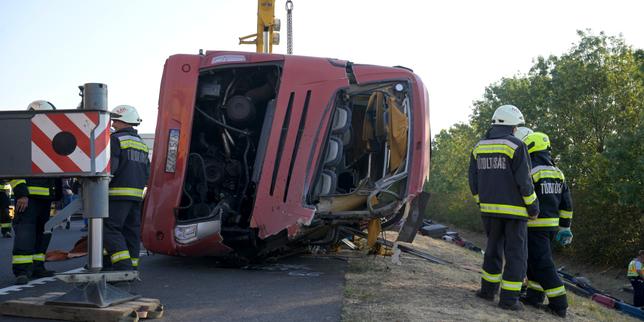
When the dust settled and the sirens began to wail their jagged song across the Hungarian countryside, the tally was absolute. At least twelve souls had crossed the invisible boundary between breathing and memory. Dozens more were pulled from the wreckage with shattered bones and lives split violently in two.
We read numbers like this on screens every day. Twelve killed. It is a clean, antiseptic statistic designed for scrolling thumbs. It fits neatly into a news ticker. But numbers are ghosts. They strip away the weight of a human life until nothing is left except a cipher.
To understand what happened on that road, we have to look past the police tape and the crumpled steel. We have to look at the fragile mechanics of daily movement—the blind trust we place in strangers behind steering wheels, in municipal asphalt, in the unspoken social contract that says we will all leave together and we will all arrive safely.
The Architecture of a Tragedy
Roads are the arteries of modern civilization. We treat them as functional conduits, invisible lines connecting point A to point B. We speed down them while drinking lukewarm tea, mentally drafting emails, arguing with podcasts, entirely desensitized to the kinetic violence roaring just inches away in the opposing lane.
We forget that every highway is a theater of risk.
In the case of the Hungary crash, preliminary investigations pointed toward the familiar, terrifying culprits of transit disasters: reduced visibility, slick surfaces, and the razor-thin margin for error that exists when heavy commercial vehicles share space with human fatigue.
Consider what happens in the span of a single second. At sixty miles per hour, a vehicle covers eighty-eight feet every second. If a driver’s reaction time is delayed by a mere heartbeat—distracted by a glare, dulled by the hypnotic drone of a long-haul night shift—the universe narrows down to an inescapable collision. There is no time for fear. There is only the sudden, violent deceleration, the scream of tearing metal, and the dark.
I have stood on roads like that after the smoke has cleared. The air tastes of scorched rubber and battery acid. There is a sickening stillness that lingers in the wake of sudden death—an eerie quiet where nature seems to hold its breath, as if acknowledging that something fundamental has gone wrong in the order of things. First responders move with grim, practiced efficiency, their orange vests flashing against the drab backdrop of the accident scene. They are veterans of catastrophe, yet even their shoulders carry the sagging weight of a morning gone wrong.
The Ripple Effect
A fatal crash is never just an isolated event localized to a patch of tarmac. It is a stone dropped in a deep lake, sending concentric circles of devastation rippling outward across continents.
Think of the families.
In a kitchen in another city, a phone rings. It is an unfamiliar country code. It is an official voice asking questions, verifying names, offering condolences that feel like paper cutouts against the enormity of the loss. The coffee cup is set down half-full. It will stay there, untouched, for days. The calendar on the refrigerator still holds dental appointments and birthday reminders scribbled in ink that suddenly belongs to a ghost.
This is the hidden cost of transit accidents. We invest billions into safer braking systems, lane-departure warnings, and reinforced chassis, yet we remain utterly vulnerable to the human element. Fatigue does not care about engineering. Bad decisions do not respect safety ratings.
When a bus carrying a dozen or more people goes down, it is an institutional failure as much as a mechanical one. It forces us to ask uncomfortable questions about transit regulations, driver hour limits, and the relentless economic pressure that forces transport companies to stretch human endurance to its absolute breaking point. How many hours behind the wheel before focus dissolves into a waking dream? How many miles of monotonous highway before vigilance turns to rust?
Moving Forward in the Dark
The wreckage in Hungary has been cleared now. The glass has been swept from the asphalt, the shattered steel hauled away to a municipal impound lot, the road repaved and reopened to the endless procession of cars and trucks rushing toward their destinations. Life resumes its frantic pace.
Yet the ghosts remain.
They live in the empty chairs at dinner tables. They live in the sudden tightening of a passenger's chest when a bus rounds a corner too fast in the morning mist. They live as a quiet, persistent reminder of how precariously we balance our daily routines over the abyss of the unexpected.
We cannot bulletproof the world. Accidents will happen; human beings will err; steel will occasionally fail. But we can refuse to let the statistics become invisible. We can look at the quiet stretches of highway not as empty space to conquer at high speed, but as shared ground demanding our absolute, undivided respect.
The next time you board a vehicle, look around at the strangers sitting beside you. Notice the book in someone's lap, the child pressing a thumb against the window, the elderly couple holding hands. Recognize that you are all traveling together through an uncertain world, bound by a shared, fragile destiny.
Drive carefully. Pay attention.
The road is long, and the margin for grace is thinner than we think.