The Ngaruawahia sun usually hits the Waikato River with a deceptive gold, turning the deep, churning water into something that looks like a playground. To a child, the riverbank isn't a boundary. It is a kingdom. On a Friday afternoon that should have been the beginning of a routine weekend, the kingdom turned. It happened in the span of a breath—the kind of silence that follows a splash when the water doesn't give back what it took.
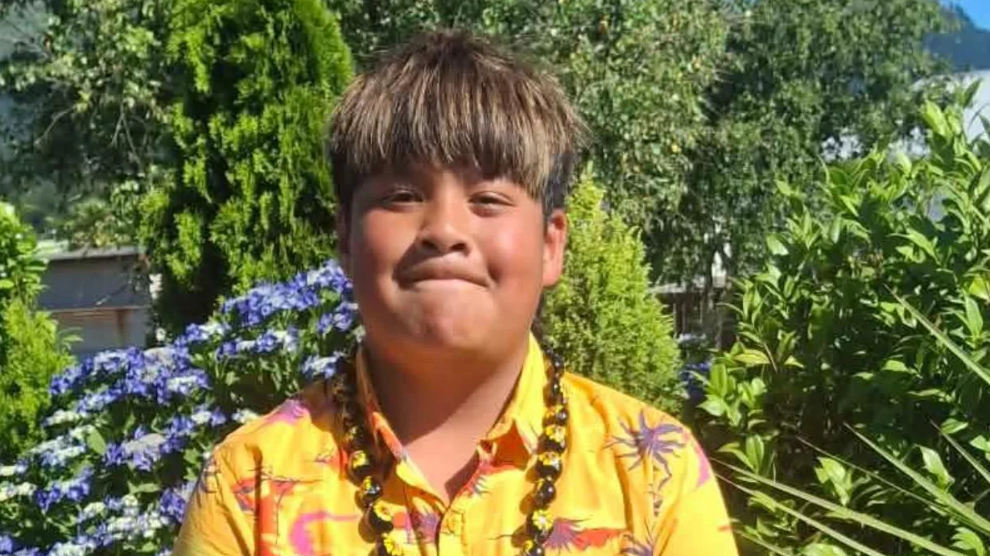
Six-year-old Cassius and his eight-year-old brother, Manaia, were not just names on a police report. They were the heartbeat of a family, two boys whose lives were measured in scraped knees, shared laughter, and the boundless energy of youth. When the news broke that two children had gone missing near the river’s edge, a heavy, familiar dread settled over the Waikato. Those who live by these waters know their temperament. The river is a lifeblood, but it is also a force of nature that demands an ancient, terrifying respect.
The search was not a clinical operation. It was a visceral, desperate clawing against time. Police divers, emergency services, and locals joined a hunt that felt less like a rescue and more like a prayer. For hours, the community held its collective breath. You could feel it in the air—that static tension of a town waiting for a miracle they feared wouldn't come.
Then came the confirmation. The bodies were found.
The Weight of the Water
To understand the scale of this tragedy, you have to look past the cold mechanics of a drowning. You have to look at the "why" that haunts every parent who has ever let their child play outside. We often treat safety as a checklist, a set of rules we recite until they become white noise. We tell kids to stay away from the edge. We talk about currents and depth. But a child’s world is governed by curiosity, not physics.
The Waikato River is the longest in New Zealand. It is a complex system of hydro-dams, shifting sandbars, and currents that can move with the speed of a sprinting athlete beneath a calm surface. When heavy rains hit, the river doesn’t just rise; it transforms. The banks become slick, treacherous slides. For a small child, the transition from solid ground to the pull of the current is instantaneous.
Consider the physics of a river current. If a child weighing 25 kilograms falls into water moving at just a few knots, the force exerted on them is overwhelming. It is not like a swimming pool. There is debris. There is the disorientation of the cold. Most importantly, there is the panic. This isn't a failure of supervision; it is the brutal reality of how quickly a mundane environment can become a lethal one.
A Community in Mourning
Ngaruawahia is a place where everybody knows your name, or at least your cousins. When the boys were identified, the grief wasn't contained within the walls of one home. It spilled out into the streets, into the schools, and onto the marae. Manaia and Cassius were described by those who knew them as vibrant souls. They were "the boys"—a duo that represented the future of their whānau.
The loss of a child is a rupture in the natural order. We are built to outlive our ancestors, not our descendants. When two are taken at once, the void is cavernous. The family’s pain is a private agony played out on a public stage, and the community’s response has been one of fierce, protective blankets of support.
But beneath the tributes and the flowers, there is a simmering conversation about the river itself.
The Invisible Stakes
Why do these tragedies keep happening? We live in a country defined by its water. New Zealand is an archipelago where the sea and the rivers are never far away. Yet, our relationship with these elements is often characterized by a dangerous casualness. We see the beauty, but we forget the teeth.
Statistics from Water Safety New Zealand often highlight a grim trend: Māori and Pasifika communities are frequently over-represented in drowning data. This isn't just a matter of proximity; it’s a reflection of how we interact with our environment. The river is a place for food, for ritual, and for play. To fence it off entirely is to sever a cultural artery. But to leave it as it is invites the recurring nightmare we saw in Ngaruawahia.
The "invisible stakes" here aren't just about water safety kits or better signage. They are about the infrastructure of our childhoods. We have built towns right up to the lips of giants. We have created paths that lead directly to the edge of the abyss.
The Mechanics of the Tragedy
Search and rescue teams often speak of the "golden hour," but in a fast-moving river, that window is more like a golden minute. When the boys disappeared, the response was massive. Helicopters buzzed overhead, their spotlights cutting through the gathering gloom. Jet skis and boats crisscrossed the water.
The recovery of the bodies took place in a stretch of water that locals know to be particularly temperamental. It wasn't a lack of effort that dictated the outcome. It was the sheer, indifferent power of the Waikato.
One.
That is the number of seconds it takes for a life to change forever. One slip. One moment of looking away. One decision to reach for a floating stick or to see how close the water really is.
Beyond the Headlines
If we only read the news as a series of unfortunate events, we miss the lesson written in the silt. The death of Manaia and Cassius is a scream for a different kind of vigilance. It is a reminder that the natural world does not negotiate.
We often look for someone to blame in the wake of such a loss. We look at the council, the parents, the lack of fencing. But blame is a hollow comfort. It doesn't fill the empty seats at the dinner table. It doesn't bring back the sound of two brothers arguing over a toy or racing each other to the front door.
The real challenge is how we carry this memory forward. Do we treat it as a freak accident, or do we acknowledge that our rivers are changing? Climate change and shifting topographies mean that "safe" spots from twenty years ago are now death traps. The riverbanks are eroding. The currents are unpredictable.
The Silent Flow
As the sun sets over Ngaruawahia today, the river looks much the same as it did that Friday. It sparkles. It flows. It hides its secrets beneath a shimmering surface.
But for one family, the Waikato will never be beautiful again. It will always be the thief that walked onto the bank and took their world. We owe it to the memory of those two boys to look at the water differently. To see the danger tucked inside the beauty. To realize that while we may live alongside the river, we are only ever there by its grace.
The flowers left at the water's edge will eventually wilt and wash away, carried downstream toward the sea. The headlines will fade. The search teams will move on to the next call. Yet, the silence left behind in that house in Ngaruawahia is a permanent, echoing thing. It is the sound of a story that ended several chapters too soon.
The river continues its journey to the ocean, indifferent to the holes it leaves in human hearts.