Water does not care about schedules. It does not wait for diplomatic summits to conclude, nor does it check flight manifests before spilling over concrete barriers and swallowing ground floors.
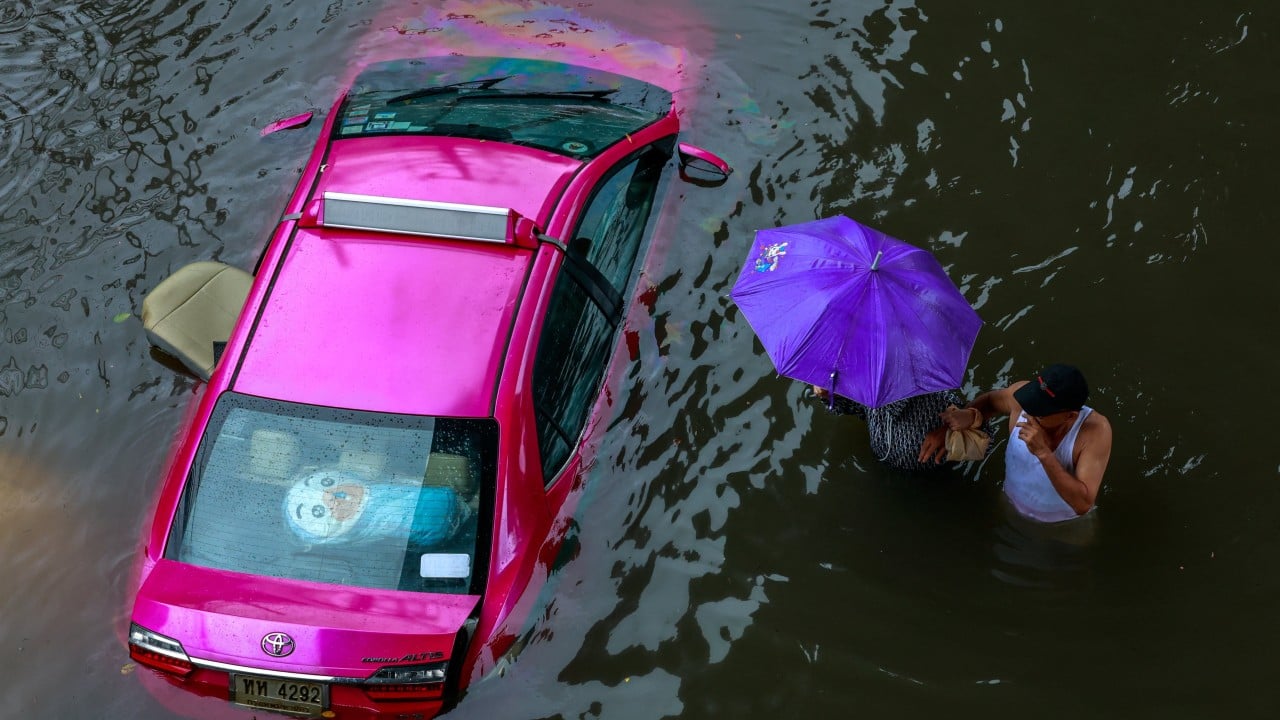
In the heart of Thailand's capital, the streets transformed overnight. What began as an unyielding deluge soon morphed into a slow-motion siege. For the millions who call this sprawling metropolis home, the monsoon is an old adversary, but this season arrived with a cruel efficiency, catching neighborhoods off guard and turning arterial roadways into impassable canals.
Consider Somchai, a fictional shopkeeper whose daily routine serves as a lens for the wider crisis. Every morning at dawn, Somchai rolls up the metal shutters of his auto-repair garage on the city's outskirts. He sweeps away the night's dust, checks his tools, and prepares for the first customers. But on this particular morning, there was no sweeping to be done. The water was already past his ankles, murky and indifferent, lapping against the tires of stranded sedans and soaking the low shelves where he kept his spare parts.
He didn't panic. Panic is a luxury for emergencies that end quickly. This was different. This water stayed. It crept upward, measuring its progress in centimeters, slowly erasing the boundary between the street and the sanctuary of his livelihood.
Thousands across the city shared that silent calculation. Down in the narrow soi alleys and up against the swelling banks of the Chao Phraya River, daily life ground to a halt. Commuters found themselves stranded at bus stops that had become island platforms. Motorcyclists stared helplessly at engines drowned out by the brown tide. Electricity flickered, severed by precautionary shutdowns to prevent catastrophic shocks, plunging waterlogged neighborhoods into an eerie, humid dusk.
And thousands of miles away, Prime Minister Anutin Charnvirakul looked at his phone.
International engagements are ceremonial weights, designed to project stability and forge alliances on the global stage. Yet leadership is ultimately judged by proximity to the ground. When the reports from Bangkok turned from routine monsoon warnings to severe crisis management updates, the calculus changed instantly. A leader cannot govern a drowning city from across an ocean.
The decision was swift. The trip to the United Kingdom was cut short. Suitcases were zipped closed in hotel rooms while the British autumn chill waited outside, irrelevant compared to the tropical heat and rising waters waiting back home. In moments of crisis, optics matter, but necessity matters more. Cutting short a diplomatic journey sends an unmistakable signal: the office is wherever the people are suffering.
Upon his return, the reality of the situation hit before his boots even touched dry pavement. The flood response was no longer a matter of administrative memos; it was boots in the mud, coordination meetings held under emergency tents, and the grim task of allocating pumping equipment to the hardest-hit districts.
Why do these floods strike with such devastating predictability yet catch authorities scrambling?
The answer lies in geography and engineering caught in a relentless tug-of-war. Bangkok is a city built on a delta, a sprawling basin naturally prone to water accumulation. For decades, rapid urbanization paved over natural drainage plains, replacing absorbent soil with concrete and asphalt. Canals that once acted as the city's venous system have been narrowed, blocked, or overwhelmed. When extreme rainfall collides with high tides pushing up from the Gulf of Thailand, the water has nowhere to go. It backs up through drainage pipes, bubbling out of street grates like geysers of urban runoff.
It is a systemic challenge that no single administration can solve overnight. Yet, when the crisis peaks, the public does not look at long-term master plans. They look at the street outside their door. They look for pumps. They look for sandbags. They look for leadership that understands the smell of stagnant floodwater mixed with fuel oil.
As the emergency response kicked into high gear, the human stories began to multiply. Volunteers pushed through waist-high currents with Styrofoam boxes filled with hot meals for the elderly trapped on upper floors. Rescue workers navigated flat-bottomed boats down residential streets, ferrying people to medical clinics. In the temporary evacuation centers set up in schools and temples, strangers shared floor space, swapping rumors about weather forecasts and sharing what little dry clothing they had.
There is a quiet resilience forged in these moments. Thai society knows floods. They have names for the worst seasons, memories etched into the lintels of doorways where high-water marks remain like scars. But familiarity does not breed indifference; it breeds a grim, organized solidarity. Neighbors who barely exchanged a nod across apartment balconies during dry months suddenly find themselves sharing ropes, ladders, and drinking water.
The Prime Minister's immediate task upon landing was not just orchestrating logistics—though deploying mobile water pumps and ensuring clean water distribution took top priority—it was restoring a sense of control. In a flood, helplessness is more corrosive than the water itself. When people see government machinery moving with urgency, when they watch leaders wade through the same muck, the psychological weight shifts. The disaster is no longer an abandoned doom; it is a shared battle.
As the days pressed forward, the pumps hummed a relentless, rhythmic soundtrack across the city. Slowly, agonizingly, the water levels began to recede, leaving behind a thick layer of fine silt, debris, and the monumental task of sanitation and repair.
Somchai rolled up his garage shutters once more, not to the sound of dry pavement, but to the scrape of a push-broom clearing gray mud from his concrete floor. His inventory was damaged, his tools needed cleaning, and the road ahead was long. But the water was gone.
Across the city, the traffic began to crawl back to life, horns blaring through the humid air as if to announce that Bangkok was bruised, muddy, but refusing to sink. Somewhere in the corridors of government, the post-mortem discussions began—how to build better walls, how to widen the canals, how to outsmart the next monsoon before it arrives.
The rain will return. It always does. But until then, the city breathes, drying its clothes in the afternoon sun and remembering what it takes to stand firm when the ground beneath disappears.