The Rif War didn't just break a European empire. It created a completely new blueprint for fighting modern states, one that anti-colonial leaders across the globe copied for decades. Yet, walk through Rabat or Casablanca today, and you'll notice a strange, heavy silence around the conflict. A century has passed since Abd el-Krim El-Khattabi forced European superpowers into a corner, but his legacy remains a deeply uncomfortable subject for the Moroccan establishment.
History books often brush past the Rif War. They frame it as a localized rebellion, a brief prelude to the broader Moroccan independence movement. That is a massive mistake. The conflict that raged in the northern mountains from 1921 to 1926 was Europe's first major colonial nightmare of the twentieth century. It was a brutal, asymmetric war where tribal fighters outmaneuvered disciplined European armies using tactics that redefined military strategy.
Understanding modern Morocco requires understanding why this century-old war is still treated like radioactive material. The official state narrative prefers a clean story of national unity under the monarchy. The Rif War offers something entirely different. It represents an alternate vision of self-determination, a fiercely independent republic that existed outside the control of both European colonizers and the central Moroccan sultanate.
The Day a Mountain Militia Destroyed an Empire
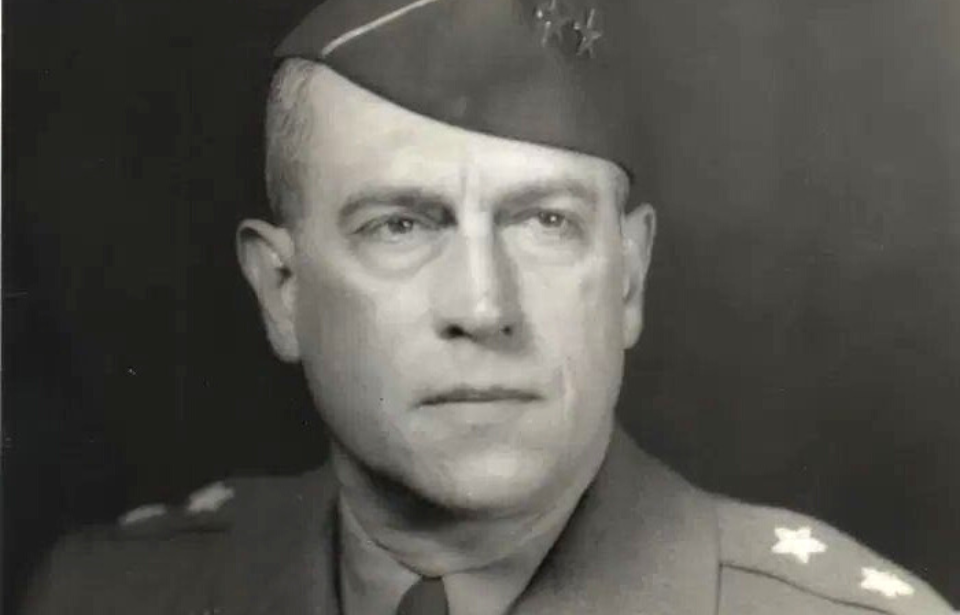
In July 1921, the Spanish army learned a lesson it would never forget. General Manuel Silvestre led a force of over 20,000 Spanish soldiers deep into the rugged Rif mountains. He expected a quick, glorious pacification campaign against fragmented local tribes. Instead, he marched his men into a trap engineered by Abd el-Krim.
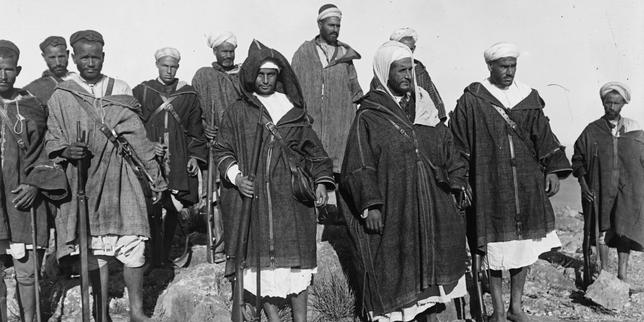
The Battle of Annual was a complete slaughter. Abd el-Krim utilized highly mobile, decentralized units of mountain fighters who knew every ridge and ravine. They cut Spanish supply lines. They water-starved outposts. When the Spanish panicked and attempted a chaotic retreat, the Rifians annihilated them.
The numbers from Annual still shock historians today.
- Over 13,000 Spanish soldiers died in a matter of weeks.
- General Silvestre committed suicide in the chaos.
- The Rif fighters captured massive stockpiles of modern rifles, artillery, and ammunition.
It remains the worst single military defeat a modern European colonial power ever suffered at the hands of indigenous forces in North Africa. The shockwaves from Annual brought down the Spanish government, paved the way for a military dictatorship under Miguel Primo de Rivera, and eventually contributed to the collapse of the Spanish monarchy itself.
Kinda puts regular border skirmishes into perspective. Abd el-Krim didn't just win a battle. He proved that European armies weren't invincible.
How Abd el-Krim Rewrote the Global Anti Colonial Playbook
Most Western military schools focus on the tactics of Mao Zedong or Ho Chi Minh when teaching guerrilla warfare. They are looking at the wrong historical starting point. Both Mao and Ho Chi Minh explicitly credited Abd el-Krim with inventing the modern hit-and-run tactics that allowed peasant populations to defeat industrialized militaries.
Abd el-Krim realized early on that his men could never win a conventional, front-line war against European artillery and numbers. He didn't try to hold fixed positions. His fighters melted into the terrain, attacked at night, ambushed supply columns, and vanished before reinforcements arrived. They dug sophisticated network tunnels that protected them from aerial bombardment, a technique the Viet Cong perfected decades later.
He also understood that military victory required a political structure. He didn't just lead a rebellion; he declared the Republic of the Rif in 1921.
This wasn't a traditional tribal alliance. It was a functioning state with a constitution, a currency, a parliament, and a regular army. Abd el-Krim banned tribal blood feuds to unify the region. He attempted to establish diplomatic relations with European powers, arguing that the Rif deserved self-determination under the principles laid out by Woodrow Wilson after the First World War.
That political sophistication terrified the colonial powers. A successful, democratic, independent republic in North Africa was an existential threat to the entire colonial system. If the Rif could govern itself, why couldn't Algeria, Tunisia, or the rest of Morocco?
The Hidden Trauma of Spain's Chemical Warfare
By 1924, Spain was desperate. They couldn't defeat the Rifians on the ground, so they turned to the air, using weapons of mass destruction. Spain became one of the first nations to systematically deploy chemical weapons against civilian populations from aircraft.
Working with German scientists, Spain manufactured massive quantities of phosgene, diphogene, and chloropicrin, but their weapon of choice was mustard gas, known as Iperita. They targeted villages, markets, rivers, and crops. The goal wasn't just to hit fighters; it was to terrorize the entire population into submission, destroying the economic life of the mountains.
The scale of this chemical campaign was staggering.
- Between 1924 and 1926, Spain dropped thousands of gas canisters across the Rif.
- The French army, which joined the war in 1925 under Marshal Philippe Pétain to protect its own colonial interests in the south, turned a blind eye to the practice.
- The long-term health consequences remain highly visible. Today, the Rif region suffers from disproportionately high cancer rates compared to the rest of Morocco, a tragic trend that local health organizations and activists directly link to the lingering environmental effects of the mustard gas dropped a century ago.
Neither Spain nor France has ever officially apologized or offered reparations for these war crimes. The historical amnesia surrounding this specific aspect of the war is fiercely guarded by European governments, and the Moroccan state has rarely pressured them on the issue.
Why Rabat Prefers Silence Over Celebration
You might think a modern independent nation would celebrate a local hero who humiliated European colonizers. Morocco doesn't. You won't find major avenues named after Abd el-Krim in Rabat. His face isn't on the currency. His remains are still buried in Cairo, Egypt, where he died in exile in 1963, because the Moroccan government has never fully integrated his memory into the state identity.
The tension stems from a fundamental conflict of visions. The Moroccan monarchy bases its legitimacy on historical continuity, religious authority, and centralized power centered in the plains. Abd el-Krim's Republic of the Rif was decentralized, modern, republican, and fiercely independent of the sultan's control. During the war, Abd el-Krim even criticized the Moroccan sultan for cooperating with the French protectorate.
That historical friction didn't end in 1926. It shaped post-independence politics.
When Morocco gained independence in 1956, the Rif felt marginalized by the central government in Rabat. In 1958, a massive uprising erupted in the region. The state responded with overwhelming military force, led by the future King Hassan II. The crackdown was brutal, involving military occupation and widespread abuses that left deep psychological scars across generations of Rifian families.
For decades, the central government treated the northern mountains with calculated economic neglect. The region became synonymous with rebellion, poverty, and migration.
When the Hirak Rif protest movement exploded in Al Hoceima in 2016 following the horrific death of fishmonger Mouhcine Fikri, protestors didn't carry portraits of the king. They carried the portraits of Abd el-Krim and the flag of the short-lived Rif Republic. To the authorities in Rabat, those symbols represent a direct challenge to the territorial integrity and political authority of the Moroccan state.
How to Explore this History Accurately
If you want to look past the heavily sanitized versions of North African history, you have to look outside official school curriculums. The real history survives in the oral testimonies of the northern towns, the archives of foreign militaries, and the works of independent scholars who refuse to let the story fade away.
Start by reading the declassified military records from Spain and France, which offer an unfiltered look at the sheer desperation of the colonial forces. Track the academic research coming out of independent research centers in Europe that document the ecological and medical fallout of the chemical attacks. Most importantly, look at how the memory of the war functions today as a cultural anchor for the Amazigh population, who see the conflict not as a dead historical event, but as a living testament to their endurance and distinct identity.
The lesson of the Rif War is straightforward. You can defeat an army, you can exile a leader, and you can bury the historical record for decades, but you cannot completely erase the memory of an idea once it takes root in the mountains.