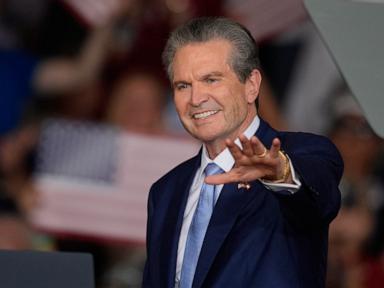
Spending over $200 million of your own fortune doesn't buy immunity from political gravity. Just ask Rick Jackson. According to the Associated Press and Ballotpedia, the 72-year-old healthcare billionaire spent the 2026 Georgia gubernatorial race trying to pull off one of modern politics' hardest tricks—embracing Donald Trump closely enough to keep the MAGA base happy while leaning on a self-made, foster-care-to-fortune biography to win over swing voters in a battleground state.
It didn't work. On November 3, 2026, Democratic nominee and former Atlanta Mayor Keisha Lance Bottoms defeated Jackson in the general election. Looking back at how Jackson ran his race reveals a massive strategic lesson for any outsider business leader eyeing public office in a polarized state.
The Limits of the Billionaire Outsider Playbook
For years, the wealthy businessman outsider formula felt almost automatic in Republican primaries. You skip the political ladder, dump millions of personal dollars into television ads, and promise to run the state government like a profitable company.
Jackson, founder and CEO of Alpharetta-based Jackson Healthcare—a privately held staffing giant bringing in more than $3 billion in annual revenue—checked every box on paper. Unlike Trump, who inherited his initial real estate empire, Jackson grew up in Midtown Atlanta experiencing childhood poverty and bouncing through five foster homes before dropping out of Lipscomb University and building his business from scratch.
In the Republican primary, that personal story paired with an enormous bankroll crushed the establishment field. Jackson took 32.5% of the vote in the May 19, 2026 primary before defeating Lt. Gov. Burt Jones in the June 16 runoff, even though Jones held early endorsements from both Donald Trump and outgoing Governor Brian Kemp.
Winning the nomination was one thing. Surviving the general election pivot was another entirely.
The Primary Trap
When you run to the right to survive a GOP runoff against a Trump-backed opponent, you leave a paper trail. Jackson's campaign platform leaned hard into culture-war staples and aggressive fiscal promises:
- Immediately freezing property taxes and cutting the state income tax in half within four years.
- Prohibiting diversity, equity, and inclusion (DEI) programs across state government and public universities, with Jackson telling WSB-TV that equal outcomes amounted to "communism".
- Pledging to make Georgia number one in the nation for deporting criminal illegal immigrants.
- Tying public assistance to strict work requirements for able-bodied adults.
Those positions worked great in rural North Georgia. At a rally in White County, 72-year-old voter Debbie Satterfield wore both a Trump shirt and a Jackson sticker, telling the Associated Press that Jackson's harsh upbringing reminded her of her own life starting with nothing.
How Rick Jackson Handled the Trump Tightrope
Once the general election kicked off against Keisha Lance Bottoms, Jackson's team faced a brutal math problem. Georgia's suburban metro Atlanta counties decide statewide elections, and those voters have repeatedly shown skepticism toward candidates tied tightly to Trump's rhetoric.
Yet Jackson couldn't afford to alienate the president's loyalists either. In December 2025, Jackson had already donated $1 million to Make America Great Again Inc., Trump's super PAC. By October 2026, with the general election weeks away, Jackson abandoned any pretense of keeping a polite distance.
According to Associated Press reporting from the trail, Jackson appeared alongside Trump at a rally in Dalton on October 16, 2026. Eight days later, when Trump announced a Saturday rally in Perry, Jackson's campaign actually scrapped its own scheduled metro Atlanta event so the candidate could share the stage with the president a second time.
On stage in Dalton, Jackson tried to thread the needle by praising Trump specifically for advocating for foster children—a rare policy bridge connecting Trump's platform to Jackson's signature personal cause, the Fostering Success Act.
Where the Messaging Clashed
Trying to be both a compassionate champion of struggling families and an unapologetic billionaire conservative created friction that Democratic opponents exploited relentlessly.
Jackson framed his massive self-funding in deeply religious terms. Speaking in a northern Atlanta suburb, he called his wealth "God's money," arguing his goal was to have "kingdom impact" and help 11 million Georgians stop struggling. He aired emotional ads featuring young adults who had aged out of Georgia's foster care system and benefited from his millions in charitable funding.
At the exact same time, critics pointed to sharp contradictions between his altruistic pitch and his lifestyle and policy stances:
- The Minimum Wage Moment: During a televised debate, an audience member asked Jackson how workers on minimum wage could afford basic necessities. Jackson replied, "Hopefully, you're not the one that is getting the $7.50 an hour"—misstating Georgia's actual $7.25 federal floor while offering zero plan to raise it, contrasting sharply with Bottoms' proposal to double the rate.
- Mansion Optics and Legal Scrutiny: It's tough to sell a humble, working-class persona when public records highlight a 47,000-square-foot estate in Cumming, Georgia, alongside a 2024 IRS lawsuit against Jackson Investment Group LLC seeking $38 million over $72 million in allegedly underreported taxable income tied to disallowed philanthropic deductions.
- Campaign Stumbles: First-time candidates make unforced errors, and Jackson's $200 million war chest couldn't edit out viral gaffes, including a widely mocked moment where he accidentally pledged to "reduce affordability to the lowest it's ever been".
What Political Strategists and Observers Should Take Away
If you analyze statewide races in purple battlegrounds like Georgia, Jackson's 2026 defeat offers clear, practical lessons on why self-funded balancing acts fail.
First, personal biography cannot override partisan alignment in a nationalized race. Voters in suburban Atlanta didn't view Jackson as an independent philanthropist who happened to have an "R" next to his name. Canceling a metro Atlanta campaign stop to stand behind Donald Trump in Perry sent an unmistakable signal about who would set the tone in a Jackson administration. When candidates tether their schedules to a polarizing national figure, swing voters stop listening to their biographical ads.
Second, money buys name recognition, not debate readiness. Dumping $200 million into a campaign guarantees every voter in the state knows your face. It does not prepare a corporate CEO for unscripted town hall questions from minimum-wage workers. Business leaders used to running boardrooms often struggle when voters demand empathy on kitchen-table policies rather than lectures about job creation.
Finally, audit your vulnerabilities before entering a statewide race. Tax disputes, sprawling real estate holdings, and past business practices inevitably become front-page news the moment a billionaire files paperwork to run. In a tight battleground election, even small cracks in an outsider's "man of the people" armor give the opposition all the ammunition they need to turn a tightrope walk into a fall.