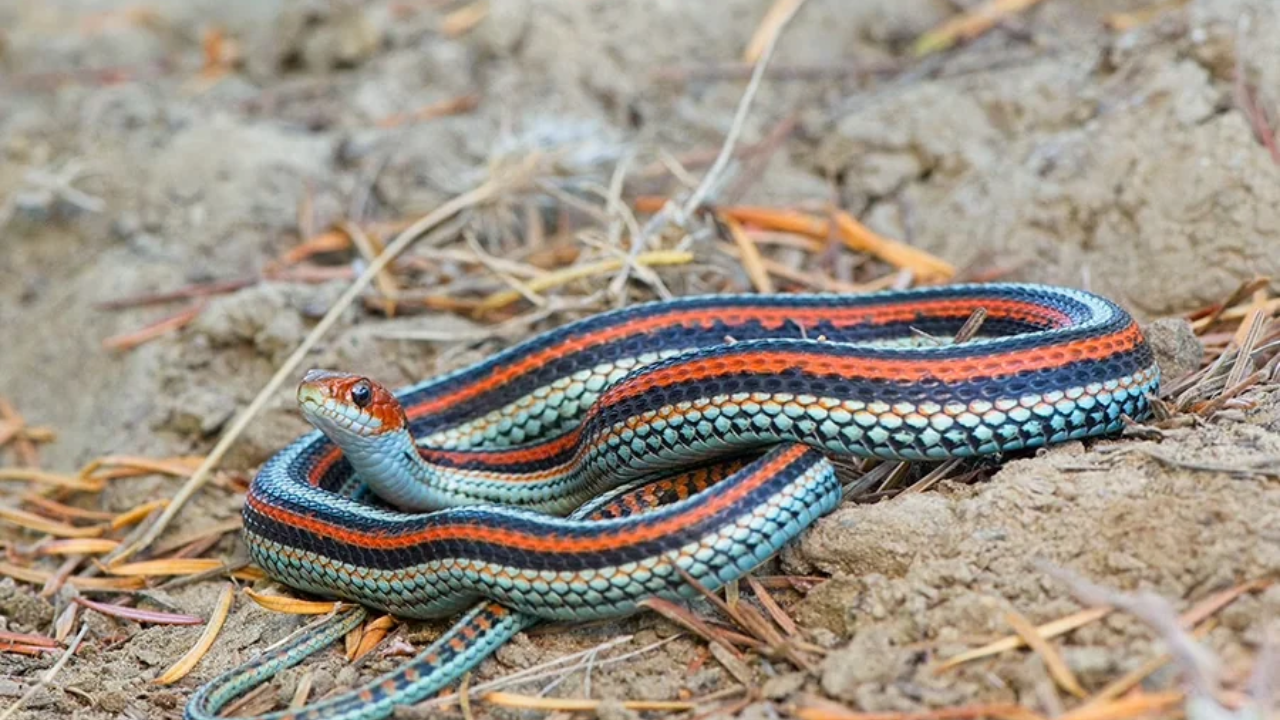
Releasing 62 captive-bred San Francisco garter snakes (Thamnophis sirtalis tetrataenia) into the wild marks a significant milestone in conservation biology, yet treating a headcount as a victory metric obscures the true operational challenges of species recovery. Reintroduction is not an endpoint; it is a high-risk ecological intervention where survival depends on trophic alignment, genetic variance, and habitat connectivity rather than initial release volume.
Most public reporting on endangered species recovery relies on a flawed input-output model: breed organisms in captivity, release them into protected land, and declare success. In practice, conservation biology operates as a complex systems problem governed by carrying capacity, predation dynamics, and stochastic environmental events. For Thamnophis sirtalis tetrataenia—a subspecies federally listed as endangered since 1967—the release of 62 individuals represents a carefully calibrated attempt to establish a self-sustaining metapopulation. Evaluating the viability of this intervention requires dissecting the biological constraints, operational bottlenecks, and ecological mechanics that dictate whether these animals survive past their first brumation cycle.
The Three Pillars of Reintroduction Viability
A successful translocation program depends on three interdependent variables: demographic buffering, trophic synchronization, and spatial refugia. Failure in any single pillar collapses the entire initiative, regardless of how many animals are bred in captivity.
1. Demographic Buffering and the Minimum Viable Population
In small, isolated populations, random fluctuations in birth and death rates—known as demographic stochasticity—can drive a subspecies to local extinction even when habitat conditions are stable. Releasing 62 snakes is an intentional effort to bypass this threshold.
- Mortality Absorption: Juvenile and sub-adult colubrids experience high natural mortality rates from avian predators, raptors, and mammalian mesopredators such as raccoons and skunks. A cohort of 62 individuals provides enough statistical mass to absorb early predation losses while leaving a functional breeding core.
- Genetic Heterozygosity: Captive breeding programs at institutions like the San Francisco Zoo must manage studbooks to prevent inbreeding depression. Introducing 62 genetically distinct individuals maximizes allelic diversity at the release site, equipping the population to adapt to localized pathogens or microclimatic shifts.
- Sex-Ratio Equilibrium: Reintroduction cohorts must maintain balanced sex ratios to prevent mate-finding Allee effects, where low population density reduces reproductive rates because individuals cannot locate partners during the spring breeding window.
2. Trophic Synchronization and Prey Dependency
Thamnophis sirtalis tetrataenia is a dietary specialist with strict energetic requirements. Unlike generalist snakes that can switch prey bases during shortages, the San Francisco garter snake relies heavily on two primary aquatic-terrestrial amphibians: the Pacific treefrog (Pseudacris regilla) and the California red-legged frog (Rana draytonii).
This creates a compound conservation dependency. Rana draytonii is itself a federally threatened species. Releasing 62 predators into an ecosystem without verifying the biomass density of their prey triggers immediate starvation or forced dispersal out of protected boundaries.
The mechanism of survival relies on seasonal hydroperiods. Ephemeral ponds must retain water long enough in the spring and early summer for amphibian larvae to metamorphose into terrestrial juveniles. This metamorphosis provides the high-calorie prey pulse required by newly released garter snakes to build lipid reserves before winter dormancy. If drought truncates the hydroperiod, the amphibian recruitment class fails, and the snake cohort faces a severe energetic deficit.
3. Spatial Refugia and Microhabitat Architecture
San Francisco garter snakes require a specific structural mosaic: emergent wetland vegetation for foraging, open sunny banks for thermoregulation, and upland rodent burrows for estivation and winter brumation.
Ectotherms regulate their metabolic processes externally. Without access to thermal gradients—moving between cool water, shaded sedges, and sun-exposed earthen mounds—a snake cannot digest prey, mount an immune response, or gestate embryos. Simultaneously, upland habitat within 200 to 500 meters of the wetland edge is non-negotiable. When seasonal ponds dry out in late summer, snakes migrate upslope into burrows excavated by California ground squirrels (Otospermophilus beecheyi) or Botta's pocket gophers (Thomomys bottae). Eliminating burrowing mammals from a nature preserve inadvertently destroys the subterranean thermal refugia that keep garter snakes alive during winter freezes and summer heatwaves.
The Bottlenecks of Captive-to-Wild Transitions
Transitioning an animal from a controlled terrarium to an unbuffered ecosystem exposes severe behavioral and physiological vulnerabilities. Conservation practitioners manage these risks through pre-release conditioning, yet specific operational bottlenecks persist.
Behavioral Naivety and Predator Recognition
Captive-bred reptiles often exhibit muted antipredator responses. In an enclosure, vibrations and overhead shadows correlate with feeding events rather than avian strikes. Upon release, this conditioning becomes a liability.
While innate escape behaviors exist—such as diving into dense aquatic vegetation or erratic lateral undulation—captive animals frequently lack spatial familiarity with local escape routes. The first 30 days post-release represent the acute mortality window. Snakes must map the terrain, locate subterranean retreats, and calibrate their basking duration to minimize exposure to red-tailed hawks and great blue herons.
Pathogen Transmission and Microbiome Disruption
Moving animals between facilities and wild habitats risks introducing novel pathogens or exposing naive immune systems to endemic microbes. Ophidiomyces ophiodiicola, the causative agent of snake fungal disease, presents an ongoing threat to North American colubrids.
Captive protocols mandate rigorous quarantine screening and fecal parasite analysis prior to release. However, wild environments harbor complex soil and water microbiomes. A snake's gut and cutaneous microbiota shift rapidly upon consuming wild amphibians and traversing natural substrates. Temporary immune suppression caused by translocation stress can allow opportunistic infections to take hold before the animal acclimates to its new thermal regime.
Telemetry Limits and Tracking Bias
Monitoring a cohort of 62 snakes poses severe logistical constraints. Internal radio transmitters require surgical implantation and are restricted by body mass—typically, a transmitter cannot exceed 5 percent of the animal's total weight.
Because many released snakes are juveniles or sub-adults, only a subset of the 62 individuals can carry active telemetry devices. The remaining population must be tracked via passive integrated transponder (PIT) tags, which require physical recapture or close-range antenna sweeps to detect. This creates an observational blind spot: researchers obtain high-resolution spatial data on larger individuals while relying on probabilistic mark-recapture models to estimate the survival of smaller cohorts.
Known Facts vs. Ecological Hypotheses
Rigorous analysis requires separating verified biological parameters from working hypotheses in this reintroduction effort.
Verified Operational Facts:
- Historical Range Collapse: Urbanization, agricultural drainage, and highway construction across the San Mateo Peninsula fragmented Thamnophis sirtalis tetrataenia into isolated pockets, eliminating over 90 percent of its historical wetland habitat.
- Reproductive Biology: The subspecies is viviparous, giving birth to live young rather than laying eggs. Females typically produce litters of 12 to 24 neonates in late summer, allowing for rapid population expansion when environmental conditions align.
- Toxin Resistance: Like other populations of Thamnophis sirtalis, this subspecies possesses evolved physiological resistance to tetrodotoxin, allowing it to consume rough-skinned newts (Taricha granulosa) that are lethal to most other vertebrate predators.
Working Ecological Hypotheses:
- Metapopulation Connectivity: Conservation planners hypothesize that bolstering specific reserve nodes will eventually allow genetic exchange across wildlife corridors. Whether individuals will successfully traverse fragmented buffers without suffering unsustainable road mortality remains an open empirical question.
- Invasive Predator Suppression: Programs assume that targeted removal of invasive American bullfrogs (Lithobates catesbeianus) will directly increase juvenile snake survival. While adult bullfrogs predate on young garter snakes and outcompete native red-legged frogs, removing them can sometimes trigger mesopredator release, altering invertebrate and amphibian dynamics in unpredictable ways.
- Climate Resilience: Modeling suggests coastal fog buffers San Mateo County habitats against extreme inland heat spikes. However, multi-year megadroughts could still desiccate upland refugia and depress amphibian prey bases beyond the adaptive capacity of the newly established cohort.
Strategic Allocation of Conservation Capital
Treat the release of 62 snakes not as a completed milestone, but as the initialization phase of a multi-year systems management protocol. To convert this biological investment into a permanent demographic recovery, resource allocation must shift immediately from captive propagation to aggressive habitat engineering.
- Enforce Hydroperiod Engineering: Install adjustable water-control structures within the release wetlands to artificially extend spring hydroperiods during low-rainfall years. Guaranteeing the metamorphosis of Pseudacris regilla and Rana draytonii takes precedence over all other habitat interventions during the cohort's first three breeding seasons.
- Protect Fossorial Mammal Populations: Establish strict moratoriums on rodenticide use and ground-squirrel control within a 1,000-meter radius of the wetland perimeter. Subterranean burrow networks are the primary thermal infrastructure preventing winter mortality; preserving the mammals that dig them is operationally identical to maintaining the snakes themselves.
- Implement Dynamic Bullfrog Eradication: Deploy continuous acoustic monitoring and nighttime gigging surveys to suppress Lithobates catesbeianus before they reach reproductive maturity. Bullfrog tadpoles overwinter for up to two years, requiring multi-season extraction protocols to break their breeding cycle and eliminate predation pressure on juvenile garter snakes.
- Deploy Automated PIT-Tag Arrays: Rather than relying solely on labor-intensive hand-captures, install solar-powered, flat-plate PIT-tag readers along natural travel corridors and culvert crossings. Passive data collection will yield continuous survival curves across the entire cohort of 62 individuals without inducing handling stress.


