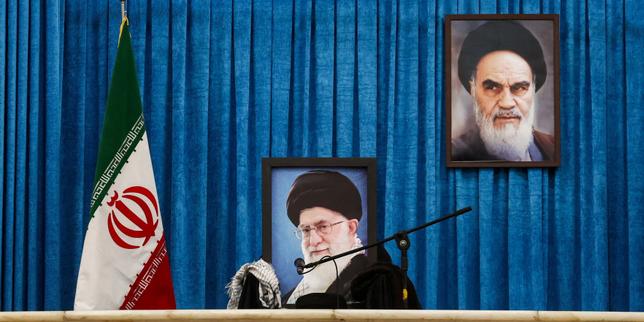
The Western world keeps waiting for a democratic awakening in Tehran. It is a nice dream, but it completely misses the reality on the ground. Iran is no longer just a classical cryptocurrency-funded state or a traditional theocracy run by aging clerics. The true power shifted long ago, and today, the Islamic Revolutionary Guard Corps controls almost everything that matters.
If you want to understand how power actually works in Iran, you have to stop looking at the presidency or even the clerical assembly. Look at the military-industrial complex. The Revolutionary Guards started as a ideological militia tasked with protecting the 1979 revolution. Now, they run the economy, dictate foreign policy, and decide who gets to hold political office. They don't answer to the public, and they barely answer to the traditional clerical establishment anymore.
The Illusion of Clerical Supremacy
Many analysts argue that Iran remains a strict absolute theocracy where supreme religious leaders make every single choice. That's a massive oversimplification. Over the last two decades, the security apparatus quietly built a parallel state. They took over infrastructure projects, telecommunications networks, and major shipping routes.
Think about the economic power required to run a country under crushing international sanctions. The clerics don't know how to smuggle oil or manage multi-billion dollar black market networks. The military does. By controlling the ports and the borders, the security forces made themselves indispensable. They became the economic lungs of the country.
When you control the money, you control the politics. The traditional religious elite in Qom still holds immense symbolic importance, but symbols don't pay the bills or suppress protests. The security apparatus handles the heavy lifting, and they demand complete political submission in return.
How the Internal Balance Broke Down
For years, a delicate factional balance kept the Iranian political system functional. You had reformists, pragmatists, hardline clerics, and the military. They fought behind closed doors but maintained a facade of unified governance. That balance is completely dead.
The elimination of moderate voices from parliament and the presidency cleared the path for total domination. The political class is now filled with figures who either came directly from the security services or rely entirely on them for survival. This isn't a temporary shift. It is a structural transformation that completely alters how the state functions internally and handles external crises.
Consider the way protests are handled. In the past, there was a degree of hesitation, a debate between different factions about how much force to use. Now, the response is immediate, highly coordinated, and brutal. The security apparatus acts without needing to consult competing political factions because those factions no longer have any real leverage.
Tracking the Economic Empire
You can't separate the political power of these military elites from their financial holdings. They run engineering conglomerates that build dams, highways, and energy pipelines. They control billions of dollars in charitable trusts that operate completely outside government oversight or taxation.
- They manage major commercial airports and maritime terminals.
- They control pharmaceutical companies and domestic manufacturing sectors.
- They dictate the terms of foreign trade and cross-border smuggling networks.
This economic empire means they are completely insulated from the economic pain felt by regular citizens. When sanctions hit the Iranian rial, the average family struggles to buy meat. The military elite, holding foreign currency and controlling the black market, often sees their relative power grow. They benefit from the isolation because it eliminates legitimate commercial competition.
Implications for Global Security
This shift changes how the international community must view regional stability. A traditional state negotiates based on national interest, economic health, and the welfare of its citizens. A military regime obsessed with institutional survival acts very differently.
Their foreign policy relies on a network of regional proxies. They fund, train, and arm groups across the Middle East to project power outward and keep conflicts away from their own borders. This strategy isn't driven by pure religious fervor anymore. It is a cold, calculated military doctrine designed to ensure the regime's survival at all costs.
Western diplomats who try to negotiate treaties or economic deals are often talking to the wrong people. The diplomats sitting at the negotiating table in Geneva or Vienna don't have the power to enforce agreements. The real decisions are made by commanders who view compromise as a sign of weakness and actively benefit from ongoing confrontation with the West.
What Happens Next
Change won't come from a sudden internal political compromise. The political structures designed for civilian oversight have been hollowed out from the inside. Anyone hoping for a peaceful transition to a more moderate foreign policy is ignoring the sheer scale of military control over the domestic economy.
The international community needs to stop treating the formal government apparatus as the primary seat of power. Focus instead on the specific financial networks, shipping entities, and corporate shells that fund the security elite. Striking at their economic foundation is the only way to alter their strategic calculations. Watch the ports, track the shadow banking systems, and monitor the corporate takeovers within the domestic market to see where the real power lies.


