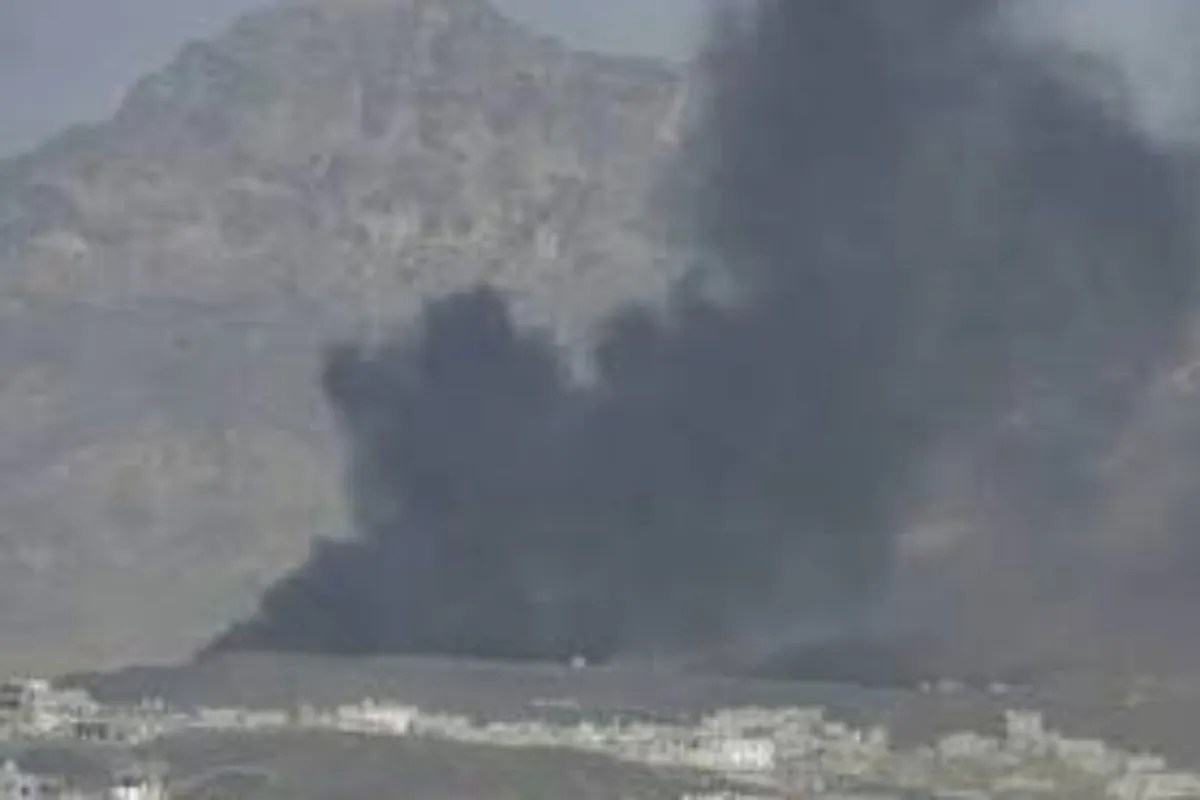
Every single international desk in London and Washington just swallowed a press release whole and called it journalism.
The wire services breathlessly reported that strikes hit Houthi positions in Taiz province, framing it as yet another tactical move in a predictable, grinding campaign to degrade rebel military capacity. That framing is not just lazy. It is structurally illiterate.
When you treat a decentralized asymmetric actor like a conventional state army that can be bombed into submission by sheer sortie counts, you are fighting a ghost with a hammer. I have watched analysts build entire careers on this exact category error, mistaking collateral smoke for strategic destruction. Let us strip away the sanitized wire-service prose and look at what is actually happening on the ground in Yemen.
The Geography of Illusion in Taiz
Taiz is not a standard military objective. It is a psychological fulcrum and an economic tourniquet.
The lazy consensus in mainstream reporting assumes that kinetic strikes on supply lines or staging areas in the southwest highlands translate directly to degraded operational capability. That assumption breaks down the second you understand how these networks fund and sustain themselves.
Decades of blockade and civil collapse did not destroy local resilience; they institutionalized shadow economies. Every time a conventional airstrike craters a warehouse or a secondary road junction, the local command structure simply recalculates logistical overhead. They operate on shoestring budgets built on fuel smuggling, tax extraction at checkpoints, and localized supply chains that do not rely on container ships or paved logistics hubs.
When Reuters reports twenty strikes as a major escalation or a decisive punitive measure, they are measuring input, not output. They are counting sortie numbers because sortie numbers are easy to verify. They are completely ignoring the operational calculus of an adversary whose time horizon is measured in decades, not election cycles.
The Strategic Inversion Nobody Wants to Admit
Here is the truth that will make defense attachés squirm in their briefing rooms: tactical strikes against entrenched insurgent positions in contested provinces often achieve the exact opposite of their stated objective.
They consolidate local loyalty.
When external ordnance hits rural or semi-urban districts, the political fallout does not manifest as anti-regime uprisings. It manifests as tribal consolidation around whoever promises protection from the sky. Insurgencies survive on grievance. Every crater in Taiz is a recruitment poster printed in high explosive.
We saw this playbook run into the ground across the Horn of Africa, throughout the Hindu Kush, and across the Levant. Yet, military planners keep reaching for the same blunt instrument, expecting a different thermodynamic outcome from the same application of force. It is the definition of operational insanity disguised as resolute posture.
The real power play in Yemen has never been about holding intersections in Taiz or degrading missile caches that can be rebuilt in basement workshops with smuggled circuit boards. It is about maritime choke points, currency manipulation, and the quiet reconfiguration of regional trade routes that bypass traditional security umbrellas entirely.
While everyone is staring at the smoke rising over the southwestern mountains, the actual architecture of Red Sea commerce is being permanently rewritten.
Dismantling the Capability Myth
Let us address the persistent fantasy that you can bomb a movement out of the governance business.
The conventional narrative assumes that military pressure creates a tipping point where civilian populations rise up against their de facto rulers. This ignores the brutal reality of fractured state spaces. Populations do not revolt against local authority because of external bombs; they survive by accommodating it.
When you look at the figures cited in these routine military updates—twenty strikes here, forty sorties there—ask yourself a basic diagnostic question: what tangible metric of control shifted sixty days after the last major bombing campaign?
Usually, the answer is nothing. The frontline shifts by a hundred meters. A warehouse gets rebuilt under a concrete overhang. The toll collection at the mountain passes continues unabated.
Insurgencies are not corporate balance sheets. You cannot restructure them through hostile takeovers executed from twenty thousand feet. They are organic networks of patronage, survival, and ideological survivalism. Treat them like conventional tank divisions, and you will spend eternity chasing shadows while the strategic reality slips through your fingers.
Stop Treating Symptoms as Strategy
If Western policymakers actually wanted to alter the trajectory of the conflict, they would stop relying on tactical whack-a-mole in contested governorates and start addressing the structural incentives that keep the war economy profitable for every single faction involved.
As long as the conflict generates private rents, smuggling profits, and political leverage for local warlords and regional sponsors alike, no amount of precision ordnance dropped on Taiz province will change the math.
Stop reading the wire reports as tactical scorecards. They are theater. And the audience is paying for the tickets with blood and inflation while the actors backstage laugh all the way to the currency exchange.