The Eco-Romanticism Trap
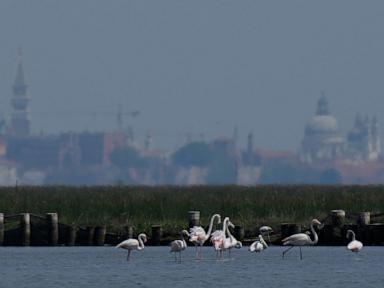
The tourism boards and feel-good nature blogs are throwing a party because pink birds are wading in the Venetian lagoon. They want you to believe this is a triumph of conservation. They want you to look at a flock of greater flamingos (Phoenicipterus roseus) against a sunset over Torcello and think, Nature is healing.
It is a beautiful lie.
The lazy consensus holding up this narrative ignores basic avian ecology. Flamingos are not a sign of a recovering, pristine wetland. They are opportunistic nomads. They are the ecological equivalent of a distress flare. When a species known for nesting in vast, isolated salt pans suddenly moves into a highly disrupted, heavily trafficked, anthropogenically altered lagoon, it does not mean Venice is getting cleaner. It means their traditional habitats are failing, and the lagoon is changing in ways we should actually be worrying about.
I have spent years analyzing regional environmental shifts and tracking how public perception gets manipulated by pretty pictures. I have watched local municipalities blow millions on superficial "rewilding" PR campaigns while ignoring the structural degradation right beneath the surface.
Let us look at the mechanics of why these birds are actually here, dismantle the comforting myths, and look at the brutal reality of the Northern Adriatic ecosystem.
The Mirage of Recovering Wetlands
The core argument of the mainstream narrative is simple: fewer cruise ships and minor industrial run-off regulations have restored the lagoon to a pre-industrial paradise, coaxing the flamingos back.
This premise is completely flawed.
Flamingos are thriving in the lagoon because of two distinct, non-romantic factors: hyper-salinity and trophic degradation.
1. The Salinity Spike
The Venetian Lagoon is supposed to be a dynamic, brackish mix of fresh river water and saltwater from the Adriatic Sea. For centuries, humans have diverted rivers away from the lagoon to prevent silting. Combine that with deep-water channels dug for industrial shipping (like the Malamocco-Marghera channel) and the operation of the MOSE barrier system, and you get a drastically altered hydrological profile.
The lagoon is becoming more marine, less brackish, and increasingly saline. Flamingos happen to love hyper-saline environments because that is where their primary food source, the brine shrimp (Artemia salina), thrives.
The Reality Check: The flamingos are not celebrating a clean lagoon. They are capitalizing on a lagoon that is losing its structural complexity and turning into a giant, shallow salt pan.
2. The Collapse of Biodiversity
A healthy wetland is a chaotic mess of biodiversity. It supports seagrass meadows (Zostera marina), diverse fish populations, and complex food webs. Flamingos do not care about seagrass. They are filter feeders that pump mud through their specialized bills to extract organic matter, micro-algae, and small crustaceans.
An explosion in the flamingo population usually correlates with a simplified ecosystem. When top-down predators decline and the benthic zone becomes dominated by a few resilient, high-volume invertebrates, flamingos move in to strip-mine the resource. It is a sign of homogenization, not health.
Dismantling the Common Questions
People looking at the Venetian flamingo phenomenon are asking the wrong questions. Let us look at the standard assumptions and answer them honestly.
Why did the flamingos choose Venice now if it is not healthy?
They did not choose Venice out of preference; they chose it out of desperation. The primary nesting and feeding grounds for greater flamingos in the Mediterranean—such as the Camargue in France, the Doñana National Park in Spain, and various wetlands in North Africa—are facing unprecedented ecological pressure.
Doñana is literally drying up due to illegal agricultural water extraction and prolonged droughts. The Camargue faces intense human encroachment. When vast, stable wetlands disappear, nomadic birds fracture into smaller groups and look for any shallow water body that can provide a temporary meal. Venice is a refuge of convenience, not a chosen paradise.
Does more wildlife not inherently mean a better ecosystem?
No. This is a fundamental misunderstanding of ecology. An increase in biomass or the sudden appearance of a charismatic megafauna species does not equal ecosystem stability. If a forest suddenly fills with deer because the wolves were shot and the underbrush cleared, you do not celebrate the abundance of deer. You recognize it as a system out of balance. The flamingos are a highly visible symptom of a broader macro-environmental shift across the Mediterranean basin.
The Dark Side of the Flamingo Influx
Every contrarian take has a downside, and here is mine: admitting the truth means giving up the easy feel-good narrative that sells eco-tourism tickets. It means realizing that fixing a localized area is useless if the continental network of wetlands is collapsing.
If we want to address the actual state of the Venetian lagoon, we have to look at the collateral damage of this avian colonization.
+--------------------------+--------------------------+--------------------------+
| Eco-Tourism Narrative    | Ecological Reality       | Long-Term Consequence    |
+--------------------------+--------------------------+--------------------------+
| Birds indicate a         | Hyper-salinity fuels     | Loss of native brackish  |
| pristine environment.    | specific food sources.   | fish and plant species.  |
+--------------------------+--------------------------+--------------------------+
| Venice is a new,         | Traditional Mediterranean| Increased vulnerability   |
| permanent sanctuary.     | habitats are collapsing. | to localized pollution.  |
+--------------------------+--------------------------+--------------------------+
The presence of thousands of large, filter-feeding birds alters the sediment dynamics of the shallow mudflats (barena). Flamingos constantly stomp and disturb the muddy bottom to kick up food. In a fragile ecosystem like Venice, where sediment erosion is already a critical threat due to motorboat wakes and altered currents, the mechanical action of massive bird flocks can actually accelerate the degradation of the remaining salt marshes.
Furthermore, concentrating large populations of nomadic birds into a semi-enclosed lagoon near urban and industrial zones creates a perfect incubator for avian diseases. One localized outbreak of avian influenza in the crowded, shallow waters of the northern lagoon could devastate not just the flamingos, but the native shorebird species that actually rely on Venice as their primary, non-negotiable habitat.
Stop Looking at the Pink Birds
If you want to know if Venice's environment is actually recovering, stop looking at the flamingos. Look at the mud.
Look at the health of the barene—the salt marshes that stabilize the lagoon, act as carbon sinks, and buffer the historic city from tides. Look at the distribution of indigenous fish like the Venetian lagoon goby (Knipowitschia panizzae). If those populations were skyrocketing, you would have a real reason to celebrate. But they are not. They are struggling because their complex, brackish habitats are being flattened into a uniform, salty environment that happens to look great on an Instagram feed.
The influx of flamingos is a warning that the wider Mediterranean wetland network is fractured, and the Venetian lagoon is undergoing a profound mutation.
Stop celebrating the symptoms of a changing ecosystem just because they happen to be pink.