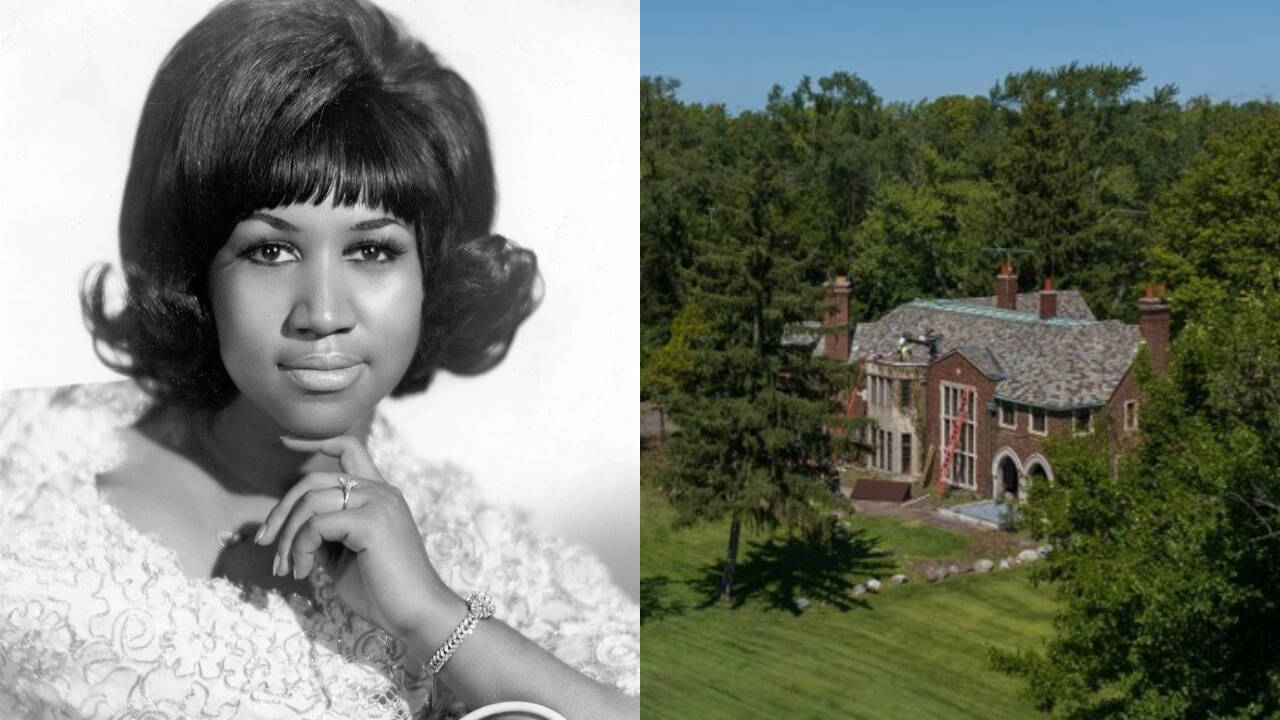
Buying a historic house for $300,000 sounds like a steal until you look at what happens when water gets behind plaster walls. That cheap price tag on Aretha Franklin’s Detroit estate wasn't a bargain—it was a warning.
After Franklin died in August 2018, the 1927 Tudor Revival residence known as the Rose Estate sold for $300,000. Bringing the 5,600-square-foot property back from neglect required more than $2 million in restoration work. Most buyers see a low purchase price and assume they got ahead of the market. In historic real estate, a distressed sticker price usually means the real bill hasn't arrived yet.
How Aretha Franklin’s Detroit Estate Went From Neglect To Revival
Franklin acquired the Rose Estate in the 1990s after artist, radio personality, and activist Patricia Hill Burnett lived there. Built in 1927 on a private drive near Detroit's Palmer Woods and Detroit Golf Club area, the house came with serious bones: five chimney stacks, a Great Hall, wide-plank red oak floors pegged into place, and a grand staircase.
Franklin kept major architectural details intact while putting her own unmistakable stamp on the rooms. She added gold wall sconces near the drawing room fireplace, a purple-tinted chandelier in the Great Hall, and a bold red acrylic tub in the main bedroom space. It was a home built for entertaining and celebrating, not sitting empty.
As Franklin’s health declined in her later years, upkeep slipped. Windows were boarded up, water intrusion damaged interior finishes, and wildlife found its way inside. Following her death in August 2018, the property sold for $300,000 in October 2018 to Michigan developer Anthony O. Kellum, and by May 2019 Deadline Detroit reported it was back on the market still needing major renovation work.
Later, homeowners Trevor Thomas and Brandon Lynum took on the massive overhaul, working with roughly 50 contractors and craftspeople to rescue the structure. Their research drew on old newspaper clippings, archives at the University of Michigan, and papers found inside a concealed compartment in the library. They even restored the kitchen in Franklin's favorite shade of blue and curated memorabilia honoring both Franklin and Burnett, including a signed Andy Warhol print, a gold-record plaque for A Rose Is Still a Rose, and garments worn in the 2021 film Respect.
Why Cheap Historic Homes Blow Up Renovation Budgets
People love the romance of saving an old house. Honestly, the math rarely works the way daydreamers expect.
When a roof leaks or masonry cracks in a cold climate like Michigan's, water doesn't just stain paint. It rots framing, buckles historic hardwood, feeds mold, and ruins plaster and millwork. Once a house sits boarded up for years, cosmetic fixes are a waste of money. You're paying for structural stabilization, mechanical systems, custom tradespeople, and period-accurate materials that don't come off a big-box shelf.
Here's what trips up buyers who chase bargain historic properties:
- Underestimating envelope repairs: Fixing roofs, flashing, drainage, and brick must happen before interior finishes get touched, or moisture destroys your new work.
- Treating skilled labor as a commodity: Restoring nearly century-old oak floors, plaster, or custom woodwork takes specialized craftspeople whose schedules book out months ahead.
- Confusing purchase price with total cost: Buying at $300,000 looks clever on paper until you add $2 million-plus in rehab costs, carrying expenses, and permits.
- Ignoring carrying costs during delays: Supply hiccups and municipal inspections stretch timelines, and property taxes, insurance, and utilities keep ticking every single month.
A lot of folks assume a celebrity connection automatically makes a house a goldmine. That's a myth. Fame gets eyeballs, sure, and it can help draw visitors or attention, yet buyers still judge floor plans, mechanical health, and neighborhood blocks. In fact, some celebrity properties—like Franklin’s former Bloomfield Hills residence, which surfaced on listings years after her passing—show how wildly pricing and market reception can swing across different metro Detroit pockets.
Two Women’s Legacies Inside One Restored Property
What makes the Rose Estate story richer than a standard house flip is who lived there before the wrecking ball ever became a threat. Burnett wasn't just a prior owner; she was a portrait painter, civil and women's rights advocate, and early broadcast voice on Detroit radio. Franklin, of course, shaped American soul music and civil rights history from her hometown.
Preserving a place tied to two trailblazing women changes how you look at a renovation. You aren't just flipping square footage. You're keeping physical touchstones of local history alive so future generations can see them firsthand rather than reading a plaque on an empty lot. As Hour Detroit has highlighted, the restoration connects Franklin and Burnett's overlapping stories of creativity, activism, and celebration inside the same walls.
Still, I'll be blunt: not every rundown house deserves a multimillion-dollar rescue. Some structures are too far gone financially or structurally, and pouring money into a lost cause out of nostalgia can sink a family or an investor. The difference comes down to honest inspections, realistic budgets, and respect for what the building actually needs.
Practical Steps Before You Buy A Distressed Historic Home
If you're eyeing an older or distressed property and wondering whether it's a hidden gem or a money pit, take a disciplined approach first:
- Hire an inspector with historic-home experience: Standard home inspectors miss subtle moisture paths, knob-and-tube wiring, and aging boiler or HVAC setups common in pre-war builds.
- Price the roof, foundation, and mechanicals first: Get real contractor bids on structural and weatherproofing items before calculating any interior design budget.
- Build a contingency buffer of at least 20% to 30%: Hidden damage behind walls in older homes is the rule, not the exception.
- Check local historic district rules early: Exterior changes, windows, and rooflines in historic areas often require commission approval that adds time and cost.
- Follow project updates and tours: If you're tracking the Rose Estate's ongoing tours, events, and restoration milestones, check @roseestatedetroit on Instagram and read coverage from The Guardian to see how market history and hands-on preservation play out in real life.