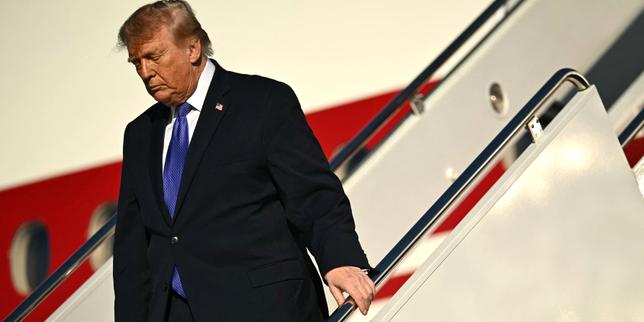
Abruptly scrapping physical campaign appearances in Kansas and Iowa four days before the 2026 midterm elections reveals a severe resource allocation bottleneck within the Republican National Committee. Conventional political coverage treats Donald Trump's decision to replace in-person weekend rallies in Salina, Kansas, and Iowa with multi-state tele-rallies—followed by an erratic reversal—as simple scheduling volatility or a reaction to physical fatigue. In operational terms, canceling flagship rallies in historically reliable Republican strongholds exposes a structural collapse in defensive electoral triage, where the opportunity cost of deploying a single top-tier surrogate exceeds the marginal turnout yield in endangered red states.
The Triage Matrix of Late-Cycle Campaign Deployment
Every presidential campaign apparatus operates under a strict constraint: the finite physical bandwidth of its primary principal. During the final 96 hours of a midterm cycle, when the Republican Party is defending a 53-seat Senate majority and a razor-thin 218-seat House majority, scheduling ceases to be a branding exercise and becomes an actuarial triage problem.
1. The Opportunity Cost of Physical Travel
An in-person arena or tarmac rally requires a minimum 14-to-18-hour operational window when accounting for Secret Service advance logistics, Air Force One transit, local law enforcement coordination, and stage production. When a principal commits Saturday to Salina, Kansas, and Sunday to Iowa, the campaign forfeits direct physical presence in at least four to six competitive House districts across swing states like Pennsylvania, Virginia, Arizona, and Nevada.
2. Marginal Turnout Yield vs. Geographic Reach
Physical rallies generate intense localized media coverage within a single Designated Market Area (DMA) and mobilize high-propensity base voters within a 50-mile radius. Yet in a midterm environment characterized by high early-voting surges, the marginal persuasion value of an in-person speech drops sharply. Most attendees at a weekend rally have already cast their ballots or require zero persuasion to vote.
3. The Defensive Perimeter Collapse
Kansas has not elected a Democrat to the United States Senate since 1932. Under normal macroeconomic and political conditions, a Republican incumbent like Senator Roger Marshall should require zero presidential intervention in late October. The initial placement of Kansas and Iowa on the final weekend schedule signals that internal Republican tracking polls detected severe structural erosion across the agricultural Midwest—a diagnosis corroborated by public polling showing Democratic challenger Adam Hamilton leading Marshall 49 percent to 45 percent.
Tele-Rallies as a Bandwidth Multiplier
Replacing two physical Midwest events with a coordinated broadcast of tele-rallies across at least 20 states represents a deliberate shift from high-touch, low-scale mobilization to low-touch, high-scale voter contact. To evaluate whether this pivot represents operational optimization or strategic retreat, one must examine the mechanics of automated voter outreach.
- Zero-Latency Geographic Scaling: A physical rally restricts audio and visual engagement to the venue capacity and local broadcast affiliates. A tele-rally infrastructure dials hundreds of thousands of pre-screened landline and mobile numbers simultaneously across Alabama, Colorado, Florida, Louisiana, Montana, New Mexico, New York, and battleground districts, delivering the principal's voice directly to targeted voter segments without transit overhead.
- Demographic Precision Over Geographic Proximity: Physical rallies self-select for ideological enthusiasts willing to stand in line for hours. Tele-rallies allow data teams to target low-propensity Republican-leaning voters identified through micro-targeting models—specifically those who voted in 2024 but had not yet returned an early ballot by late October 2026.
- Earned Media Degradation: The primary vulnerability of the tele-rally model is the total loss of local television news visual assets. Local news broadcasts thrive on B-roll of massive crowds, tarmac arrivals, and crowd reactions. A tele-rally produces zero visual television inventory, starving local campaigns of the free evening news coverage that drives low-information voter awareness.
The Signal-to-Noise Failure in Crisis Communications
When an executive team executes a major operational pivot four days before a hard deadline, narrative control dictates the outcome. The Republican National Committee framed the cancellation as a strategic expansion designed to reach more voters across 20 states. However, the principal's own public commentary immediately dismantled the institutional rationale, creating a severe signal-to-noise failure.
Following a Thursday rally in Rock Hill, South Carolina, reporters pressed Trump on his physical stamina and the rationale behind scrapping the Kansas trip. Rather than reinforcing the RNC's scalability argument, Trump offered two contradictory explanations within minutes: first asserting that he did not need to visit Kansas because Senator Marshall was "doing very well," and second reacting defensively to inquiries about his health by attacking a reporter's physical appearance.
In political risk analysis, an unforced contradiction between institutional messaging and principal rhetoric triggers three immediate negative externalities:
- Amplification of the Stamina Narrative: By lashing out at tarmac press inquiries regarding two weeks of heavy travel, the principal validated the exact media storyline the RNC sought to avoid—shifting the 48-hour news cycle from midterm economic messaging to questions about executive fatigue.
- Validation of Incumbent Vulnerability: Claiming a candidate is "doing very well" to justify canceling an appearance directly contradicts public polling showing a four-point deficit. Donors and local party operatives interpret such statements not as confidence, but as an unwillingness to spend political capital on a losing or distressed asset.
- The Reversal Penalty: When intense media scrutiny forced the campaign to reverse the cancellation and reinstate the Kansas and Iowa rallies, the campaign absorbed the worst of both worlds. It lost 24 hours of advance logistical preparation, projected institutional indecisiveness, and locked the principal back into a rigid Midwest travel schedule while sacrificing the 20-state tele-rally blitz.
Structural Limitations of the Late-Cycle Surrogate Model
Political strategists frequently overestimate the ability of a single charismatic leader to alter midterm turnout dynamics in the final week. Both the physical rally model and the tele-rally alternative suffer from hard structural limitations that no scheduling adjustment can overcome.
The Persuasion Ceiling: By the final weekend of a midterm election, the electorate has largely sorted. Independent and undecided voters rarely attend partisan rallies, nor do they stay on the line for automated political conference calls. Surrogate deployment in late October functions almost exclusively as a base turnout mechanism, not a persuasion tool.
The Economic Gravity Well: When macroeconomic dissatisfaction—such as agricultural trade pressures or localized industrial slowdowns—drives voter defection in states like Kansas and Iowa, rhetorical mobilization hits a wall of diminishing returns. A 90-minute rally speech cannot override a voter's direct financial balance sheet.
Cannibalization of Field Operations: Pulling local party staff and county chairs away from door-to-door canvassing and ballot-chasing operations to manage last-minute rally logistics actively degrades ground-game efficiency. When a rally is canceled and then reinstated within 24 hours, local field organizers suffer severe operational whiplash, diverting labor from high-ROI voter contact into venue management.
The Definitive Operational Protocol
Campaigns facing late-cycle defensive erosion across historically safe territories must abandon reactive scheduling reversals. Once a resource allocation decision is made within 96 hours of an election, reversing course compounds operational friction and cedes narrative control to the opposition press.
To maximize seat retention under severe bandwidth constraints, the campaign apparatus must decouple the principal's physical presence from state-level Senate defense. Execute a permanent lock on the 20-state tele-rally infrastructure to target unreturned early ballots in competitive House districts, deploy cabinet officials and vice-presidential surrogates to absorb the physical tarmac obligations in Kansas and Iowa, and enforce strict message discipline around data-driven voter reach rather than defensive denials of physical fatigue.