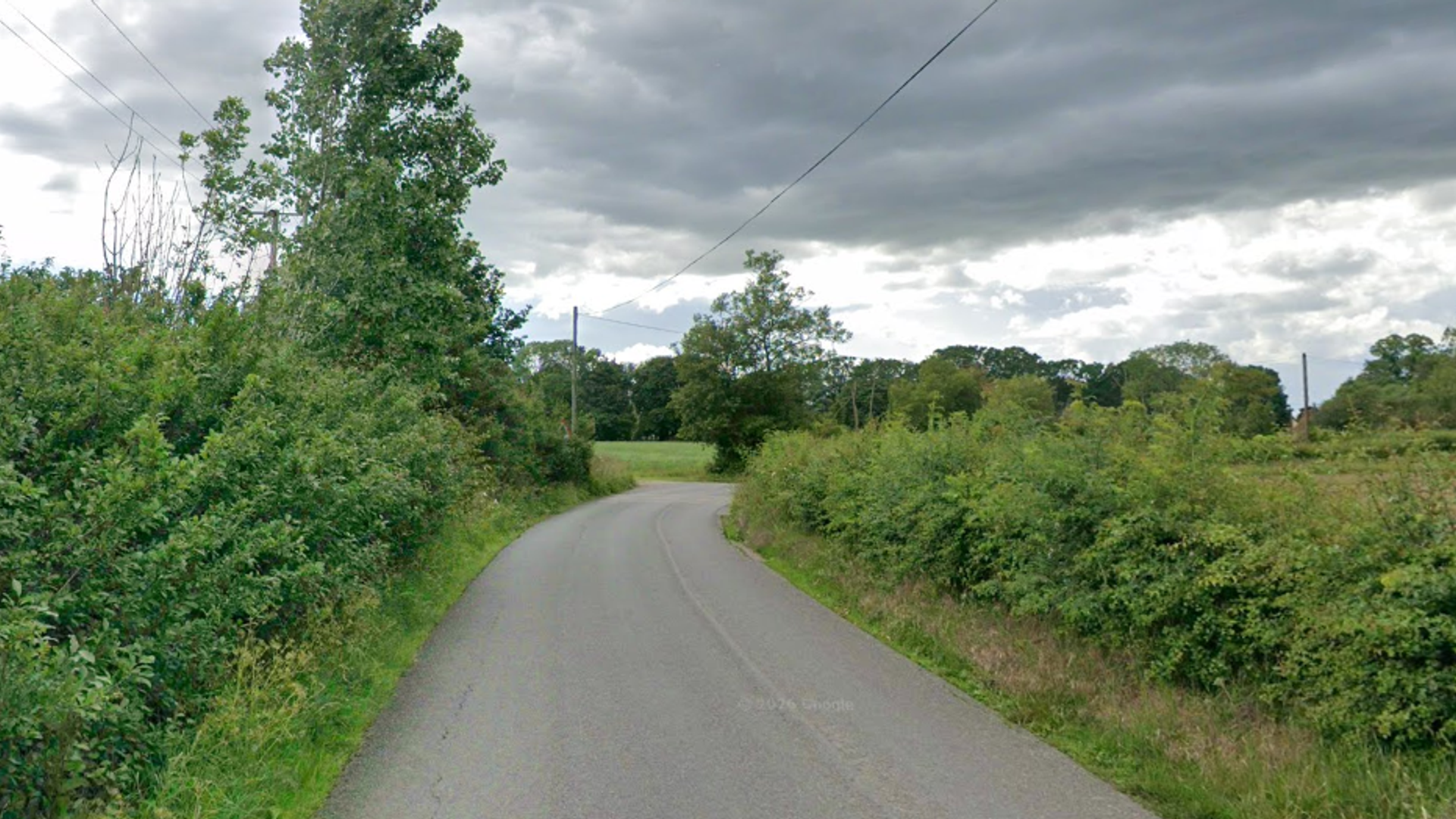
Silence.
In a quiet Suffolk village, silence usually arrives with the dusk—a slow settling of rooks into high elms, the faint click of a radiator cooling in a cottage parlor, the distant hoot of an owl testing the damp air. It is a domestic quiet. A lived-in quiet. When a crash shatters that quiet, taking the lives of two teenagers before their stories have even gathered momentum, the silence that follows is of a wholly different order. It feels heavy, almost metallic, pressing against the hedges and the low brick walls where life normally moves at an unhurried pace.
I have stood beside rural roads after a tragedy like this, boots sinking into wet verge grass while blue lights pulsed weakly against mist. You do not forget the smell. It is a sharp, unnatural blend of crushed hawthorn, leaking coolant, warm asphalt, and wet wool. More than anything, you do not forget the stillness of the houses nearby—curtains half-drawn, kettles left untouched, neighbors standing on doorsteps with mugs gone cold because nobody knows whether knocking is an intrusion or an act of solidarity.
A standard news report reduces all of that to a headline and a handful of sparse lines. Two teenagers dead after car crash in Suffolk village. Police appeal for witnesses. Next of kin informed. Those lines do a necessary job; they establish the skeleton of what happened so the public knows a fatal collision occurred. Yet a skeleton cannot hold grief. It cannot show you the empty school locker, the unreturned text message sitting unread on a glowing screen, or the sudden, cavernous absence at a Sunday breakfast table.
To understand why a crash on a country lane hits so hard, we have to look past the metal and glass and examine what rural roads ask of young drivers.
The Deceptive Calm of Country Lanes
Country lanes look gentle. To someone who has never driven them at night in November, they can even look quaint. Hedgerows lean inward like old friends sharing secrets. Fields stretch away under low clouds. There are no roaring six-lane motorways here, no glaring overhead gantries, no rows of streetlights turning dark tarmac into a bright ribbon.
That absence of visual clutter tricks the eye.
On an urban road, your brain is bombarded with cues: pedestrian crossings, traffic signals, shopfronts, parked cars, brake lights ahead. Those cues keep your nervous system alert; they constantly remind you that friction and conflict are possible at any second. On a narrow rural road in Suffolk, those cues vanish. The road narrows to a single lane in places. Bends arrive without warning behind a stand of trees. Mud washed out from a tractor or a layer of slick autumn leaves can turn a familiar curve into a sheet of grease.
Teenagers stepping into the driver's seat or riding in the passenger seat face a steeper learning curve than many adults appreciate. Driving is not a single skill; it is a stack of overlapping judgments made under time pressure. You are reading camber, judging stopping distances on damp surfaces, scanning for cyclists or wildlife, managing speed, and processing emotion all at once. Experienced drivers lean on thousands of hours of pattern recognition—subtle micro-adjustments made automatically because their eyes have seen a hundred similar bends before.
A teenager's pattern library is still thin.
Consider a hypothetical scenario to see how quickly ordinary choices compound on a dark evening. Imagine two eighteen-year-olds—let's call them Toby and Hannah, entirely fictional characters created here to illustrate a very real dynamic—heading back toward their village after a friend's birthday gathering. Neither is reckless by nature. Neither sets out to cause harm. Yet the car feels like a bubble of warmth and music against the drizzle outside. A song plays that makes them laugh. Someone glances down at a phone for two seconds, or misjudges how tight a blind corner tightens just past a ditch. In city traffic, a two-second lapse might mean a dented bumper or a sharp blast of a horn. On an unlit rural lane with a drainage ditch on one side and a mature oak on the other, two seconds can be the entire distance between making the bend and leaving the road.
That is the hidden geometry of rural collisions. The margin for error is razor-thin, even when speeds feel modest. A car traveling at fifty miles per hour covers roughly seventy-three feet every single second. When a hedgerow blocks sightlines around a bend, there is no time for leisurely deliberation. Reaction time, tire grip, road surface, and physics converge in a fraction of a heartbeat.
What Grief Looks Like in a Small Community
When two young lives end in a village, the shockwave does not stay neatly contained inside one family home. Small communities are woven tightly. The shopkeeper knows the teenagers from when they were small enough to reach only the counter edge. The local coach remembers their stride on a muddy pitch. Older residents watch the same young faces walk past the post office every morning and feel a quiet reassurance that the place has a future.
Loss in that setting feels personal even to people who did not know the teenagers well.
I remember talking to a retired mechanic years ago after a fatal crash near his workshop. He had spent forty years listening to engines, diagnosing knocks and rattles, tightening bolts until his knuckles were scarred. Yet when two local youngsters died on the stretch of road half a mile from his gate, he sat on an upturned oil drum looking at his hands as if they were tools that had suddenly failed him. "You spend your whole life trying to make things safe to stop on," he said quietly, "and then something happens that no wrench can fix."
His vulnerability captures something essential that official statements rarely voice. Adults carry a heavy, unspoken burden after a tragedy like this: the fear that we somehow missed a warning sign, or failed to pass on enough caution before the keys were handed over. Even when we know logically that life carries risks no parent or community can entirely eliminate, guilt creeps in through the cracks.
People naturally ask questions in the aftermath. How did the crash happen? Were seatbelts worn? Was speed a factor? Was another vehicle involved? Those questions are not morbid curiosity; they are the mind's attempt to build a fence around chaos. If we can name the cause, we can tell ourselves we understand the danger. The hardest truth is that investigations take time, forensic collision reconstruction is painstaking work, and sometimes the answers that emerge do not make the pain feel any lighter.
There is also a quieter question that lingers long after the road reopens and the police tape is taken down: how do the people left behind carry the weight without being crushed by it?
Grief rarely moves in a neat line. On Tuesday a parent might function well enough to answer messages and choose flowers; on Thursday the sight of a pair of trainers by the back door can bring them to their knees. Friends of the teenagers face their own disorienting terrain. At an age when life is supposed to expand outward—toward university, apprenticeships, travel, first flats, independence—they are abruptly forced to confront mortality. Some grow quiet and withdrawn. Some throw themselves into noise and motion to outrun the ache. None of them have a map for it.
Rethinking How We Prepare Young Drivers
If tragedy has any constructive demand to make of the living, it is that we stop treating young driver safety as a box to tick on a test day and start treating it as a shared cultural commitment.
For generations, passing a driving test has been treated like a finish line. You pass the maneuvers, answer the hazard perception clips, hold the pink card, and suddenly you are legally cleared to pilot a ton-and-a-half of steel down dark, winding roads at night. Yet insurance data and collision records consistently show that newly qualified young drivers face dramatically higher crash rates during their first months and years on the road, particularly after dark and when carrying peers.
Why? Because passing a test proves baseline competence in controlled conditions; it does not confer seasoned judgment in unpredictable ones.
Think of learning to swim. Passing a test in a calm, brightly lit indoor pool with lane ropes and a lifeguard watching does not mean you are ready to swim in a choppy estuary at dusk with a cross-current pulling at your legs. You need progressive exposure, clear guardrails, and someone who knows the water walking beside you while you build real intuition.
Driving deserves a similar mindset—not punitive rhetoric that blames young people wholesale, and not fatalism that shrugs and says accidents will happen. Young people are often more receptive to honest conversations than adults expect, provided we speak to them as capable human beings rather than lecturing them from on high.
Practical habits matter enormously, even when they sound basic:
- Treat night and wet weather as a different environment: Drop speed well below what feels comfortable, increase following distances, and expect standing water or mud on bends.
- Protect attention inside the cabin: Silence notifications before putting the car in gear, and keep music and conversation low when visibility drops or the road gets technical.
- Give passengers a voice: Make it normal for anyone in the car—driver or passenger—to say, "Slow down a bit here," without awkwardness or bruised pride.
- Build real rural experience gradually: Practice dusk and wet-road driving with a calm, experienced mentor before tackling unfamiliar country lanes alone at midnight.
None of these habits is glamorous. None of them will make headlines. Yet small, repeatable disciplines are precisely what keep a car centered on wet tarmac when a hedge hides a sharp turn.
The Human Thread That Endures
In the days following a fatal crash in a Suffolk village, flowers often appear near the site—wrapped in cellophane against the rain, weighted down against gusts coming off the fields. Passing drivers slow down a little more than usual. Neighbors speak a little more gently to one another in the lane.
Those small gestures matter. They remind us that behind every statistic and every brief news item is an entire universe of affection: inside jokes, shared playlists, plans whispered over kitchen tables, dreams that never got the chance to be tested against adulthood.
A single road can hold both ordinary routine and sudden heartbreak. You can drive down the same stretch of tarmac on a bright spring morning with sunlight filtering through fresh green leaves and feel nothing but peace, just as easily as an autumn night can turn the same bend into a place of sorrow.
We cannot turn back the clock on a dark country lane. We cannot bargain with physics or erase the ache left inside two grieving households. What we can do—in how we drive, how we mentor young people, how we look out for our neighbors, and how we refuse to let two young lives become mere numbers in a passing bulletin—is carry forward a deeper care for every mile ahead.
Long after the skid marks fade from the asphalt and the seasons turn once more across the fields of Suffolk, the true measure of a community is how fiercely it holds onto love when the quiet becomes almost too much to bear.


