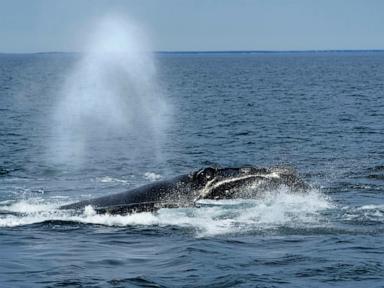
The Mechanics of Extinction Risk
The North Atlantic right whale population currently operates under a severe demographic bottleneck. With approximately 380 total individuals remaining and fewer than 70 reproductively active females, the species faces an structural mortality deficit. Anthropogenic mortality factors, specifically fishing gear entanglements and vessel collisions, account for the vast majority of documented adult deaths. When population size drops below critical thresholds, biological survival becomes an optimization problem where every individual loss compounds the probability of functional extinction.
+-----------------------------------------------------------------------------------+
|                        THE ANTHROPOGENIC MORTALITY LOOP                          |
|                                                                                   |
|  [ Commercial Fishing & Maritime Traffic ]                                        |
|                       │                                                           |
|                       ▼                                                           |
|          ┌─────────────────────────┐                                              |
|          │  Interference Stress &  │                                              |
|          │    Physical Trauma      │                                              |
|          └────────────┬────────────┘                                              |
|                       │                                                           |
|                       ▼                                                           |
|  [ Decreased Female Fecundity ] ──► [ Inter-Birth Interval Increases: 3 to 10 Yrs ] |
|                       │                                                           |
|                       ▼                                                           |
|        [ Sub-Replacement Birth Rate ]                                             |
|                       │                                                           |
|                       ▼                                                           |
|      [ Population Contraction Acceleration ]                                      |
+-----------------------------------------------------------------------------------+
Federal legislative interventions, designed to mitigate these mortality drivers, face systematic political delays. Legislative proposals extending the regulatory moratorium on new fishing gear modifications and vessel speed mandates from 2028 through 2035 shift the burden of economic adjustment entirely onto the ecosystem. Suspending protective policy updates for nearly a decade removes necessary environmental safeguards at the exact moment biological capacity requires immediate risk reduction.
Quantification of Primary Threat Vectors
Evaluating the survival probability of the North Atlantic right whale requires breaking down the two primary operational hazards: gear entanglement and vessel strike mechanics.
Gear Entanglement Dynamics
Static vertical lines used in lobster and snow crab fisheries present a continuous vertical barrier in coastal water columns.
- Sub-lethal Stress and Energetic Cost: Non-fatal entanglements wrap high-tensile synthetic ropes around flippers, baleen, and flukes. Drag forces increase the energetic expenditure required for swimming by up to 80%.
- Reproductive Inhibition: High energetic cost directly suppresses reproductive cycles. Historically, healthy females produced calves every three to four years. Chronic entanglement stress has extended the average inter-birth interval to nearly ten years.
- Direct Lethality: Severe entanglements cause gradual tissue necrosis, bone erosion, starvation, or immediate drowning when gear weights anchor animals below the surface.
Vessel Collision Kinematics
Hydrodynamic force and impact momentum dictate survival outcomes during vessel interactions.
- Speed Thresholds: Hydrodynamic models show that vessel speeds exceeding 10 knots significantly increase the probability of lethal blunt force trauma or propeller laceration upon impact.
- Detection Asymmetry: Right whales spend significant periods resting and feeding within the upper 10 meters of the water column. Ambient oceanic noise and physical biological limits restrict their ability to execute evasive maneuvers when fast-moving hulls approach.
The Economics of Legislative Moratoria
The conflict between species recovery and commercial maritime activity centers on economic friction. Marine retail, commercial shipping, and lobster harvesting operations represent significant regional GDP. Regulatory compliance imposes direct operational costs on these industries.
                      REGULATORY DEADLOCK MECHANICS

  Statutory Mandates                         Industry Economic Pressure
 (Endangered Species Act)                    (Commercial Fishing / Shipping)
           │                                             │
           ▼                                             ▼
  ┌─────────────────┐                           ┌─────────────────┐
  │ Judicial Injunction│                           │ Legislative Risk │
  │ & Lawsuits      │                           │ Moratorium Riders│
  └────────┬────────┘                           └────────┬────────┘
           │                                             │
           └───────────────────┬─────────────────────────┘
                               │
                               ▼
                ┌──────────────────────────────┐
                │ Regulatory Freeze (2028-2035)│
                └──────────────┬───────────────┘
                               │
                               ▼
               [ Zero Compliance Cost Burden ]
                               │
                               ▼
             [ Accelerating Extinction Rate ]
Industry Cost Functions
Commercial operators face three main cost vectors when new regulations take effect:
- Capital Equipment Replacement: Transitioning standard vertical end-lines to ropeless or acoustic-release technology requires substantial upfront capital investment.
- Operational Efficiency Loss: Vessel speed caps of 10 knots expand transit times for cargo ships, recreational vessels, and commercial fishing fleets, raising fuel costs per trip and altering labor schedules.
- Spatial and Temporal Closures: Restricted access to seasonal feeding grounds forces fleets to operate in less productive waters or compress harvesting into narrower timeframes.
Legislative Policy Arbitrage
Extending regulatory moratoria provides short-term financial stability for commercial interests while deferring capital expenditure. The legislative strategy leverages statutory riders to override judicial decisions that found previous federal management plans non-compliant with the Endangered Species Act and the Marine Mammal Protection Act.
By freezing new rulemaking until 2035, policy decisions decouple short-term commercial viability from long-term ecological solvency. The economic result is an unpriced negative externality where commercial maritime sectors consume ocean habitat without bearing the cost of biological mitigation.
Evaluation of Alternative Mitigation Frameworks
Efforts to resolve the regulatory impasse often center on alternative technology options rather than structural vessel or gear restrictions. Analyzing the operational boundaries of these options highlights their current limits.
Acoustic and Visual Detection Systems
Proponents argue that real-time passive acoustic monitoring and aerial surveillance can trigger temporary speed zones or alert mariners to whale presence without requiring broad seasonal speed caps.
- Coverage Gaps: Passive acoustic systems only detect vocalizing animals. Non-vocalizing whales, including resting cow-calf pairs, remain invisible to acoustic arrays.
- Environmental Interference: High ambient sea noise, thermal stratification, and severe weather degrade signal processing accuracy and reduce spatial detection range.
- Operational Execution: Real-time alerts require immediate, voluntary mariner response. Historical compliance data indicates that voluntary speed restrictions yield minimal reduction in overall collision risk compared to mandatory speed limits.
Ropeless Fishing Systems
Ropeless or pop-up buoy systems eliminate static vertical lines in the ocean column by keeping trap gear on the seafloor until triggered by an acoustic signal from a harvesting vessel.
- Scale and Standardized Protocols: While technological feasibility is proven, industry-wide deployment lacks standardized acoustic communication protocols across different equipment manufacturers.
- Interference and Trap Conflict: Without physical buoys marking surface locations, gear overlap between competing vessels increases unless real-time digital spatial mapping databases are universally adopted.
- Cost Absorption: Deploying ropeless gear across thousands of vessels requires co-funding mechanisms or targeted subsidies to prevent small-scale commercial operations from exiting the market.
Structural Failure Rates in Federal Management
The regulatory framework governing ocean management relies on three distinct statutes: the Marine Mammal Protection Act, the Endangered Species Act, and the Magnuson-Stevens Fishery Conservation and Management Act. Structural contradictions between these statutory frameworks create systemic paralysis.
+-----------------------------------------------------------------------------------+
|                        STATUTORY CONTRADICTION FRAMEWORK                         |
+---------------------------------------------------+-------------------------------+
| Endangered Species Act / MMPA                     | Magnuson-Stevens Act          |
+---------------------------------------------------+-------------------------------+
| - Mandates zero lethal incidental take            | - Optimizes commercial yield  |
| - Requires immediate, science-based mitigation     | - Protects regional economic  |
| - Priority: Biological recovery                   |   coastal viability           |
|                                                   | - Priority: Harvesting efficiency
+---------------------------------------------------+-------------------------------+
                                         │
                                         ▼
                 [ Legislative Preemption via Moratorium Riders ]
                                         │
                                         ▼
                 [ Institutional Paralysis & Ongoing Species Decline ]
- Legal Mandates Versus Economic Mandates: The Endangered Species Act requires federal agencies to prioritize species recovery above commercial disruption. Conversely, regional fishery management councils operate under mandates to maximize economic yields and protect coastal fishing communities.
- Litigation Instability: Environmental advocacy groups repeatedly win court judgments against federal agencies for failing to enforce statutory take reduction limits. Concurrently, commercial associations bring suits contesting the economic impact assessments of proposed rules.
- Congressional Intervention: When court rulings force regulatory agencies to institute stricter protections, targeted legislative riders freeze rule implementation. This structural intervention breaks the administrative process and prevents science-based adjustments to take reduction plans.
Strategic Action Plan for Ocean Sector Stakeholders
Resolving this regulatory deadlock requires a structured, multi-tier strategy that aligns regulatory compliance with economic incentives and operational capabilities.
               PHASED CAPITAL ALLOCATION ROADMAP

  Phase 1: Immediate Technology Standardization (Months 1–12)
  ├── Universal Acoustic Protocol Adoption
  └── Digital Surface Marking Infrastructure Deployment

  Phase 2: Hybrid Enforcement Framework (Months 13–24)
  ├── Mandatory Speed Limits in High-Density Aggregation Areas
  └── Dynamic Management Zones Triggered by Multi-Sensor Detections

  Phase 3: Managed Gear Transition (Months 25–48)
  ├── Subsidized Ropeless Line Deployment
  └── Performance-Based Environmental Standard Certification
Phase 1: Technology Standardizing and Subsidization
Federal maritime authorities must establish standardized communication protocols for ropeless trap retrieval systems. Capital allocations should pivot from broad regulatory moratoriums to direct equipment subsidies, funding the conversion of high-risk commercial fisheries within 36 months.
Phase 2: Hybrid Dynamic and Seasonal Zone Enforcement
Instead of relying solely on fixed static zones or purely voluntary warnings, regulatory bodies must implement mandatory hybrid management zones. Fixed 10-knot speed limits must remain mandatory along high-density migration corridors and calving grounds, while dynamic speed zones enforced by legal penalties should activate in adjacent waters upon multi-sensor biological detection.
Phase 3: Transitioning to Performance-Based Standards
Regulatory approval for commercial fisheries must transition from gear-type restrictions to hard performance standards. Fisheries operating within designated critical habitats must demonstrate verified zero-vertical-line footprints during seasonal migration windows, utilizing digital gear tracking databases to prevent spatial gear conflict.


