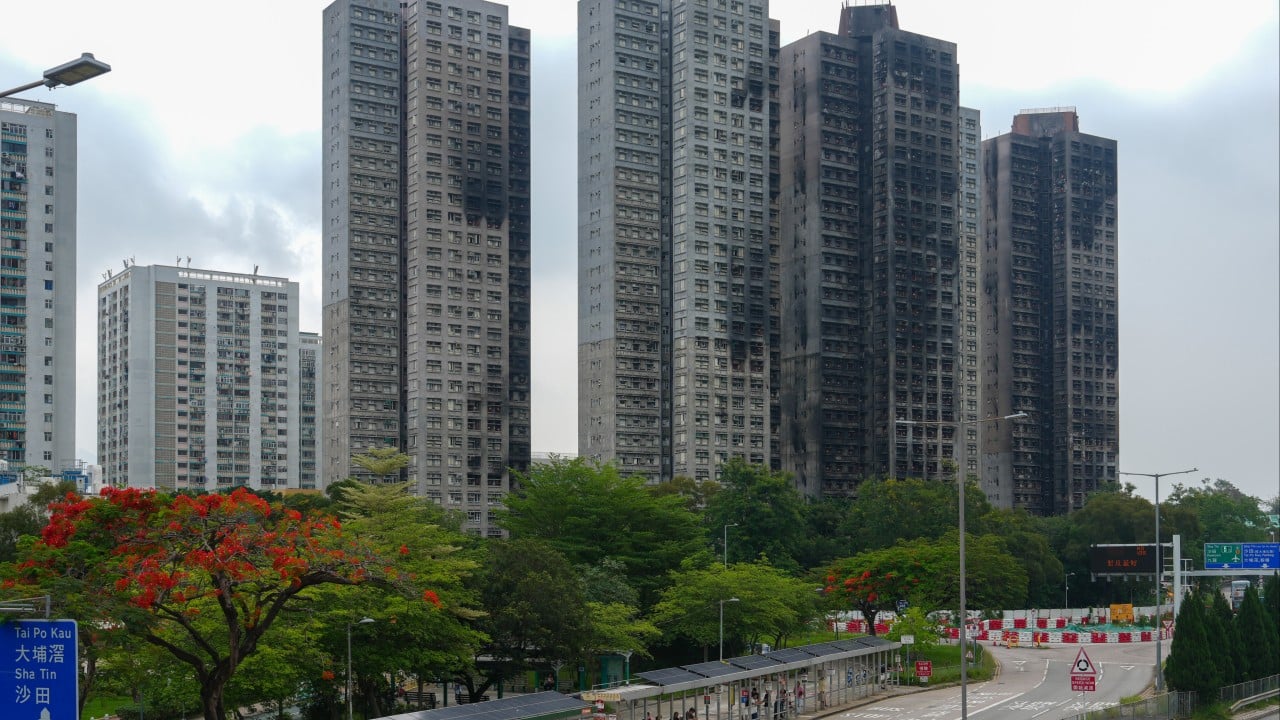
The inquiry into the horrific Wang Fuk Court fire in Tai Po is playing out exactly like every other disaster investigation in history. The public is furious. The media is screaming. The politicians are pointing fingers.
Four government departments—the Labour Department, the Fire Services Department, the Buildings Department, and the Housing Bureau’s Independent Checking Unit (ICU)—have been dragged over the coals. We watch them on the stand, squirming, claiming the flammable styrofoam, the un-certified safety nets, and the disabled fire alarms were "not our responsibility". For another look, see: this related article.
The lazy consensus has already formed. The editorial boards have written their drafts: This was a catastrophic failure of government oversight. We need more inspections. We need stricter laws. We need better inter-departmental communication.
They are entirely, dangerously wrong. Similar reporting on the subject has been provided by TIME.
The deadly 2025 blaze that claimed 168 lives was not caused by a lack of regulation. It was caused by the sheer, suffocating weight of it.
I have spent two decades navigating the intersection of construction, corporate risk, and municipal bureaucracy. I have watched developers blow millions of dollars complying with arbitrary codes while ignoring glaring, real-world hazards.
The Tai Po fire is the ultimate proof of a counter-intuitive truth: The more you regulate, the more dangerous buildings become.
The Illusion of the "Inspectocracy"
When a disaster occurs, our immediate psychological reflex is to demand more inspectors. We want men in hardhats with clipboards walking the scaffolding, ensuring everything is safe.
But the "inspectocracy" does not create safety. It creates a highly sophisticated game of cat and mouse where the prize is a stamped piece of paper.
Consider what actually happened at Wang Fuk Court. The Housing Bureau’s Independent Checking Unit (ICU) had a policy of notifying the project consultant in advance of inspections.
What did the contractors do? They simply swapped out the cheap, highly flammable scaffolding mesh for a fire-retardant version just before the inspectors arrived. Once the clipboards were signed, the dangerous material went right back up.
This is not a failure of "communication." It is the logical consequence of a compliance-focused safety culture.
When safety is defined by a pre-announced government audit, you incentivize the illusion of safety, not the reality of it. The contractor, Prestige Construction—a firm with an astonishing 140 prior safety convictions—understood this game perfectly. They knew that as long as they had the right paperwork, the physical reality on the scaffolding did not matter.
The Buildings Department admitted they relied entirely on paper certificates submitted by the contractors to verify the safety of the scaffolding mesh. They did no physical flammability tests. Why would they? The checklist did not require it.
The paperwork was pristine. The building burned to the ground anyway.
How Diffused Liability Murders Accountability
The second great lie of the Tai Po inquiry is that these four departments failed because they did not talk to each other.
"There was no formal referral mechanism," testified an Urban Renewal Authority official, explaining why complaints about a corrupt, incompetent contractor were ignored.
This is bureaucratic gaslighting.
The issue is not a lack of communication channels. The issue is that the sheer number of overlapping regulatory bodies allows everyone to shirk liability. When everyone is responsible for safety, nobody is.
Imagine a simple scenario:
- A resident spots highly flammable expanded polystyrene boards covering interior and exterior windows.
- They call the Fire Services Department. The FSD says window coverings are outside their purview.
- They call the Housing Bureau’s ICU. The surveyor says they do not regulate external wall materials.
- They call the Labour Department. The department says the scaffolding nets seem fine from their angle.
- They call the Buildings Department. The department points to a signed certificate from a mainland testing authority.
Each bureaucrat is telling the absolute truth. Under the narrow, hyper-specific definitions of their respective mandates, it was not their job.
By slicing the elephant of "safety" into fifty tiny, regulated pieces, the government created a system where the animal died, but every single butcher could prove their knife was clean.
The Paperwork Shield
In a deregulated or self-regulated system with brutal liability, a contractor who uses fake fire certificates or disables a building's fire alarms goes to prison for manslaughter, and the project consultant is bankrupted by lawsuits.
But in a hyper-regulated system, the regulations themselves become a shield.
When a contractor can point to a government-approved inspector who signed off on the site, or a certificate stamped by an authorized third party, their legal liability is instantly diluted. They have complied with the process.
We saw this in the testimony of the property management company, ISS EastPoint Properties. An in-house electrician accidentally switched off the entire building's fire alarm system. Why? Because they were emptying water tanks, and the fire installation contractor was not present.
The industry defense? "It is not our job to teach other companies how to do their work."
This is the ultimate evolution of the compliance-first mindset. Everyone operates in a silo. No one looks at the building as a living, breathing, potentially combustible system. They look at it as a series of distinct contracts and regulatory boxes to tick.
The Real Cure: Brutal, Un-insurable Liability
If we double down on the mainstream consensus, what happens next?
The government will create a new "Inter-Departmental Fire Safety Coordination Task Force." They will write a 400-page manual on scaffolding mesh verification. They will introduce a new digital portal where departments can share complaints.
And the next time a contractor wants to cut corners, they will just hire a slightly more expensive consultant to navigate the new portal and forge the new digital certificates.
To actually fix this, we must dismantle the bureaucratic buffer.
Instead of adding more inspectors to pre-approve work, we must shift the entire burden of risk back to the private actors who profit from these projects.
1. Eliminate the "Pre-Announcement" Inspection
No more warning letters to contractors before an inspector arrives. Inspections must be unannounced, random, and accompanied by immediate, on-site material testing. If the mesh burns for five seconds instead of the certified four, the site is shut down instantly, and the contractor is fined 10% of the gross project value per day.
2. Personal, Criminal Liability for Directors
A corporate fine is just a cost of doing business. For a company like Prestige, with 140 convictions, fines are built into the margins. Safety will only matter when the personal freedom of directors is on the line. If a system is shut off and people die, the directors of the contracting firm and the property management company must face immediate, non-bailable manslaughter charges.
3. Starve the "Paper-Only" Consultants
The project consultant is the most useless entity in modern construction. They exist solely to translate the contractor's cutting of corners into language that satisfies the government's checklists. If a consultant signs off on a project where the fire alarms are disabled or the materials are fraudulent, their professional license must be permanently revoked. No appeals. No second chances.
The tragedy at Wang Fuk Court was not a failure of the rules. It was a failure of a system that believes rules can replace responsibility. Until we stop asking the government to protect us from bad contractors and start making it legally and financially fatal to be a bad contractor, the scaffolding will keep going up, the certificates will keep being forged, and the high-rises will keep burning.