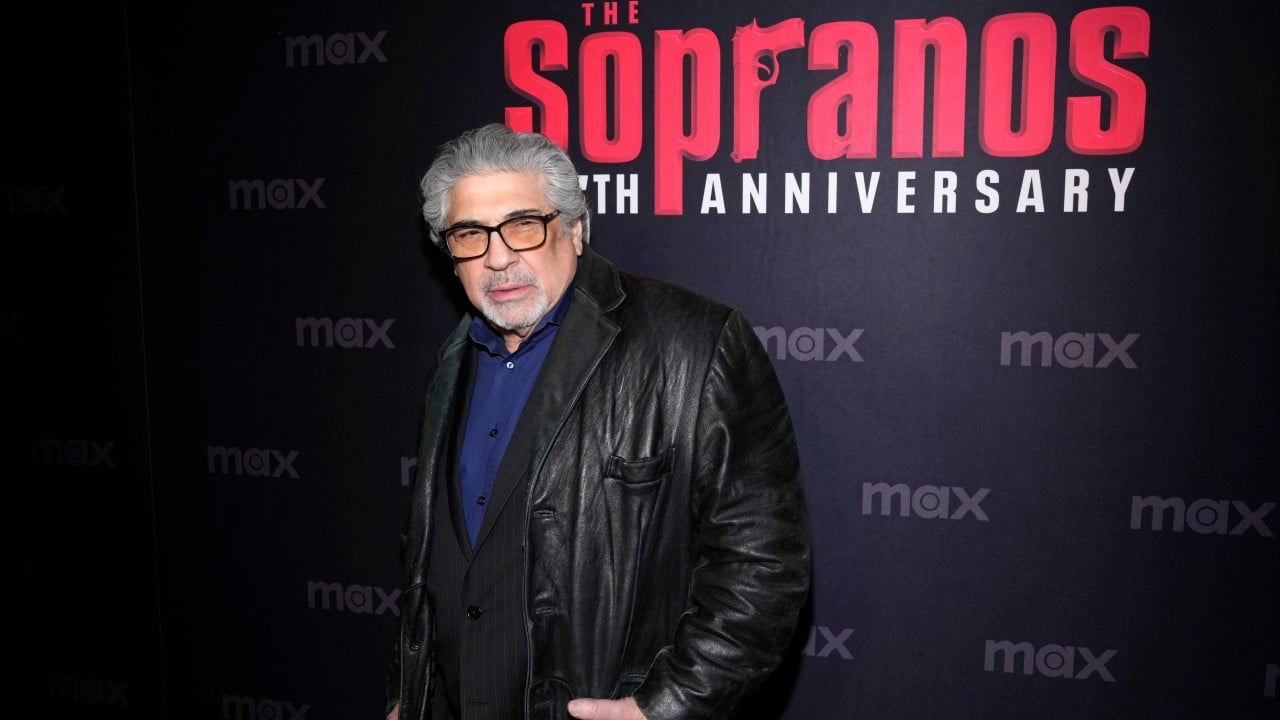
The lazy consensus rolls out every time a recognizable face exits the stage. Obituaries default to the path of least resistance. They dig up the headshots, count the mob movies, drop the obligatory references to Italian-American casting tropes, and call it a day.
When the news broke about Vincent Pastore passing away at eighty, the media immediately rushed to fit him into a neat little box. Big guy, rough voice, New York swagger, professional tough guy. They flattened a multi-decade career into a single archetype.
They got it completely backwards.
Reducing Pastore to a caricature of cinematic organized crime ignores how he actually operated, how he cracked open a notoriously closed industry late in life, and why his presence on screen always carried a strange, self-aware friction that standard casting directors never fully understood.
The Myth of the Accidental Heavy
Hollywood loves the bootstrap myth of the overnight sensation who just happened to walk off the street and onto a soundstage. It makes for good press releases. In Pastore's case, the narrative usually paints him as a guy who ran clubs in New Rochelle, hung around the right crowds, and lucked into playing Big Pussy Bonpensiero on The Sopranos because he looked the part.
That version of events is an insult to craft.
I have watched enough casting rooms burn through budget and time trying to find authenticity in actors who went to prestigious drama schools but have never experienced the crushing gravity of a real-world working-class neighborhood. Pastore did not just play a tough guy; he understood the underlying architecture of authority, guilt, and survival.
Before the major film credits piled up, he spent decades navigating the volatile waters of the New York hospitality and club scene. He knew the cadence of men who lived on the edge of legality long before a camera crew pointed a lens at him. When you watch Salvatore Bonpensiero sweat through his FBI informant crisis, you are not watching a masterclass in theatrical pretense. You are watching a man leverage lived observation into raw psychological tension.
The mainstream media calls that typecasting. Anyone paying attention calls it precision casting.
Why the Mobster Archetype is Misunderstood
For decades, cultural critics have whined about Italian-American actors getting funneled into criminal roles. The argument goes that playing mobsters reinforces harmful stereotypes and limits artistic range.
That critique misses the mark entirely.
Acting is not about checking diversity boxes or maintaining pristine cultural optics. It is about emotional truth. The organized crime genre in American television and film is our version of the Western or the Shakespearean tragedy; it is a vehicle to explore loyalty, betrayal, capitalism, and family decay.
Pastore understood this better than most of his peers. While others leaned into the cartoonish bluster of movie tough guys, he played the exhaustion. Look closely at his performances in Goodfellas, Carlito's Way, and The Sopranos. His characters are rarely invincible masterminds. They are anxious, heavy, trapped by their own choices, and constantly calculating the cost of their next move.
When your entire career is framed as "just playing yourself," critics assume zero technical skill is involved. That is the ultimate trap. Making naturalism look effortless requires a terrifying amount of restraint. Pastore never chewed the scenery when a quiet, dead-eyed stare could do the heavy lifting.
The Late Bloomer Advantage
Most actors spend their twenties starving in cheap apartments, chasing validation from casting directors who only want fresh-faced youth. Pastore entered the industry in his late thirties and didn't land his defining role until his fifties.
That timeline gives you an unfair advantage.
When you start late, you bring zero adolescent desperation to the set. You do not care about looking pretty, protecting your brand, or playing the Hollywood networking game. You treat the job like a blue-collar trade. Show up on time, know your lines, execute the scene, and go home.
That attitude is precisely why David Chase and his casting team trusted him with one of the most psychologically demanding arcs in television history. Big Pussy was not just a side character; he was the emotional canary in the coal mine for Tony Soprano’s entire psychological disintegration. If Pastore had played him as a one-dimensional thug, the betrayal wouldn't have hurt.
Instead, he made audiences feel pity for a rat. That requires elite-level nuance.
Dismantling the Hollywood Obituary Playbook
Every standard tribute to Pastore highlights the same surface-level trivia. They mention his work on stage, his voice acting in animated features, and his reality television stints. They treat these pivots as eccentric career detours.
They are missing the strategy.
Pastore never fell victim to the actor's curse of taking himself too seriously. He understood the modern attention economy long before digital influencers ruined it. He leaned into the pop culture version of himself, showing up in music videos, indie comedies, and cameo roles that mocked his own tough-guy persona.
That self-awareness is rare. Most actors spend their entire lives terrified of breaking character or losing their mystique. Pastore treated his public persona like a living, breathing prop. He knew that the moment you stop laughing at yourself in this business, you become obsolete.
The Real Legacy
We spend too much time mourning the loss of icons by turning them into saints. We sanitize their edges, praise their struggles, and file them away into the history books where they can no longer challenge our assumptions.
Vincent Pastore was no saint. He was a working-class New Yorker who beat the odds, refused to play Hollywood's game by their rules, and carved out an unforgettable footprint in the golden age of television through sheer, unadulterated presence.
He didn't need a formal conservatory background to out-act the classically trained theater nerds sharing the screen with him. He just needed to be real.
The industry will keep looking for the next tough guy, the next gravel-voiced heavy from the boroughs, trying to bottle what he had. They will keep failing because they are looking at the suit, the accent, and the resume, completely blind to the grit underneath.
Stop reading the standard obituaries. Go back and watch the season two finale of The Sopranos. Watch the boat scene. Watch the way a guy who was supposed to be a simple character actor carries the weight of an entire cultural watershed on his shoulders without flinching.
That is how you leave a mark.