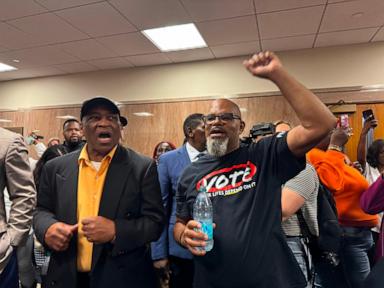
Louisiana and Georgia are not "advancing" democracy. They are refining a high-stakes shell game that keeps the same people in power while convinced voters fight over the scraps. The media treats redistricting like a moral crusade for representation. It isn't. It’s a spatial optimization problem designed to minimize the impact of your vote while maximizing the comfort of incumbents.
The standard narrative suggests that the 2028 map shifts in Louisiana—driven by federal mandates for a second majority-Black district—are a victory for civil rights. That’s a shallow read. In reality, these "victories" often result in packing and cracking, a technical strategy where minority voters are either stuffed into one super-district (packing) or scattered across several (cracking) to ensure their influence never hits a critical mass elsewhere.
The Myth of Competitive Districts
We are told that redistricting aims to make maps "fair." But fairness is a subjective metric used to mask the death of competition. Look at the numbers. Since the 1990s, the number of competitive House seats has plummeted. We have replaced broad political appeal with surgical demographic sorting.
When Georgia joins the fray for 2028, they aren't looking to create a marketplace of ideas. They are looking to build fortresses. If you live in a "safe" district, your general election vote is a formality. The real election happened months prior, behind closed doors, using $GIS$ software that predicts your behavior better than you do.
The $GIS$ (Geographic Information Systems) used today isn't the crude map-making of the 1980s. It uses massive datasets—your grocery habits, your magazine subscriptions, your commute patterns—to draw lines that split neighborhoods with the precision of a laser.
The Efficiency Gap Deception
Political scientists love to cite the "efficiency gap." It’s a formula intended to measure "wasted" votes. If party A wins a district with 80% of the vote, 30% of those votes are "wasted" because they weren't needed for the win. If party B loses a district with 49%, all those votes are "wasted."
The formula looks like this:
$$EG = \frac{\sum W_v^A - \sum W_v^B}{N}$$
Where $W_v$ represents wasted votes and $N$ is the total number of votes cast.
While this looks like a tool for justice, it is actually a manual for the perfect gerrymander. Parties use this math to ensure they don't win too big in any one place. They want to win by 52% in five districts rather than 90% in two. The "fairness" mandates coming out of courts in Louisiana and Georgia simply force the cartographers to be more sophisticated in how they hide the bias.
Why Non-Partisan Commissions Often Fail
The "lazy consensus" suggests that taking the power away from politicians and giving it to "independent commissions" solves the problem. It doesn't. It just shifts the bias from overt to structural.
I’ve watched these commissions operate. They are often staffed by "academics" and "civic leaders" who carry the same subconscious biases as the politicians they replace. They prioritize "community of interest" (a term so vague it can mean anything from a school district to a shared love of crawfish) over mathematical neutrality.
When you prioritize "communities of interest," you inherently favor the status quo. You freeze a moment in time—the 2020 or 2030 Census—and assume that neighborhood will stay the same for a decade. It never does. By the time the maps are used for the third or fourth time, the demographics have shifted, but the boundaries are locked in stone.
The Georgia Precedent: 2028 is a Defensive Play
Georgia’s entry into the 2028 redistricting cycle is framed as a response to shifting populations. Don't buy it. It's a defensive crouch. The state is trending purple, not because people are changing their minds, but because of massive domestic migration.
The incumbents aren't trying to represent the new Georgia; they are trying to dilute it. By moving the lines now, they can neutralize the growth in the Atlanta suburbs before it threatens the power structure in 2030.
Imagine a scenario where a suburban county grows by 20% in four years. If you leave the map alone, that county becomes a power center. If you "redistrict" early under the guise of "alignment," you can slice that county into three pieces, tethering each piece to a rural base that outvotes the newcomers. That isn't progress. It's an administrative coup.
The Cost of the "Compactness" Obsession
We are told that districts should be "compact"—nice, neat shapes on a map. This is a visual trick for the uninformed. A perfectly square district can be just as gerrymandered as one that looks like a "Rorschach inkblot."
Compactness is a proxy for "it looks right," which is the opposite of data-driven governance. In a state like Louisiana, where geography is dictated by bayous and historical settlement patterns that aren't "compact," forcing a shape-based mandate actually disenfranchises voters who live along natural corridors.
The obsession with geometry over geography is why we have districts that make sense to a computer but feel like alien territory to the people living in them.
Stop Asking for Fair Maps
The question "How do we make maps fair?" is the wrong question. It assumes that there is an objective "fair" state that exists if we just find the right algorithm.
There isn't. Every map is a choice. Every line drawn is an act of exclusion.
If you want actual representation, you don't change the lines; you change the math of the election itself.
- Multi-member districts: Instead of one winner per district, run five.
- Ranked choice voting: Stop the "lesser of two evils" trap.
- Open primaries: Kill the party stranglehold before the general election even starts.
Louisiana and Georgia won't do any of this. Why? Because the current system works perfectly for the people running it. They get to pick their voters rather than the voters picking them.
The media will keep focusing on the "drama" of the courtroom battles and the "victory" of new maps. They are missing the forest for the trees. The real story isn't that the lines are moving; it's that the lines exist at all. As long as we use 18th-century geographic boundaries to manage 21st-century digital citizens, the house will always win.
The 2028 redistricting effort isn't a fix. It's a software update for an OS that is designed to crash. Stop cheering for a new map and start demanding a new game.
Don't wait for the courts to save your vote. They are just the referees in a match where both teams are owned by the same syndicate. If your representative's primary concern is the shape of their district, they aren't representing you. They are protecting their lease.
Article ends. No more lines. No summary. No next steps.