The heat in Mbandaka does not just sit; it presses. It carries the thick, sweet scent of the Congo River and the low, constant hum of a city trying to outrun its own geography. For a stranger, the market is a dizzying blur of color and noise. For a local doctor, it is something else entirely. It is a grid of potential contact points.
Every handshake is a gamble. Every shared motorbike taxi ride is a link in a chain that could stretch across provinces before anyone even realizes the chain has been forged.
When the World Health Organization elevated the risk assessment of the latest Ebola outbreak in the Democratic Republic of Congo to "very high" nationally, the announcement arrived in Geneva briefing rooms as a sterile statistic. It was a data point on a PowerPoint slide. But on the ground, along the muddy banks of the Équateur province, that risk assessment translates into a very specific kind of quiet panic. It means the thin line between a contained cluster and a runaway catastrophe has just worn dangerously translucent.
To understand why the risk is suddenly so high, you have to leave the spreadsheets behind and look at the water.
The Highway That Bleeds
Mbandaka is not an isolated village tucked deep into the rainforest where a virus can burn itself out in isolation. It is a bustling port city of more than one million people. More importantly, it sits like a choke point on the Congo River, the literal economic artery of Central Africa.
Consider a hypothetical trader we will call Marie. She sells dried fish. She doesn't read WHO press releases. If Marie gets sick, she doesn't immediately go to a clinic; she takes a crowded wooden whaleboat downriver toward Kinshasa to buy medicine or visit family. Kinshasa is a mega-city of fifteen million people. The river is a conveyor belt. If the virus hitches a ride on that belt, the math of containment changes instantly.
This is not a theoretical fear. It is the nightmare that keeps epidemiologists awake in their tents. The geographic vulnerability of the current outbreak zone is what triggered the international alarm. Ebola is no longer just hiding in the dense canopy of the jungle. It has reached the concrete.
The virus itself is a masterpiece of brutal simplicity. Structurally, it looks like a tangled piece of thread under an electron microscope. But once inside the human body, it acts like a demolition crew. It attacks the endothelial cells that line the blood vessels. As the infection progresses, it triggers a systemic inflammatory response that drops blood pressure and causes multi-organ failure.
We often talk about Ebola as a disease of bleeding, but the reality is less cinematic and far more devastating. It is a disease of profound dehydration, exhaustion, and the total collapse of the body’s internal plumbing.
But the biology of the virus is only half the problem. The harder half is the human landscape it encounters.
The Architecture of Distrust
In a perfect world, a highly contagious pathogen is met with immediate isolation, contact tracing, and ring vaccination. You map the patient’s movements, vaccinate everyone they touched, and create a firewall of immunity.
But the world along the river is far from perfect. It is scarred by decades of conflict, systemic neglect, and a profound, justifiable distrust of authority.
When teams in white biohazard suits roll into a neighborhood in heavy SUVs, they do not always look like saviors. To a family that has watched children die of preventable malaria and clean water shortages for years without seeing a single foreign doctor, the sudden arrival of millions of dollars in high-tech medical gear because of this specific disease feels suspicious. Rumors spread faster than the virus. Some believe the treatment centers are where people go to die, or worse, where the illness is manufactured.
This psychological barrier is where the real battle is fought. If a mother hides her feverish child under a blanket when the health surveillance team walks by, the entire global health apparatus fails. One hidden case can reset the ninety-day countdown to eradication back to zero.
The stakes are amplified by the sheer exhaustion of the local healthcare workforce. The doctors and nurses in Équateur province are not fresh recruits. They are veterans of multiple successive outbreaks, working in clinics that often lack reliable electricity or running water. They wear layers of impermeable personal protective equipment in 95-degree heat, sweat pooling in their rubber boots, knowing that a single tear in a glove or an accidental touch of the face during doffing could be a death sentence.
The Invisible Vectors
The WHO’s upgrade of the risk level to "very high" also reflects a frustrating reality of modern epidemiology: the changing nature of the virus's origin.
Historically, Ebola outbreaks were rare, sporadic events triggered when a human handled infected bushmeat—usually a fruit bat or a primate that had died in the forest. Once the human chain was broken, the outbreak ended. But recent genetic sequencing suggests a more complicated story. The virus can persist in the bodily fluids of survivors for months, or even years, long after they have recovered and returned to normal life.
This means the embers of a previous outbreak can smolder silently beneath the surface, waiting for the right conditions to ignite a new flare-up.
It creates a terrible paradox for survivors. They beat a disease with a historical mortality rate that hovers around fifty percent. They crawled out of the isolation wards, celebrated by their communities. Yet, they carry a hidden burden, walking through their villages knowing that they might unwittingly be the source of the next wave. The stigma is a heavy, invisible cloak.
To break this cycle requires more than just shipping crates of experimental vaccines and monoclonal antibodies to the front lines. It requires a shift in how the world views global health security.
Right now, the international community operates on a reactive model. We wait for the smoke to become a visible plume on the satellite imagery before we mobilize the fire engines. We fund the panic, but we starve the preparation.
The Cost of the Gap
Between outbreaks, the funding dries up. The temporary isolation tents are packed away or rot in the humidity. The local community health workers, who know every family in their village and possess the trust that no foreign expert can buy, go unpaid. They return to farming or market trading just to survive.
Then, when the virus jumps the species barrier again, the global community spends ten times the amount of money rebuilding the infrastructure from scratch.
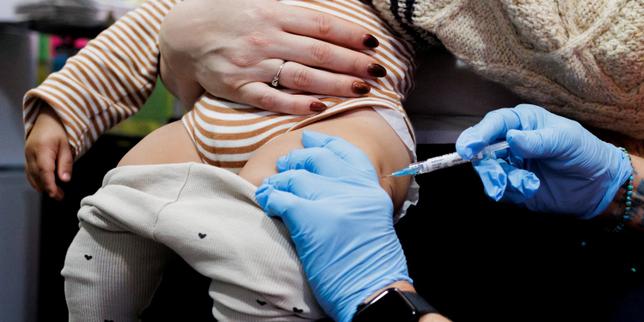
The current response relies heavily on the Ervebo vaccine, a highly effective tool that has fundamentally changed the playbook for Ebola control. In past decades, an outbreak in a major transit hub like Mbandaka would have meant a guaranteed catastrophe. Today, the vaccine allows responders to draw a protective ring around the infected.
But a vaccine is only as good as the cold chain that carries it.
The doses must be kept at ultra-low temperatures—between -60°C and -80°C. Imagine trying to maintain that level of deep-freeze refrigeration in a region where the power grid is non-existent, relying on solar-powered freezers and portable generators transported by dugout canoes through equatorial swamps. The logistics are a marvel of human ingenuity, but they are incredibly fragile. If a generator fails on a remote river tributary, hundreds of life-saving doses turn into useless liquid within hours.
The real problem lies in our collective short-sightedness. We treat these outbreaks as isolated African tragedies, regional emergencies that happen to people living along rivers we will never cross.
But the distance between Mbandaka and any international airport is measured in hours, not weeks. A person exposed to the virus can board a barge, catch a flight from Kinshasa, and land in London, Paris, or New York before they show a single symptom. The "very high" risk designation is a warning for the entire global village, a reminder that an infection anywhere is an infection everywhere.
The Waiting Game
As night falls over the river, the market stalls pack up, and the kerosene lamps are lit along the water's edge. In the local isolation ward, the monitors click. A nurse checks the IV drip of a patient whose identity is protected by a clipboard and a heavy curtain.
Outside, the city continues to move, oblivious to the fact that its survival depends entirely on whether that patient's contacts can all be found before tomorrow morning.
There is no neat resolution to this story, no comforting assurance that the virus has been beaten back into the forest. There is only the daily, grinding work of containment. The world watches the numbers rise and fall on the WHO dashboards, looking for signs of stabilization.
But the true measure of success isn't found in the statistics. It is found in the silence of an empty isolation bed, in the steady, uninterrupted pulse of the river traffic, and in the collective intake of breath from a city waiting to see if the firewall will hold.