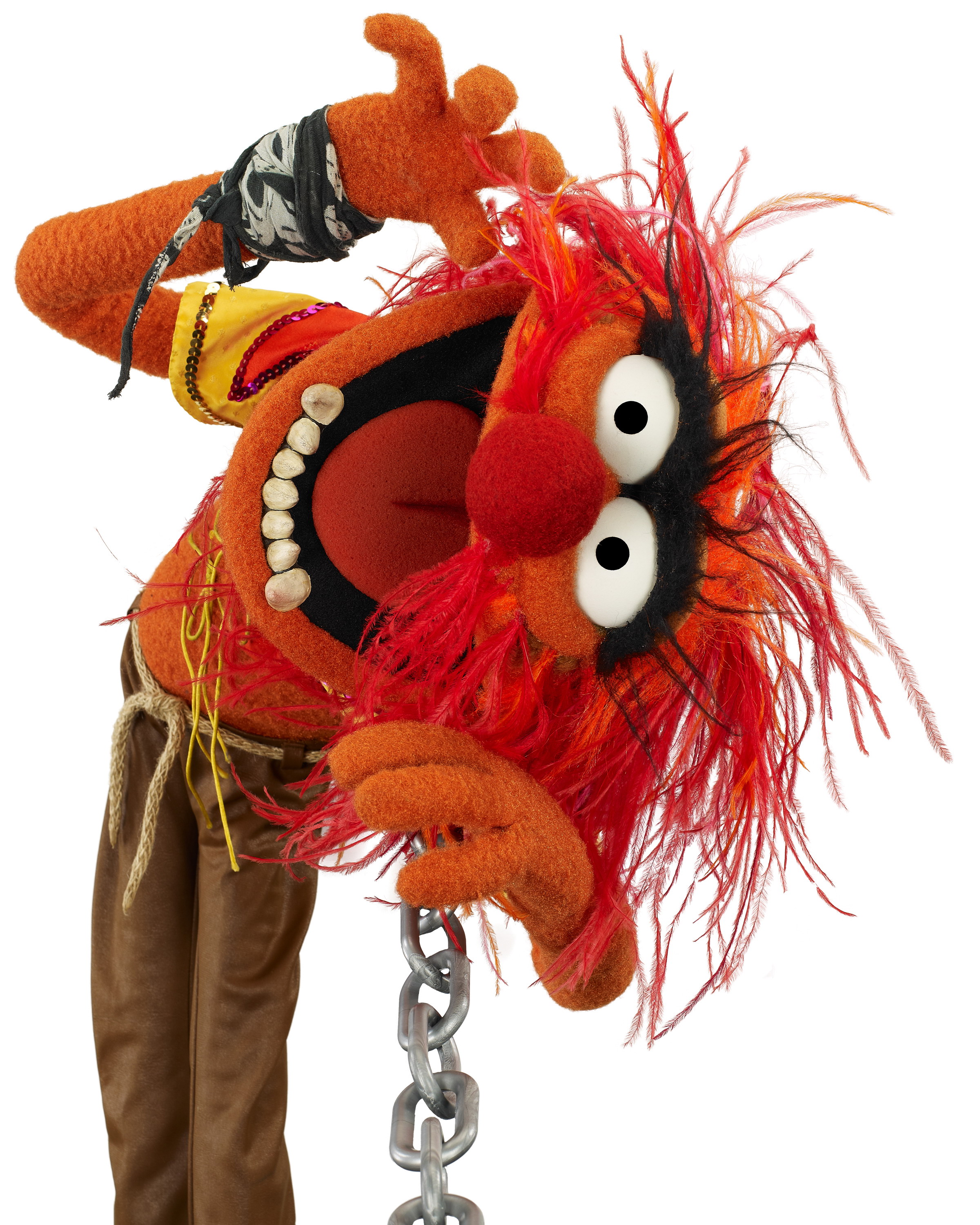
The fuzzy red monster didn’t know he was a threat to national security. He just wanted to help a friend say "Hello."
When Elmo appeared in a segment teaching children a few basic words in Arabic, the reaction from certain corners of the American media landscape wasn't curiosity or a nod to cultural literacy. It was an explosion. Commentators on Fox News recoiled as if the Muppet had swapped his ticklish belly for a manifesto. They spoke of indoctrination. They spoke of the "creeping influence" of foreign cultures entering American living rooms through the Trojan Horse of public broadcasting.
It was loud. It was indignant. It was perfectly calibrated to make a parent sitting in a suburban kitchen feel like the ground was shifting beneath their feet.
But while the bright lights of the studio were focused on a puppet’s vocabulary, a much larger, much quieter story was unfolding in the shadows of the very building where those commentators collect their paychecks. It is a story of billions of dollars, royal lineage, and a silence so profound it vibrates.
The outrage had a blind spot. A massive, Saudi-shaped blind spot.
The Invisible Shareholder
Money doesn't usually make a sound. When it moves across borders in quantities large enough to buy a significant stake in a global media empire, it travels through digital pipes, handled by men in bespoke suits who value discretion above all else.
Consider for a moment the irony of the situation. On the screen, a pundit warns you that a three-year-old learning the word for "friend" in Arabic is a cultural crisis. Meanwhile, behind the scenes, Prince Alwaleed bin Talal of Saudi Arabia has spent decades as one of the largest shareholders of News Corp and 21st Century Fox.
We are talking about a man who, at various points, held more sway over the parent company of Fox News than almost anyone not named Murdoch.
If we are to believe that language in a children’s show is a form of soft power, what do we call the billions of dollars anchored in the foundation of the network itself? Influence is a funny thing. It is easy to spot when it wears fur and googly eyes. It is much harder to see when it sits on a balance sheet.
The hypocrisy isn't just a quirk of the news cycle; it is a structural necessity. To maintain the narrative of "us versus them," you have to be very careful about who you define as "them." Apparently, a puppet promoting bilingualism is a foreign invader. A billionaire prince with a direct line to the board of directors is just a "strategic partner."
The Geography of Anger
Fear is a localized commodity. It works best when it is directed at something the audience can visualize—a classroom, a library book, a television screen. It fails when it becomes too abstract.
Imagine a hypothetical viewer named Jim. Jim lives in a town where the factory closed ten years ago. He feels like the world he grew up in is evaporating. When he turns on the news and sees a segment about Elmo learning Arabic, that feeling of loss finds a target. He doesn't have the time or the inclination to research the institutional shareholding structures of multinational conglomerates. He just knows that the red puppet doesn't look like the world he remembers.
The network feeds Jim’s anxiety because anxiety is addictive. It keeps him tuned in through the commercial break.
But the network will never tell Jim about the Prince. They won't explain how Saudi interests have used their leverage to soften coverage of the Kingdom’s human rights record or how petrodollars have helped prop up the very platform Jim is watching. To do so would be to admit that the "traditional values" being defended on air are frequently subsidized by a regime that represents the antithesis of those values.
It is a shell game. You watch the puppet. They keep the gold.
The Cost of Selective Vision
The danger of this selective outrage isn't just that it’s dishonest. It’s that it leaves the public completely unequipped to understand how power actually works in the twenty-first century.
When we obsess over the cultural "purity" of Sesame Street, we lose the ability to track the movement of global capital. We forget that media companies are, first and foremost, businesses. Their loyalty isn't to a flag or a culture; it is to the shareholders. And when those shareholders include members of the Saudi royal family, the editorial "independence" of the network starts to look very fragile.
During the Arab Spring, or in the wake of the Jamal Khashoggi's murder, the silence from certain media outlets was deafening. There were no fiery monologues about foreign influence then. There were no warnings about the "creeping" reach of the Riyadh. The anger had been put on a leash.
It turns out that "national sovereignty" is a very flexible concept when it’s being debated by people whose salaries are paid by international financiers.
A Language of Power
There is a deep, unsettling pathos in watching adult humans wage war on a fictional monster while bowing to real-world autocrats.
Arabic is just a language. It is spoken by millions of people, many of whom are American citizens, doctors, soldiers, and neighbors. Teaching a child a few words of it is an act of expansion—it makes their world a little bit bigger, a little bit more understandable. It reduces the "other" to a person you can greet.
The "foreign influence" that actually matters isn't the one that teaches your children how to say "shukran." It’s the one that dictates what you are allowed to be angry about. It’s the one that tells you to fear a puppet while it shakes hands with a tyrant in the dark.
The next time a talking head tells you that a children’s show is the front line of a civilization war, look past the screen. Look at the ledger. Look at the names on the filings.
The most dangerous words in the world aren't the ones being taught to Elmo. They are the ones that the news anchors are paid never to say.
The red puppet is still smiling, unaware of the storm. He is just a bit of felt and some clever puppetry. The Prince, however, is very real. He is quiet. He is patient. And he knows exactly how much it costs to buy a silence that sounds like a scream.