The map on the wall of the cramped command post in eastern Ukraine is stained with coffee and older, darker things. Outside, the wind howls across the steppe, carrying the sharp, metallic tang of burning diesel and earth churned raw by artillery. Inside, a junior officer traces a fingernail along a blue line representing a frontier that has ceased to be a line and become a scar.
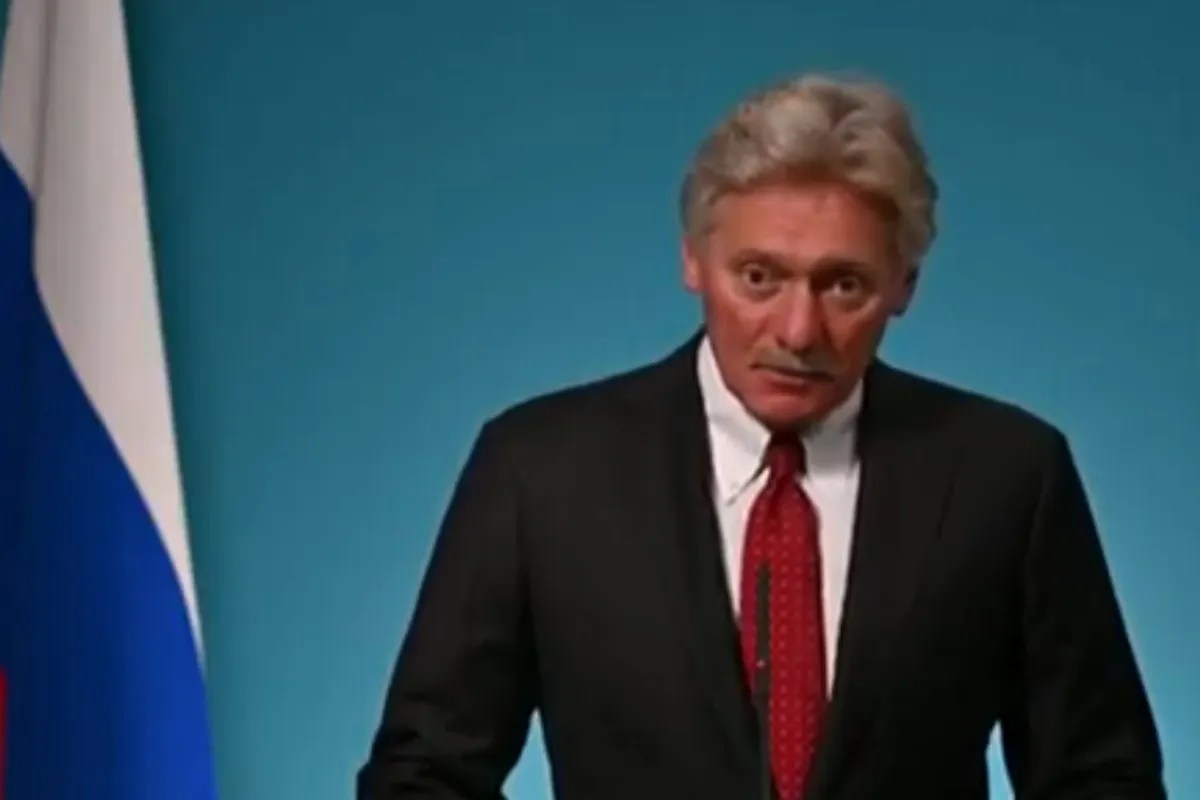
Moscow has spoken again. The message is not diplomatic code wrapped in velvet. It is a brick thrown through a window.
No NATO boots on Ukrainian soil.
To the diplomats in Brussels and Washington, this is a bargaining position. To the generals in Moscow, it is an existential anchor. But to the men and women hunkered in freezing cellars while sirens wail overhead, it is the invisible gravity pulling every shell, every drone, and every sleepless night into a tighter, more terrifying orbit. We talk about geopolitics as if it were a game of chess played by ghosts in sterile rooms. It is not. It is made of flesh, mud, and the heavy silence that follows an explosion.
Listen.
That is the sound of an entire generation realizing that the architecture of global security built after the Second World War has cracked wide open.
The Anatomy of an Ultimatum
To understand why Moscow reacts with such visceral fury to the mere whisper of Western military deployment, we have to strip away the abstractions of international relations and look at history through the lens of geography. Russia is a country defined by its vulnerabilities. Lacking natural mountain barriers to the west, the European plain has served for centuries as an open highway for invading armies—from Napoleon’s Grande Armée to the mechanized divisions of Nazi Germany.
When the Soviet Union dissolved, a quiet understanding, whether formally codified in treaties or left to the dangerous ambiguity of verbal promises, hovered over the expanding borders of the North Atlantic Treaty Organization. Moscow expected a buffer. Instead, it watched the alliance creep eastward, nation by nation, until the western edge of the Russian sphere of influence brushed against the very teeth of the alliance.
Ukraine became the ultimate flashpoint. Not because of abstract democratic ideals, though those matter profoundly to the people fighting beneath the blue and yellow flag, but because Ukraine is the geographic hinge of Eastern Europe.
When Russian leadership states that the presence of NATO forces inside Ukraine crosses an absolute red line, they are operating from a deeply ingrained strategic paranoia. (Note: This analysis reflects declared doctrine and historical security postures, not a moral justification for military aggression.) They see Western military infrastructure in Kiev, Kharkiv, or Odesa not as a stabilizing peacekeeping measure, but as a dagger pressed directly against their geopolitical throat.
Imagine standing on a narrow ledge with someone you deeply mistrust. Every time they take a step closer, your heart beats harder. Eventually, you stop asking them to pause. You draw a line in the dirt. You tell them that the next step brings a total collapse.
That line is Ukraine.
The Cost of Ambiguity
In a cafe in Lviv, far from the front lines but close enough to feel the tremors, a young woman named Sofia pours over maps on her laptop. She is an architect by training, but now she designs digital archives for displaced families. Her brother is in the trenches near Bakhmut.
When asked about Western security guarantees, her laugh is short and bitter.
"They talk about escalation management," she says, stirring a cup of cold tea. "They talk about avoiding a wider war. But for us, the wider war is already here. Every day we wait for weapons that arrive too late, or permissions that take too long to grant, more of our stone turns to dust."
Sofia represents the tragic paradox of the current conflict. Ukraine seeks the protection of the alliance because it recognizes that without a formidable deterrent, its sovereignty remains permanently vulnerable to revanchist appetite. Yet, that very desire for protection triggers the ultimate escalation fear in Moscow.
The Western calculus is paralyzed by this exact tension. Leaders in Washington and Berlin walk a tightrope. They want to supply enough military hardware to prevent a total collapse of Ukrainian defenses, but they hold back the heavy direct intervention—the boots on the ground, the enforced no-fly zones—terrified that crossing Moscow's red line will transform a regional war into a continental or global conflagration.
This hesitation is rational from a distance. It is maddeningly lethal up close.
The Logic of Deterrence and Despair
War has its own momentum. It devours logic and excretes survival instincts.
When Moscow issues sharp warnings against foreign troop deployments, Western analysts often debate whether it is a bluff. Can the Kremlin afford a direct clash with the alliance? Economically, no. Militarily, the conventional forces of Russia have been severely bloodied and depleted by years of brutal attrition in the Donbas and southern steppes.
Yet, relying on the assumption that a nuclear-armed power is bluffing when it defines its core security interests is a gambler’s ruin.
Consider the nuclear shadow that hangs over every diplomatic cable. During the Cold War, the doctrine of Mutually Assured Destruction kept superpowers from direct kinetic conflict. Proxy wars were fought in the shadows of Vietnam, Afghanistan, and Angola precisely to avoid a direct meeting of American and Soviet armies.
Today, we are testing those old guardrails in real-time. Ukraine is the proxy theater, but the proximity of the battlefield to NATO’s eastern members—Poland, Romania, the Baltic states—means the margin for error is razor-thin. A stray missile, a miscalculated intercept, or the sudden introduction of Western combat brigades could compress the timeline from stability to total war into a matter of minutes.
This is why the diplomatic freeze persists. Neither side can afford to back down without losing face, and neither side can press forward without risking annihilation.
The Human Horizon
Back in the command post, the officer looks up from the map. The radio crackles with static, reporting incoming artillery coordinates a few kilometers north.
We are living through an era where macro-level decisions made in ornate halls in Moscow, Brussels, and Washington translate instantly into smoke rising from civilian rooftops. The demand that NATO troops stay out of Ukraine is framed in the cold vocabulary of strategic stability, but its weight is borne by ordinary people whose lives have been reduced to collateral variables in a historic realignment of power.
The red line remains drawn. The mud of the eastern front remains soaked with blood and frozen by winter winds. And as the world watches from afar, holding its collective breath, the heavy machinery of history grinds forward, indifferent to the pain of the individuals caught in its gears, waiting to see who blinks first in a contest where the stakes are nothing less than the future of human survival.