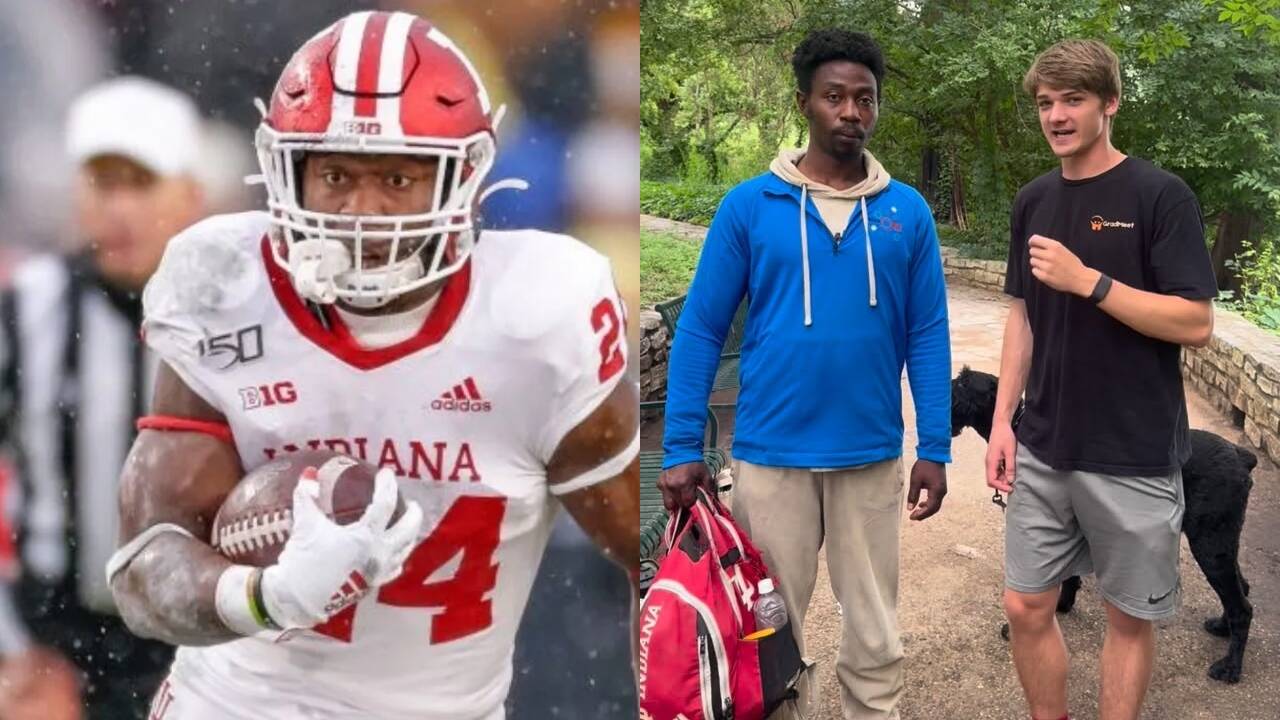
On a sun-scorched sidewalk in Austin, Texas, a worn Indiana University athletic backpack held all the earthly belongings of a man who once played under roaring stadium lights. Sampson James, a former four-star recruit and Big Ten running back, had spent eight months navigating the brutal geometry of street homelessness. His story caught national attention not simply because a chance encounter with a fellow alumnus sparked a seventeen-thousand-dollar online fundraiser, but because it lays bare the systemic fragility awaiting elite athletes when the stadium doors close. We love the Hollywood narrative of redemption sparked by a logo on a nylon bag, yet we rarely interrogate the machinery that allowed a promising young athlete to slip through the cracks of higher education and athletic support systems in the first place.
The journey from high school phenom at Avon High to sleeping rough in Texas did not happen overnight. It was a compounding collapse. James arrived in Bloomington in 2019 with immense expectations, carrying the heavy physical toll inherent to modern collegiate football. A severe knee injury altered his trajectory, stalling the explosive acceleration that made him a prized prospect. Then came a diagnosis of bipolar disorder, a medical reality that intersects poorly with the hyper-masculine, production-driven culture of major college athletics. When he left Indiana University in 2023 without completing his degree, the infrastructure designed to foster his success vanished entirely. The athletic department's obligation, legally and practically, ended where his eligibility and utility expired.
This is the uncomfortable truth behind modern collegiate sports. Universities generate billions of dollars in revenue off the physical output of young men and women, many of whom come from vulnerable socioeconomic backgrounds. Yet, the transition assistance post-injury or post-eligibility remains an ad-hoc patchwork. When an athlete breaks down physically or psychologically, they are frequently left to navigate an unforgiving economic landscape without an active safety net. James's descent into homelessness on the streets of Austin is an indictment of an enterprise that treats players as depreciating assets rather than developing human beings.
Enter Jasper Steinmetz, a recent Indiana graduate who happened to spot the familiar crimson-and-white insignia while walking along a trail. A casual greeting about alma mater loyalty transformed into an investigation, an online crowdfunding campaign, and a temporary rescue package that secured an apartment and prepaid rent. The public response was swift and generous, driven by a nostalgic tribalism inherent to college sports fanbases. People who cheered for James from the stadium bleachers or their living rooms chipped in to pay his rent because they recognized his face and his jersey history.
Yet, relying on viral compassion and crowdfunding is a deeply flawed public health strategy. For every Sampson James whose old backpack catches the eye of someone with an internet connection and a heart for philanthropy, dozens of other former athletes quietly endure destitution, chronic traumatic encephalopathy symptoms, untreated mental health struggles, and financial ruin without a GoFundMe page to save them. A system that relies on lottery-like encounters on public trails is not a system at all; it is a failure of institutional responsibility disguised as a heartwarming human interest vignette.
The aftermath of James's rescue highlights the pressure now heaped upon him by well-meaning strangers. "Now that all these people donated and you got the apartment, they really want to see you succeed," Steinmetz noted during a follow-up interaction. James acknowledged the heavy psychological weight of that expectation, stating his determination not to let down the community that rallied behind him. But survival and personal rehabilitation should not depend on whether a man can successfully carry the collective hopes of an online fanbase without stumbling again.
We must stop treating these recoveries as feel-good miracles that absolve institutions of their duty of care. Universities boast multi-million-dollar athletic facilities, nutrition centers, and specialized coaching staffs dedicated entirely to optimizing athletic output on Saturday afternoons. That same fiscal and organizational power must extend into permanent, lifetime medical and psychological backing for every athlete who puts their body and mind on the line. Until lifetime support is baked into the foundational contract of collegiate athletics, a red backpack on a city sidewalk will remain a symbol of how easily the system discards the very people it was built to elevate.