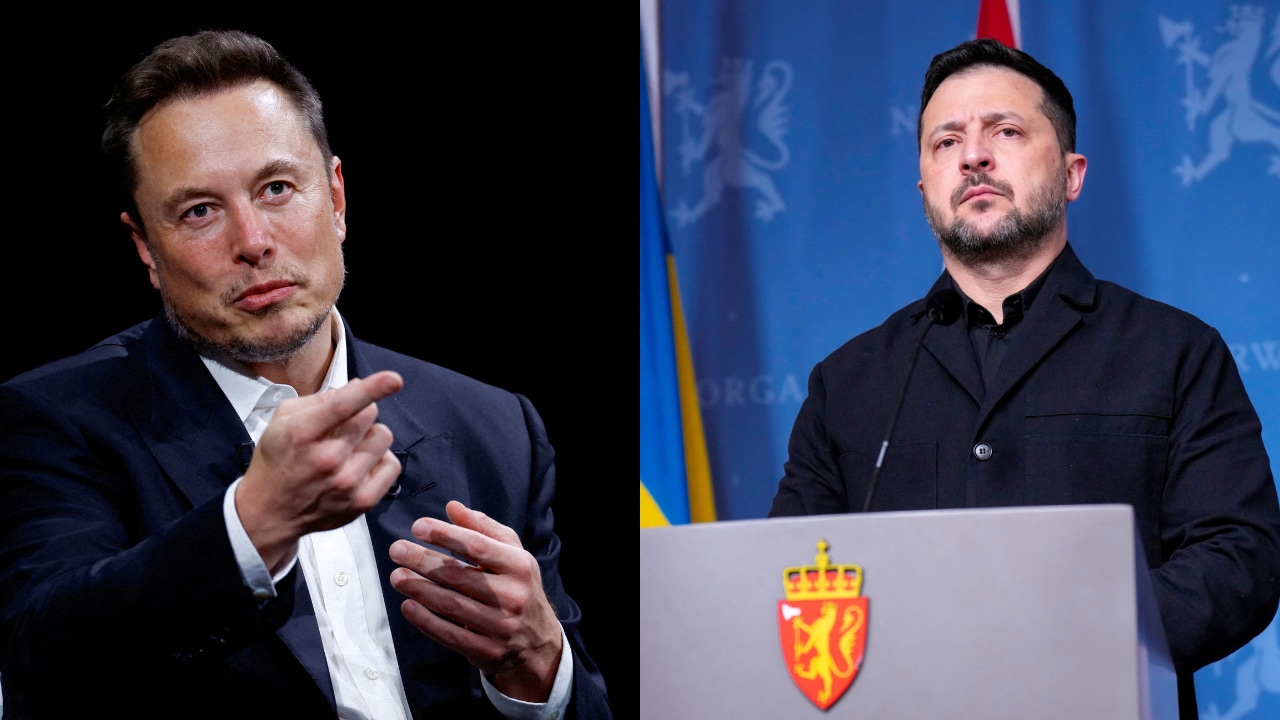
Elon Musk didn't mince words when he explained why Ukrainian drone feeds suddenly went dark over the front lines in October 2026. "Ukraine military violated Starlink terms of service and used it for offensive drone strikes to kill people," the SpaceX founder posted online. "That loophole was closed last week."
It was a blunt admission. For days, Ukrainian commanders had watched their unmanned aerial vehicles drop out of the sky or lose telemetry the moment they accelerated past roughly 100 mph. When service finally snapped back to normal speeds on October 24, 2026, the public clash between Kyiv, SpaceX, and Washington exposed a messy truth about modern warfare. Expanding on this theme, you can find more in: Geofencing the Battlefield and the Privatization of Military Command.
Private tech companies now hold the kill switches to sovereign military operations. And nobody agrees on where commercial rules end and Pentagon contracts begin.
The October Blackout and the Speed Cap Controversy
If you follow battlefield tech, you know that speed caps are the oldest trick in the satellite geofencing playbook. Standard commercial Starlink terminals aren't supposed to act as missile guidance systems. SpaceX has long baked velocity limits into its civilian hardware—typically cutting connectivity if a terminal moves faster than 70 to 90 kilometers per hour inside Ukraine, while blocking signals entirely inside Russian territory. Analysts at ZDNet have also weighed in on this situation.
In mid-October 2026, something changed. Ukrainian officials reported on October 14 that high-speed satellite links were suddenly severing whenever platforms exceeded roughly 100 mph (about 160 km/h).
The operational fallout was immediate. Commanders in Ukraine's Unmanned Systems Forces reported lost drones, aborted mid-range strikes, and blinded reconnaissance teams. Kyiv's 2026 mid-range strike campaign relies heavily on fast, connected drones to choke off Russian supply lines before troops ever reach the trenches. When the bandwidth vanished at high speeds, that strategy hit a brick wall.
Ukrainian President Volodymyr Zelenskyy didn't buy the idea that this was a random technical glitch. He publicly called the outages systematic restrictions rather than accidental errors, demanding answers from American officials. By October 24, Zelenskyy announced that full speeds had been restored, crediting intense media scrutiny and direct diplomatic pressure on Washington for forcing the reversal.
Starlink vs Starshield Where the Stories Collide
Here is where the story splits into two completely different versions of reality. Understanding the clash requires separating two hardware ecosystems that people constantly confuse.
Commercial Starlink is the off-the-shelf satellite internet built for RVs, rural homes, and frontline infantry trenches. Starshield is the militarized, encrypted variant built specifically for the U.S. Department of Defense and allied militaries.
When Musk defended the throttling, he drew a hard line between the two systems. He admitted SpaceX restricted commercial Starlink to stop Kyiv from strapping civilian dishes onto offensive attack drones. "Using Starlink, a civilian commercial service, for offensive drone strikes to kill people has never been allowed, nor should it be," Musk argued.
At the exact same time, Musk insisted he had nothing to do with any restrictions on Starshield. According to SpaceX, those military-grade terminals are governed strictly by the U.S. government.
Ukrainian military tech experts pushed back hard on Musk's explanation. Serhii Beskrestnov, a prominent Ukrainian military communications specialist, pointed out a glaring flaw in SpaceX's narrative. Commercial Starlink terminals were already hard-capped at 70 to 90 km/h and geofenced out of Russia. Kyiv couldn't physically use civilian dishes for deep or medium-range strikes even if it wanted to. The October outage didn't just catch rogue civilian dishes—it crippled the dedicated Starshield links that Ukraine was legally contracted to use.
Washington's Fingerprints on the Kill Switch
If SpaceX claims the Pentagon controls Starshield, who actually turned down the dial in October?
That question triggered finger-pointing at the highest levels of the U.S. government. Reports from The Wall Street Journal indicated that President Donald Trump eventually intervened on October 21, ordering Musk to lift the 160 km/h speed cap after growing frustrated with the ongoing standoff. Trump publicly denied speaking to Musk about the cutoff, though he left the door open to stepping in if disruptions continued. Meanwhile, Vice President JD Vance hinted at coordination between the White House and Musk during the episode.
For Kyiv, the timing felt anything but coincidental. The satellite throttling hit right as diplomatic friction spiked between the Trump administration and Zelenskyy's government. Washington had been pushing back against Ukrainian strikes targeting Russian oil infrastructure while simultaneously exploring a controversial diesel trade arrangement with Moscow.
In a blunt interview with Piers Morgan days after the outage, Zelenskyy admitted he felt personally betrayed by Trump over the connectivity freeze, accusing Washington of undercutting a critical ally more than four years into Russia's full-scale invasion. Even into November 2026, the dispute refused to die down. Zelenskyy continued pressing the U.S. for formal explanations regarding lingering Starshield anomalies, prompting Musk to fire back during a November 19 DealBook Summit appearance alongside Trump's delegation in China. "I don't want to blow your mind, but Zelensky is not always truthful," Musk told New York Times columnist Andrew Ross Sorkin, denying any active restrictions remained.
Why Ukraine Cannot Escape SpaceX's Orbit Yet
It's easy to ask why a modern military would leave its nervous system in the hands of a single billionaire. Honestly, Ukraine didn't have a choice in 2022, and it still lacks a true one-to-one replacement today.
When Russian forces invaded in February 2022, they immediately wiped out Ukraine's conventional telecom networks and Viasat satellite modems. SpaceX stepped in with prepositioned terminals, giving Ukrainian artillery, infantry, and drone operators an unjammable, high-bandwidth lifeline. By February 2026, SpaceX even rolled out a strict terminal whitelist across Ukraine to sever Russian troops who had been smuggling black-market dishes onto the battlefield.
Musk loves to remind critics of that leverage. "Were Starlink to be turned off, the Ukrainian front line would collapse immediately," he wrote on October 24. "This is not a threat, it is simply a statement of fact."
He's largely right about the dependency, which is exactly why Kyiv is scrambling to build backup plans. Repeated connectivity scares have forced Ukrainian defense planners to hunt for alternative satellite providers. By November 2026, reports surfaced that Ukraine had turned to Israeli satellite communications firm HiSky to provide secondary data links for long-range drones operating deep inside Russian territory.
Still, defense analysts point out a harsh reality. Systems like HiSky can keep a long-range strike drone connected to basic telemetry, but they can't match the sheer throughput, low latency, and terminal density of SpaceX's low-Earth orbit constellation. Thousands of Ukrainian squads rely on Starlink not just for drones, but for encrypted messaging, battlefield mapping, and logistics coordination.
What This Clash Means for Modern Warfare
The October 2026 Starlink standoff isn't just a spat between a tech CEO and a wartime president. It's a warning flare for every defense ministry on earth.
For decades, militaries owned their own satellites or leased capacity from traditional aerospace contractors that answered exclusively to Pentagon procurement officers. Dual-use commercial constellations flipped that model upside down. They are cheaper, faster to deploy, and vastly more resilient against electronic warfare than legacy military satellites.
They also come with Terms of Service agreements.
When a private company builds the infrastructure, it controls the software patches, the geofencing boundaries, and the velocity thresholds. Even when the U.S. government pays for specialized military tiers like Starshield, the operational lines blur the moment political winds shift in Washington or ethical objections arise in Hawthorne, California.
If you're tracking defense tech, procurement policy, or the war in Ukraine, watch three concrete developments over the coming months:
- Contractual guardrails on Starshield. Look for the Pentagon and allied European ministries to demand strict, legally binding Service Level Agreements that strip private vendors of unilateral throttling authority on military-funded terminals.
- Multi-constellation drone architectures. Expect Ukrainian and NATO drone manufacturers to ditch single-vendor reliance, equipping unmanned systems with multi-band modems that automatically fail over between LEO constellations, tactical mesh radios, and inertial navigation when geofences trigger.
- Sovereign European alternatives. Keep an eye on accelerated funding for European-owned constellations like IRIS² and OneWeb integrations, as allied governments realize that borrowing American commercial bandwidth comes with unpredictable geopolitical strings attached.
Starlink speeds may be back to normal over Ukraine for now, but the illusion of unconditional satellite access is gone for good.