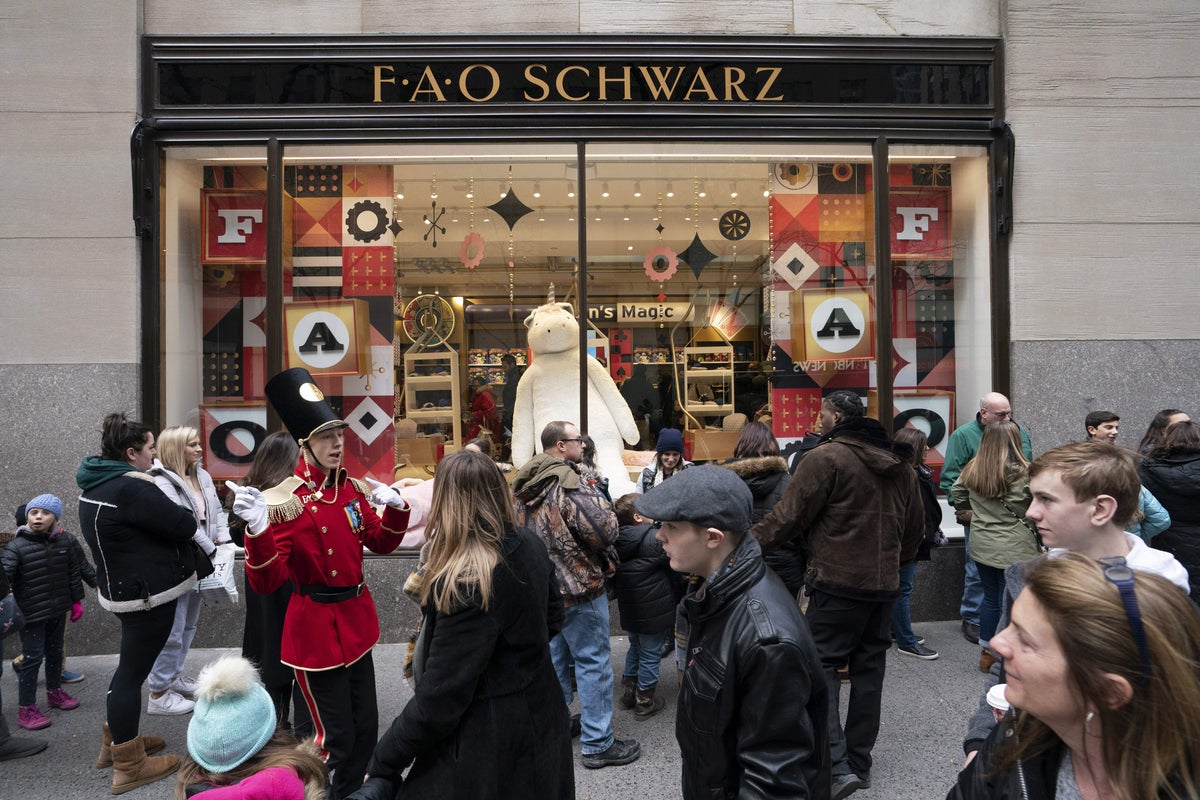
FAO Schwarz has opened a second retail footprint in New York City for the first time in more than a century, anchoring a 5,000-square-foot installation inside the Nordstrom flagship store on 57th Street and Broadway. This expansion operates as a corporate rescue mission disguised as nostalgia. By embedding the oldest toy retailer in the United States into a newly privatized high-end department store, both brands are attempting to solve the existential riddle of modern brick-and-mortar retail, where foot traffic is scarce and experiential theater is expensive to maintain.
The deal goes far beyond a single Manhattan storefront. It serves as the launchpad for a nationwide rollout that will place FAO Schwarz branded installations inside every Nordstrom location across the country, alongside dedicated miniature shops called Jewel Boxes in eight major metropolitan markets. For a toy brand that has teetered on the edge of extinction, filed for bankruptcy multiple times, and survived corporate hand-offs from Right Start to Toys "R" Us, this real estate play represents a calculated shift away from standalone flagship operations toward low-risk, shared-overhead partnerships.
The Economics of Shared Retail Square Footage
High-street retail in Manhattan has become an unsustainable proposition for single-category brands. When FAO Schwarz abandoned its iconic Fifth Avenue location next to the Apple Store cube in 2015, the culprit was not a lack of brand recognition. The issue was an annual rent bill that had reportedly scaled past 20 million dollars.
Manhattan High-Street Retail Mechanics
┌────────────────────────────────────────────────────────┐
│ Standalone Flagship Model (Pre-2015)                   │
│ High Fixed Rent + High Staffing + Single-Category Risk │
└───────────────────────────┬────────────────────────────┘
                            ▼
┌────────────────────────────────────────────────────────┐
│ Concession & Shop-in-Shop Model (2026 Strategy)        │
│ Shared Overhead + Revenue Splits + Experiential Pull   │
└────────────────────────────────────────────────────────┘
When private consumer products company ThreeSixty Group acquired the brand in 2016 and engineered a comeback at 30 Rockefeller Plaza in 2018, the physical layout shrank to 20,000 square feet. This was a fraction of its historical peak. The new 2026 partnership with Nordstrom reduces that real estate vulnerability even further by utilizing a concession model.
Under this framework, Nordstrom hands over prime ground-floor and kids-department square footage to FAO Schwarz. The toy brand brings its legendary assets, including actors dressed as toy soldiers and versions of the giant floor piano made famous by the 1988 film Big. This arrangement lowers the capital expenditure required to test a market. Instead of signing a decade-long commercial lease with a strict landlord, the toy brand enters an environment where the baseline operating costs, utilities, loss prevention, and point-of-sale infrastructure are already paid for by the host department store.
For Nordstrom, the motivation is foot traffic. Department stores have suffered a steady erosion of their core demographic as apparel shopping migrates online or shifts to direct-to-consumer digital channels. Toys represent an emotional purchase category that resists digitization because parents still prefer to see their children interact with a physical object before investing in premium goods. The presence of custom assembly tracks for Brio trains or custom-built plush stations acts as a physical destination designed to pull families into the store, where those same parents might eventually browse luxury apparel or footwear lines.
The Financial Pressures Driving the Deal
To understand why this partnership is happening now, one must look closely at the corporate restructuring occurring behind the scenes at both companies. At the tail end of 2024, Nordstrom accepted a 6.25 billion dollar deal to go private. The buyout was led by the Nordstrom family alongside Mexican retail powerhouse El Puerto de Liverpool.
Private companies operate under intense, quiet pressure to optimize cash flow away from the public stock market spotlight. Every square foot of a flagship department store must generate premium sales volume. Leaving an upper floor dedicated to traditional, slow-moving children's apparel lines is a recipe for margin compression.
Retail Margin Dynamics
┌─────────────────────────────┬──────────────────────────┐
│ Category                    │ Average Gross Margin     │
├─────────────────────────────┼──────────────────────────┤
│ Standard Mass-Market Toys   │ 20% - 30%                │
│ Experiential/Custom Toys    │ 50% - 65%                │
│ Designer Children's Apparel │ 45% - 55%                │
└─────────────────────────────┴──────────────────────────┘
Traditional mass-market toys carry notoriously thin gross margins, often hovering between 20 percent and 30 percent due to fierce pricing competition from digital marketplaces and big-box operations. The Nordstrom execution avoids this trap by focusing entirely on premium, highly customizable merchandise. The inventory mix relies heavily on experiential upsells:
- Custom Handbag Design Hubs: Allowing children to choose components from thousands of aesthetic combinations at 70 dollars per assembly.
- The Jellycat Diner: A heavily branded food-themed plush experience requiring formal reservations and commanding a baseline entry price of 70 dollars.
- Bespoke Cosmetics Kits: Personalized palettes that carry the high gross margins typical of the beauty sector rather than the toy industry.
By shifting the product mix toward high-margin customization, the installation operates less like a toy store and more like a high-end specialty boutique. This helps rationalize the value of the Manhattan real estate.
The Strategic Limits of Experiential Retail
The retail industry frequently uses terms like theater and immersion to describe these installations, but executing retail theater at scale is difficult. The toy soldiers who stand at the entrance are not just props. They are paid performers whose labor costs must be absorbed by the product margins.
When a brand scales from a single flagship location to an omnichannel presence across dozens of department stores, maintaining the quality of that experience becomes a logistical challenge. The eight Jewel Box locations planned for regional malls in states like California, Florida, and Washington will not have the same footprint or staffing budgets as the Manhattan flagship. They will instead rely on scaled-down iterations, such as automated storytelling stations and limited live demonstrations.
There is also a risk of brand dilution. In 2022, FAO Schwarz entered a multiyear agreement with Target to feature branded sections inside mass-market big-box environments. While that move provided immediate volume and cash flow, it placed a luxury brand on shelves right next to discount commodities. The pivot back toward Nordstrom indicates a realization that the long-term survival of the brand depends on maintaining an aura of exclusivity. It needs to look like a luxury destination, not a grocery store endcap.
The broader challenge is that experiential retail is highly cyclical. Parents will bring their children to see a giant piano once or twice during a holiday season or a summer vacation. Converting that tourist curiosity into repeatable, predictable quarterly revenue is an entirely different battle. If the interactive elements become stale, or if the product lines do not evolve quickly enough to match fast-moving digital entertainment trends, the high cost of maintaining these elaborate displays can quickly drain profits.
What the Data Suggests for Future Scale
The success of the Nordstrom and FAO Schwarz alliance will serve as a bellwether for the future of the department store model. If this shop-in-shop execution delivers a sustained lift in secondary purchases across adjacent luxury categories, it will likely trigger a wave of similar cross-brand integrations throughout the commercial real estate sector.
Independent data from commercial retail audits shows that when an experiential anchor enters a multi-level department store, dwell time—the average amount of time a shopper spends inside the building—increases by an average of 18 minutes. The critical metric to watch over the next 18 months will not be the raw volume of plush toys sold on 57th Street. The true measure of success will be whether that increased dwell time translates into higher credit card transactions at the upscale cosmetics counters and apparel racks situated just a few floors away.
Physical retail is not experiencing a simple recovery. It is undergoing a structural triage. Legacy brands are realizing that they can no longer afford to stand alone against digital commerce, forcing them to pool their resources, share their square footage, and split the cost of entertaining the consumer.