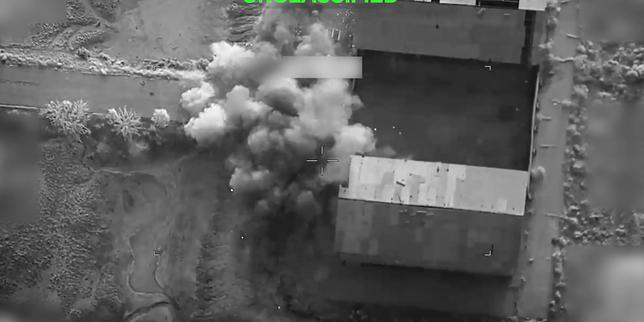
On July 15, 2026, the United States military launched a fresh wave of daytime airstrikes against Iranian coastal defense networks and missile storage facilities on Greater Tunb and Hengam islands. This escalation, paired with the reimposition of a strict U.S. naval blockade, officially shattered the short-lived June ceasefire agreement mediated by Pakistan. While Washington frames this intensive campaign as a surgical operation to secure the Strait of Hormuz, the truth is far more grim. The trade of direct fire between the two nations has evolved into an unsustainable war of attrition where tactical dominance does not translate to strategic victory.
For decades, military analysts assumed that a direct confrontation between Washington and Tehran would quickly end in a decisive U.S. victory.
The events of 2026 have completely dismantled that assumption. Despite suffering devastating losses—including the death of Supreme Leader Ali Khamenei in the opening salvo of the war on February 28—the Iranian regime has proven that its decentralized command structure and asymmetric arsenal can effectively paralyze global energy trade. Washington is now learning a brutal lesson. Decapitating a regime's leadership does not automatically neutralize its power to wage war.
The Failure of Operation Epic Fury
The war began with what was supposed to be a paralyzing blow. Under the codename Operation Epic Fury, joint U.S. and Israeli forces executed nearly 900 airstrikes within a 12-hour window. They targeted air defense batteries, command posts, and the private compounds of Iran’s ruling elite.
The strike successfully eliminated Khamenei alongside Major General Mohammad Pakpour and Defense Minister Aziz Nasirzadeh.
In traditional warfare, the sudden loss of the head of state and the entire joint chiefs of staff would trigger an immediate military collapse.
Yet, Iran's military apparatus did not buckle. The Islamic Revolutionary Guard Corps (IRGC) has spent forty years preparing for this exact scenario. Its regional commands operate with a high degree of autonomy, relying on pre-delegated authority to launch retaliatory strikes without needing direct orders from Tehran.
Within hours of the initial bombardment, the IRGC launched hundreds of ballistic missiles and thousands of suicide drones from hidden underground silos scattered across the country. These salvos targeted U.S. bases in Iraq and Syria, civilian infrastructure in Israel, and commercial vessels navigating the Persian Gulf. Epic Fury succeeded in destroying concrete and killing commanders, but it failed to disable the decentralized threat.
The Fatal Flaw in the Strait of Hormuz Strategy
The core objective of the newly reimposed U.S. naval blockade is to force Iran back to the negotiating table by choking off its ability to export oil. However, this strategy relies on a flawed understanding of modern maritime security.
The Strait of Hormuz is a narrow bottleneck, measuring just 21 miles wide at its narrowest point.
Through this single waterway flows roughly 20 percent of the world's petroleum. Because the shipping lanes run directly through Omani and Iranian territorial waters, policing the strait requires constant vigilance and an immense allocation of naval assets.
By declaring the June ceasefire over and enforcing a blockade, the Trump administration hoped to starve the Iranian economy into submission. Instead, the move has triggered a desperate, highly effective retaliation.
Iran has adopted a policy of collective economic ruin. Under the doctrine of "shared energy exports or none at all," the IRGC has systematically targeted neutral commercial shipping in the Persian Gulf. By using inexpensive sea mines, swarming fast-attack craft, and anti-ship cruise missiles, Iran has driven global maritime insurance rates to historic highs.
The U.S. Navy possesses the firepower to sink every Iranian vessel afloat. It does not, however, have the capacity to protect thousands of vulnerable, slow-moving tankers from cheap, mass-produced drones. Every time a U.S. destroyer fires a multi-million-dollar interceptor missile to shoot down a thirty-thousand-dollar Iranian drone, Tehran wins the economic math of the war.
The Threat Expansion Beyond the Gulf
The current crisis is rapidly expanding beyond the Persian Gulf. Unable to break the U.S. naval blockade directly, Iran is working to shut down alternative shipping corridors across the Middle East.
The most immediate danger lies in the Bab el-Mandeb strait.
By utilizing their Houthi allies in Yemen, the IRGC is actively working to shut down the southern entrance to the Red Sea. If the Houthis successfully halt traffic through the Bab el-Mandeb while the U.S. battles Iran in the Strait of Hormuz, the Suez Canal will become virtually useless.
At the same time, the IRGC has demonstrated its ability to project power across neighboring sovereign states. Following the July 15 U.S. airstrikes, Iran launched retaliatory missile and drone attacks targeting American military facilities in Jordan, Bahrain, and Kuwait.
While Kuwaiti air defenses and Jordanian interceptors managed to down several incoming projectiles, the message was clear. Any country hosting U.S. forces is now a legitimate target in Iran's eyes.
This regional escalation puts Washington's allies in an impossible position. Countries like Bahrain, which hosts the U.S. Navy’s Fifth Fleet, face the very real prospect of severe infrastructure damage and economic ruin simply by association. If the conflict continues to widen, regional partners may begin quietly restricting U.S. access to their airspace and bases to protect themselves from Iranian wrath.
The Illusion of a Decisive Strike
Within the White House, pressure is mounting for a dramatic escalation. Reports from the Situation Room indicate that administration officials are actively planning a massive offensive that would go far beyond the current coastal strikes near the Strait of Hormuz.
This proposed offensive would target Iran's deep-underground nuclear facilities, its inland missile factories, and its domestic energy grid.
Proponents of this plan argue that only a total military defeat can break Iran's will to fight. This is a dangerous illusion.
Iran’s nuclear program and missile production facilities are highly compartmentalized and buried deep beneath solid rock in mountain ranges like the Zagros. Even the heaviest bunker-busting munitions in the U.S. inventory cannot guarantee their complete destruction.
More importantly, a massive aerial campaign targeting civilian and industrial infrastructure would likely solidify domestic support for the Iranian regime. Despite widespread anti-government protests and economic hardship in late 2025, a foreign invasion and sustained bombing campaign of the homeland would trigger a wave of nationalist fervor.
A direct, full-scale war would also force the United States to commit hundreds of thousands of ground troops to a pacification campaign in a mountainous country four times the size of Iraq. With geopolitical tensions rising in Eastern Europe and the Indo-Pacific, committing the bulk of American conventional military power to a grinding occupation in Western Asia would be a catastrophic strategic mistake.
The Hard Reality of the Persian Gulf
The current U.S. policy toward Iran is built on the hope that more pressure will eventually produce a different result. Yet, the lessons of the last six months prove that military force alone cannot resolve this conflict.
As long as Washington insists on unconditional surrender, Tehran will continue to respond with asymmetric chaos. The global economy simply cannot afford a protracted war of attrition in the world's primary energy corridor.
The only viable way out of this crisis is a diplomatic settlement that acknowledges the limits of military power. This does not mean capitulating to Iranian aggression, but rather accepting that a blockade cannot force a sovereign nation into submission when that nation has nothing left to lose. If the United States continues to rely solely on airstrikes and blockades, it will find itself permanently policing a burning waterway, paying a premium in blood and treasury for an illusion of security.