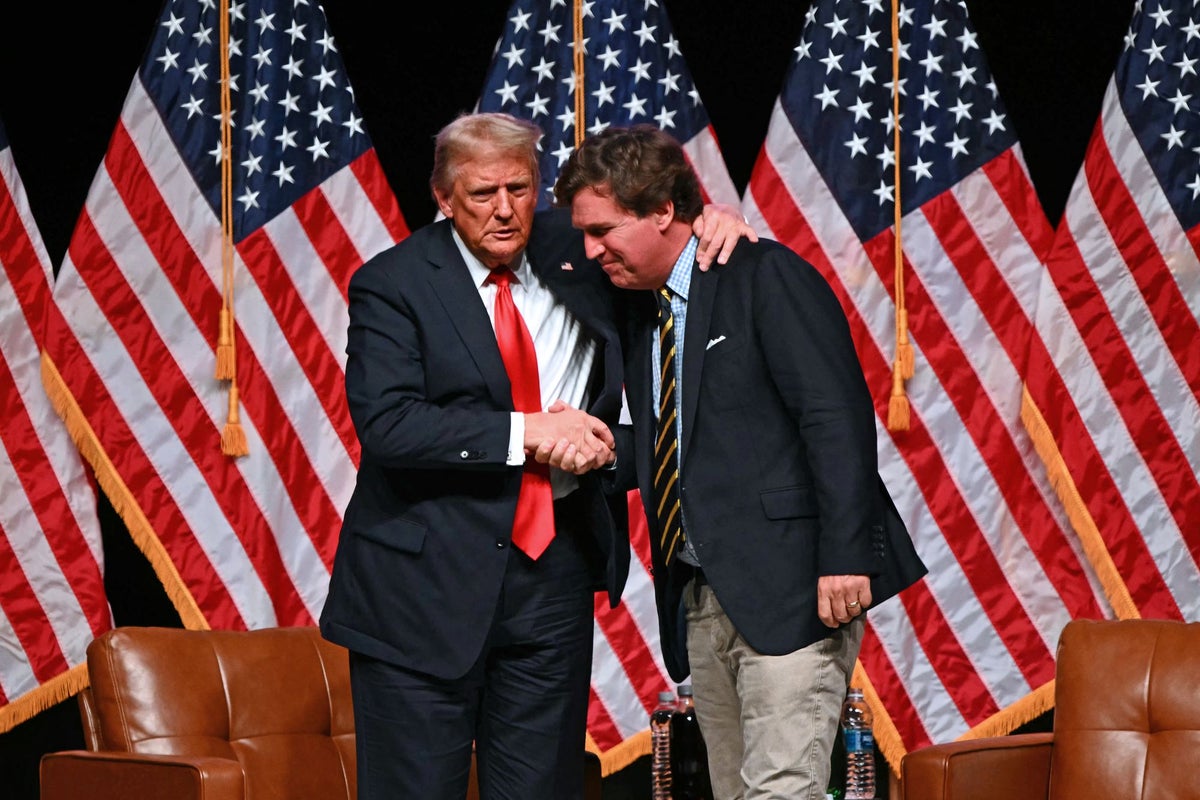
Tucker Carlson has officially severed his ties with the Republican Party. Speaking on a recent episode of the podcast Can’t Be Censored, the former Fox News host announced he will no longer support the GOP under any circumstances, though he emphasized he is not becoming a Democrat. This structural rupture marks the definitive collapse of the uneasy alliance between mainstream conservative media and traditional party politics. It reveals a deep ideological civil war over foreign policy, donor influence, and the ultimate direction of populist conservatism ahead of the upcoming midterm elections.
The immediate trigger for Carlson's departure was the outbreak of the war in Iran earlier this year. For years, the populist right operated under the assumption that its standard-bearers were committed to an isolationist agenda. When Washington shifted back toward major foreign military involvement, that assumption shattered. Carlson openly apologized to his audience for his previous support of the current administration, stating that he felt tormented by his role in misleading voters.
This is not a sudden whim. It is the logical conclusion of a decade-long drift away from institutional conservatism. To understand why this happened, one must examine the fundamental friction between the populist base and the party machinery that claims to represent it.
The Shattered Mirror of America First
The intellectual foundation of the modern conservative movement has been cracked for a long time. For thirty-five years, Carlson functioned as one of the most reliable defenders of the Republican establishment. He moved from elite print publications to cable news networks, adjusting his positions as the political center of gravity shifted. His transition from a traditional bow-tie-wearing libertarian to a fierce critic of corporate power and foreign intervention mirrored the broader evolution of the conservative base.
The military escalation in Iran forced a choice. The party establishment aligned tightly with classic defense priorities and international alliances. Meanwhile, the populist media wing viewed the conflict as a betrayal of domestic interests. Carlson argued that the party has consistently failed to represent its own voters, citizens, and nation. By declaring that the GOP makes decisions based on the desires of donors and foreign entities rather than the American electorate, he pointed to a systemic failure in the representative model.
Political parties exist to aggregate interests and secure power. When the primary media mouthpieces of a movement decide that the party apparatus is actively hostile to the core values of the base, the entire apparatus becomes unstable. This separation means that the conservative movement no longer has a unified messaging center.
The Economy of Independent Media Infrastructure
Carlson can afford to walk away from the Republican Party because the economic model of political commentary has fundamentally changed. A decade ago, a conservative media figure required the backing of a major cable network or a national party apparatus to maintain relevance. The distribution networks were controlled by a small group of executives who could enforce ideological discipline.
That reality is gone. After his termination from Fox News, Carlson built a self-sustaining media company reliant on direct subscriptions and independent digital distribution platforms. He no longer needs the approval of party chairmen or major corporate advertisers who might be sensitive to unorthodox foreign policy views.
This independence creates a distinct incentive structure. In the old system, media figures were rewarded for party loyalty and turning out voters for establishment candidates. In the current independent digital media marketplace, commentators are rewarded for ideological purity and direct conflict with institutions. The more Carlson attacks the traditional party leadership, the more he validates his brand as an untamed truth-teller to his core subscribers. This economic shift means that the Republican Party has lost its traditional levers of control over its most influential advocates.
The Populist Coalition Fractures
The departure of high-profile figures from the party tent exposes deep divisions among populist voters. Representative Marjorie Taylor Greene quickly amplified Carlson's sentiments, indicating that a substantial faction within Congress shares this profound frustration with the party leadership. This creates an governance problem for a party trying to maintain a cohesive legislative agenda.
The division is primarily defined by foreign policy and government spending. One faction remains committed to traditional global leadership, foreign aid, and defense spending. The other faction views these commitments as a direct drain on domestic resources and an insult to working-class citizens. When these two worldviews clash during an active military conflict, compromise becomes impossible.
The immediate consequence will likely be seen in the upcoming primary elections. Candidates will no longer face a simple choice between an establishment option and a populist option. Instead, they will have to navigate a fragmented environment where being endorsed by the traditional party apparatus could be a distinct disadvantage among the most energetic segments of the electorate.
Structural Realignment Without a Destination
The most challenging aspect of Carlson's declaration is his refusal to align with any alternative political structure. He explicitly rejected the Democratic Party, leaving his followers in a state of political homelessness. This reflects a broader trend across the American electorate where voters are increasingly disillusioned with both major parties but find third-party options unviable due to structural barriers.
Without a party structure, a political movement cannot easily pass laws, confirm judges, or execute policy. It can only oppose, critique, and disrupt. Carlson's exit signifies a shift from active political participation to institutional sabotage.
This stance challenges the traditional understanding of political power in Washington. For generations, analysts assumed that every major cultural or political grievance would eventually be absorbed and processed by one of the two major parties. The current reality suggests that some grievances are too volatile to be contained within the two-party system. The conservative movement is entering a phase where its most potent cultural forces are operating completely outside the control of its political leaders.
The long-term consequence of this de-alignment remains uncertain. If more influential media figures and legislators follow this path, the Republican Party may find itself hollowed out. It could retain the formal structures of power but lose the cultural passion required to win competitive national elections. The institutional machinery remains intact, but the engine that drove its recent electoral successes has been detached.
What Does Tucker Carlson Really Believe?
This interview provides critical context regarding Carlson's ideological shift following the conflict in Iran and details his evolving relationship with the populist movement.