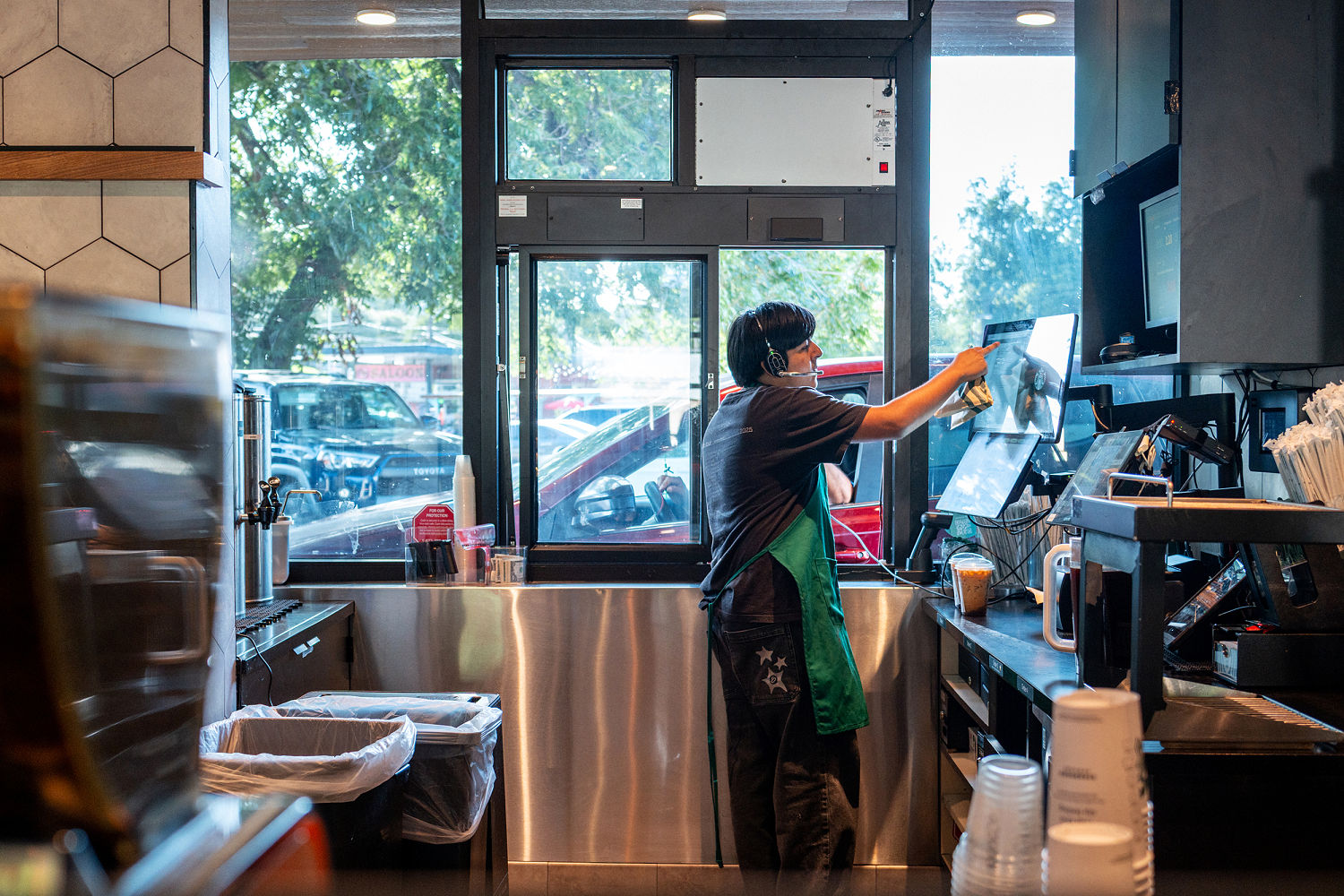
McDonald’s US sales are slipping because relentless menu price hikes have finally pushed low-income diners out the door, creating a traffic deficit that higher spending from remaining customers can no longer cover. For nearly three years, the Golden Arches relied on aggressive pricing to pad revenue while foot traffic quietly eroded. That math has broken. When the core working-class customer base decides a fast-food combo meal costs too much, raising prices on the people still standing in line only accelerates the decline.
Wall Street loves a clean narrative, and for a long time, the fast-food pricing story looked bulletproof. Inflation hit the supply chain, beef and labor costs surged, and quick-service restaurants passed those expenses directly to the consumer. Customers grumbled about the cost of a Big Mac meal, posted viral receipts on social media, and kept swiping their cards anyway. Corporate earnings looked healthy because average check growth masked a troubling drop in guest counts.
But retail economics eventually enforces gravity. You cannot indefinitely extract more money from fewer people without hollowing out your brand's foundation.
The Illusion of Pricing Power
In restaurant industry parlance, same-store sales growth splits into two distinct buckets. The first is traffic, which measures how many transactions ring through the register. The second is check size, which tracks how much money each transaction generates.
During the post-pandemic inflation wave, McDonald’s leaned heavily on check size. Franchisees raised prices repeatedly across nearly every menu tier. A hash brown that used to be an impulse buy crept toward three dollars in major metro areas. A standard Quarter Pounder with Cheese meal routinely crossed the twelve-dollar mark, and in high-cost markets like California or New York, combinations pushed past fifteen.
For several quarters, this worked brilliantly on paper. Even if five percent fewer people walked into the restaurant, a ten percent jump in menu prices yielded a net positive sales number. Executives praised the brand’s resilience. Analysts applauded management's ability to protect profit margins.
Yet anyone who has spent time studying quick-service retail knows that traffic is the true pulse of a fast-food empire. High check sizes driven purely by price hikes are a sugar high. When you lose a customer over price, you do not just lose one Tuesday lunch; you lose a habitual weekly routine that took decades of marketing to build. Once a consumer breaks the habit of pulling into the drive-thru, winning them back requires steep discounting that directly cannibalizes the margins you were trying to protect.
Losing the Core Customer
McDonald’s was never built to be a luxury experience. Its historical dominance rested on a simple, unspoken social contract with the American working class. The food would be consistent, fast, and cheap enough that a family of four could eat dinner without doing mental arithmetic at the counter.
By chasing margin through price increases, the brand violated that contract. Industry earnings calls over the past year have repeatedly highlighted a stark bifurcation in consumer behavior. Households earning over one hundred thousand dollars a year largely absorbed the price hikes, sometimes even trading down from sit-down casual dining chains like Chili’s or Applebee’s into McDonald’s drive-thrus. That trade-down effect temporarily cushioned the blow.
Meanwhile, households earning under forty-five thousand dollars—the historical bedrock of fast-food volume—began vanishing.
Consider a hypothetical example of a single parent working an hourly shift in the Midwest. Five years ago, grabbing two value meals after a long day cost roughly twelve dollars. Today, that exact same order easily exceeds twenty-two dollars before tax. At that price point, the value proposition of fast food collapses entirely. That parent stops pulling into the drive-thru and starts buying bulk groceries, frozen meals, or rotisserie chickens from Walmart and Aldi.
The grocery store aisle became McDonald’s fiercest competitor. While supermarket prices certainly rose during the same period, the gap between cooking at home and eating at a drive-thru widened to a chasm. When consumers realize they can buy three pounds of ground beef, a pack of buns, and a bag of frozen fries for the price of two combo meals, brand loyalty evaporates overnight.
Why Value Meals Are a Double-Edged Sword
When traffic numbers finally turned undeniably negative, corporate leadership reached for the oldest lever in the quick-service playbook: the bundled value deal. The rollout of limited-time five-dollar meal bundles was explicitly designed to stop the bleeding and lure price-sensitive diners back into the ecosystem.
It works for foot traffic. People love a bargain, and a five-dollar price point triggers an immediate psychological response that cuts through inflation fatigue.
However, value bundles expose a brutal internal friction between corporate headquarters in Chicago and the independent franchisees who actually operate roughly ninety-five percent of US McDonald’s locations.
Understanding this tension is critical to understanding why McDonald’s cannot simply slash prices across the board. McDonald’s Corporate makes a massive portion of its money through real estate rent and a percentage of top-line gross sales. When a restaurant sells a five-dollar bundle, corporate headquarters collects its royalty off the top regardless of how much it cost the store to make that food.
Franchisees, on the other hand, live and die by store-level operating margins. They are the ones paying twenty dollars an hour for kitchen staff in California, absorbing higher property insurance rates, fixing broken ice cream machines, and buying increasingly expensive beef and packaging.
If a franchisee sells a five-dollar meal that costs four dollars and eighty cents in food, labor, and paper to produce, they are essentially trading dollars just to keep the lights on. Worse yet, heavy promotion of cheap bundles creates trade-down cannibalization. A customer who was perfectly willing to pay eleven dollars for a regular combo meal sees a giant poster for a five-dollar bundle and buys the cheaper option instead. Traffic goes up, corporate royalty checks stay steady, and the franchisee's actual take-home profit shrinks.
The Structural Trap of Fast Food Economics
This is not just a temporary marketing hiccup that a clever ad campaign or a celebrity meal collaboration can fix. McDonald’s is caught in a structural vise tightening from three different directions simultaneously.
Labor and Input Costs Are Sticky
Unlike commodity spikes that eventually cool off, labor costs rarely move backward. State-level minimum wage hikes, particularly California’s twenty-dollar fast-food wage law, permanently reset the baseline cost of operating a restaurant. Even in states without statutory hikes, franchisees must pay competitive wages to keep drive-thru lanes staffed against competition from Amazon warehouses and big-box retailers. Because labor is a fixed reality, franchisees lack the financial breathing room to permanently return to the true Dollar Menu era of the early 2000s.
Casual Dining Stole the Value Narrative
For decades, McDonald’s owned the perception of affordability. Recently, full-service casual dining chains executed a brilliant counter-offensive. Brands like Chili’s aggressively marketed ten-dollar and eleven-dollar lunch and dinner combos featuring a burger, fries, a drink, and an appetizer.
The psychology here is devastating for fast food. When a consumer realizes that sitting down in a booth with a server brings them a thicker burger and unlimited chips for roughly the same price as a drive-thru bag handed through a window, the fast-food value illusion shatters. McDonald’s suddenly found itself priced like casual dining while still offering a fast-food experience.
The Digital App Divide
McDonald’s has poured billions into its loyalty app, and digital orders now account for a massive share of systemwide sales. The app offers genuine discounts, buy-one-get-one deals, and free fries that bring prices closer to historical norms.
Yet this created a two-tier pricing system that alienates casual visitors. Tech-savvy regulars who use the app get fair prices, while the average driver pulling off the highway who reads the illuminated menu board gets hit with full retail sticker shock. Those non-app customers look at the board, feel gouged, and vow not to return. A pricing strategy that requires consumers to surrender their personal data and download software just to avoid paying fifteen dollars for a burger inherently limits organic walk-in traffic.
The Myth of Endless Menu Engineering
Whenever quick-service giants face traffic stalls, executives inevitably talk about menu innovation—better chicken sandwiches, upgraded burger sears, specialty beverages like the CosMc’s spinoff concept.
Menu upgrades can certainly juice average check sizes. Adding bacon, crispy onions, or gourmet sauces allows restaurants to charge a premium that helps offset labor costs. McDonald’s saw real success with its Best Burger initiative, which tweaked grilling techniques and bun recipes to improve quality.
Still, you cannot engineer your way out of a fundamental price-value mismatch. No matter how well you toast the bun, a basic fast-food burger has a psychological price ceiling in the mind of the American consumer. Once you cross that ceiling, every minor operational flaw—cold fries, a missing sauce packet, a slow drive-thru line—transforms from a minor annoyance into an infuriating waste of money. High prices destroy consumer forgiveness. When a meal costs six dollars, people shrug off lukewarm fries. When it costs fourteen dollars, they take their money elsewhere.
What Actually Reverses Traffic Decline
Restoring sustainable traffic growth requires painful medicine that neither Wall Street nor franchisee associations enjoy swallowing. Short-term, ninety-day promotional bundles provide temporary volume spikes, yet consumers quickly realize those deals are fleeting gimmicks rather than permanent price relief.
To win back lost households, McDonald’s has to establish predictable, everyday affordability across its core menu without bankrupting its operators. That means ruthless simplification of kitchen operations to strip out labor minutes per order, aggressive supply chain renegotiations, and accepting lower percentage margins on entry-level items in exchange for high-volume frequency.
History shows that fast-food empires survive downturns by dominating volume, not by mimicking boutique pricing. Until the price on the drive-thru board aligns once again with what a working-class paycheck can comfortably afford, higher spending from wealthier customers will remain a temporary bandage over a shrinking customer base.