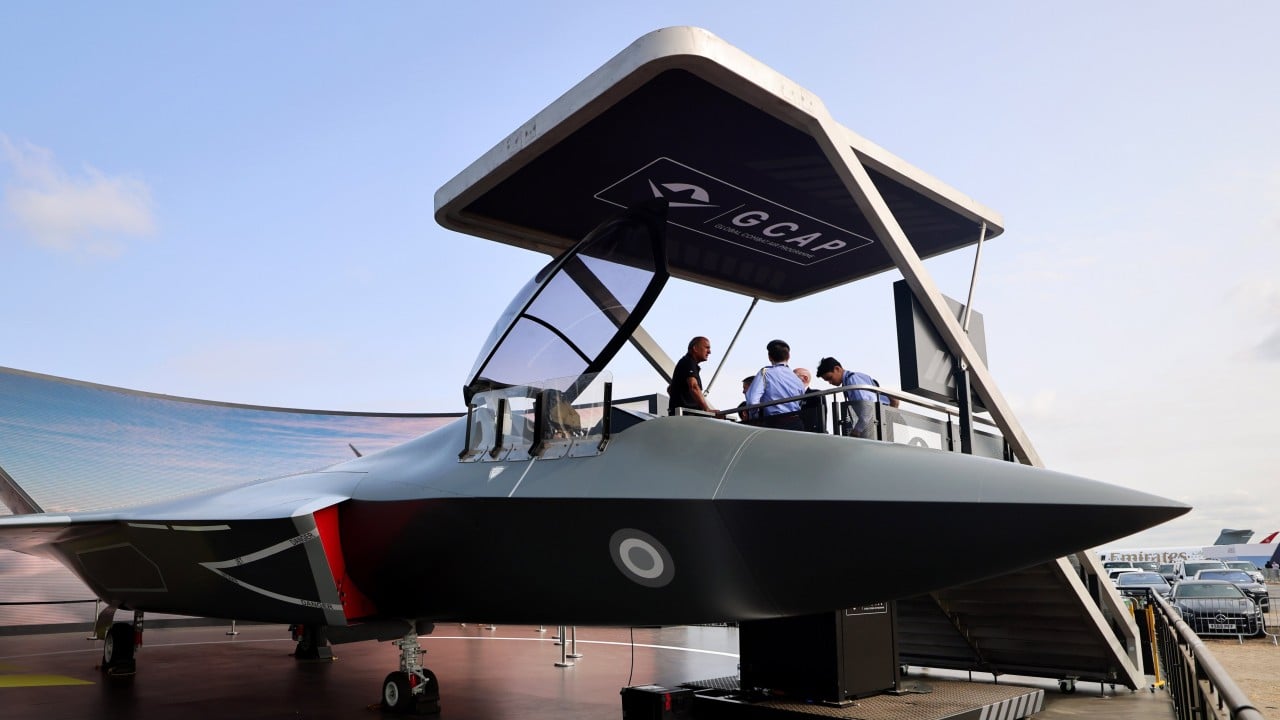
Canada recently signed on as the first observer nation in the Global Combat Air Programme, joining Japan, Britain, and Italy in their push to build a sixth-generation stealth fighter jet by 2035. For Tokyo, Ottawa's arrival is not merely an diplomatic courtesy. It provides Japan with an essential counterweight against soaring development costs, potential American export restrictions, and the immense industrial pressure of countering regional air dominance. Canada brings specialized Arctic infrastructure, software talent, and future purchasing potential without cluttering the project's delicate three-way management structure.
For decades, the Japanese Air Self-Defense Force anchored its doctrine to American aerospace hardware. Tokyo bought F-4 Phantoms, built F-15s under license, and spent billions securing F-35 stealth fighters. That dependency brought a quiet vulnerability. When Washington refused to export the F-22 Raptor in the late 2000s, Japan found itself trapped. It possessed an aging fleet of domestic F-2 fighters and no clear path to build a homegrown replacement without staggering costs.
That isolation led directly to the formation of the Global Combat Air Programme, known as GCAP. By partnering with London and Rome, Tokyo spread the financial burden of designing a platform capable of outmatching rival systems in the Indo-Pacific. Yet trilateral partnerships carry inherent friction. Industrial rivalries between Mitsubishi Heavy Industries, BAE Systems, and Leonardo threatened to slow decision-making.
Canada entering the frame changes the economic balance of the entire enterprise.
The Cold Economics of Sixth-Generation Air Power
Developing a sixth-generation combat jet is an insanely expensive gamble. Estimates for designing, testing, and fielding a platform equipped with direct-energy weapons, autonomous drone control systems, and advanced radar absorbers routinely cross fifty billion dollars. No single middle-power economy can absorb that shock alone.
If a project produces only two hundred aircraft, each airframe carries an unbearable price tag.
By stepping in as an observer nation, Canada opens a door to future fleet orders without demanding a seat at the design table today. This status gives Ottawa a front-row seat to software architecture, flight testing, and supply chain options while preserving the tight decision-making core between London, Tokyo, and Rome. For Japanese tax payers, every extra jet built for an export customer drops the unit cost of Tokyo’s own fleet.
Breaking the American Lock-in
Ottawa’s decision to look beyond Washington mirrors Tokyo’s own strategic shifts. Canada historically relied almost exclusively on American defense hardware. Recent trade spats, sweeping tariff threats, and rising frustration over software lock-in on platforms like the F-35 pushed Canadian planners to look across the Atlantic and Pacific.
The American defense industry operates on tight control. Buying an American fighter jet often means buying black-box software that domestic engineers cannot alter without explicit permission from Washington.
Japan experienced this friction firsthand during the development of the F-2 in the 1990s. American authorities restricted access to source codes, delaying deployment and driving up expenses. GCAP offers an alternative. The program relies on shared intellectual property and modular systems, allowing participating nations to write their own algorithms and integrate domestic weapons systems. Canada wants that autonomy. Japan needs partners who value it.
Arctic Realities and Pacific Distances
A fighter jet designed for European defense often lacks the range required for Pacific or Arctic operations. Western Europe is geographically compact. A flight from London to Berlin takes minutes. A patrol over the East China Sea or across Northern Canada covers thousands of miles over open water.
Japan needed a heavy, twin-engine platform capable of long endurance patrols. Britain and Italy originally focused on interceptor capabilities tailored to Europe.
Canada’s operational needs match Japan’s almost perfectly.
- Vast Operational Range: Both nations require long-range transit capabilities over empty ocean and freezing wastes.
- Extreme Weather Testing: Canadian bases in Cold Lake and Goose Bay offer testing conditions that mimic Northern Pacific winter deployments.
- Sensor Networks: Both countries require long-range radar integration to cover massive, sparsely populated border zones.
When Ottawa tests military platforms, it evaluates cold-weather sensor reliability and extreme long-range data link retention. Japanese engineers working on the GCAP airframe get immediate access to environmental testing conditions that Western European testing sites simply cannot match.
Avoiding the European Procurement Trap
Defense analysts frequently point to the Eurofighter Typhoon or the French-German FCAS jet project as warnings of what happens when too many sovereign states demand equal control over a single aircraft design. Program managers spend years arguing over component assembly lines rather than aerodynamic performance.
GCAP avoided that trap by establishing a lean corporate structure built around a single joint venture known as Edgewing, paired with an international government organization headquartered in the United Kingdom.
Bringing Canada in as a full partner early on could have fractured that governance structure. By adopting observer status, Ottawa gets transparency without injecting legislative delays into Tokyo’s aggressive 2035 deployment deadline.
"Observer status gives Canada a window into the engineering without giving political committees the power to veto technical specifications," notes one senior aerospace analyst. "It protects the schedule while building an export pipeline."
The Industrial Reality Check
Behind the diplomatic optimism lies a harsh industrial reality. Mitsubishi Heavy Industries has not built an all-new indigenous combat fighter from scratch since the Second World War. The F-2 was a heavily modified variant of the Lockheed Martin F-16.
Japan’s defense manufacturing sector suffers from thin margins and a lack of export history. Until recently, constitutional restrictions prevented Tokyo from exporting military hardware overseas. That policy left Japanese suppliers reliant on a single customer: the Japanese government.
Canada’s aerospace industry operates on the exact opposite model. Canadian firms like CAE, Bombardier, and specialized sensor manufacturers survive almost entirely on global export markets. They understand supply chain logistics, international certification, and commercial software integration.
If Canadian firms join the GCAP supply chain, they bring immediate manufacturing scale that Japanese suppliers currently lack.
The Software Imperative
Modern combat aircraft are effectively flying supercomputers wrapped in radar-absorbent materials. The airframe itself matters less than the code driving its multi-spectral sensors, automated flight controllers, and artificial intelligence routing systems.
Writing millions of lines of mission-critical code demands thousands of specialized software engineers. Japan faces a chronic tech talent shortage across its industrial sector. Canada, backed by major tech hubs in Toronto, Montreal, and Vancouver, holds a deep pool of software engineering talent.
Integrating Canadian software expertise into GCAP subsystems relieves pressure on Japanese software teams who are simultaneously working on domestic command-and-control networks.
The China Factor and Power Shifts in the Pacific
The timing of Canada's entry reflects a shifting security environment across the Northern Pacific. Chinese naval and air incursions near Japanese airspace hit record highs over the last three years. Russian aircraft regularly test defense identification zones near Alaska and Northern Japan.
The Western defense shield in the Pacific can no longer rely solely on American forces.
Japan needs allies who operate compatible hardware. If Canada eventually purchases a fleet of GCAP fighters to complement or replace its aging aircraft, northern Pacific defense networks gain structural coherence. A Japanese pilot operating near Okinawa could instantly share real-time target data with a Canadian patrol jet flying off the coast of Alaska through encrypted, shared software protocols.
This level of interoperability remains difficult when nations fly vastly different aircraft types with proprietary communications gear.
The Unspoken Risk for Tokyo
While Canada's observer status offers significant upside, it introduces political risk for Japan. Canadian defense procurement is notoriously volatile. Ottawa has a long history of canceling defense contracts, delaying purchases, and altering fleet requirements across political administrations.
If Tokyo relies too heavily on eventual Canadian orders to offset development expenditures, a policy reversal in Ottawa could leave Japanese taxpayers covering an unbudgeted shortfall.
Furthermore, Washington will not sit idly by while two major allies explore non-American airframes. American defense primes hold immense political sway. They will push hard to keep Ottawa committed to extended F-35 procurement orders or tempt Japan with upgraded American autonomous combat systems.
Tokyo must keep the GCAP timeline on track regardless of whether Ottawa ultimately converts its observer status into a firm purchase order. Any delay in the 2035 target date compromises Japan's regional air deterrence at the exact moment its current fleet of F-2 fighters reaches structural retirement.
Japan’s fighter jet future looks brighter with Canada observing from the sidelines. The alignment provides scale, operational range parity, and an alternative to absolute reliance on American defense suppliers. The success of this alliance will not be judged by joint press conferences at airshows, but by whether a joint flight of Japanese and allied jets can take to the skies in 2035 on time, on budget, and fully operational.


