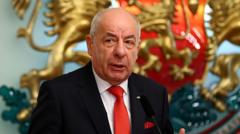
The unexpected resignation of Hungary’s head of state following intense parliamentary pressure marks a significant shift in the nation's political landscape, proving that even symbolic roles can become fatal flashpoints when public anger boils over. While the presidency in Hungary is largely ceremonial, the sudden vacancy exposes deep structural vulnerabilities within the ruling party’s legislative dominance. The removal was not a sudden burst of parliamentary independence. It was a calculated retreat designed to protect the core leadership from a rapidly expanding political firestorm.
Understanding this crisis requires looking past the official statements of unity and national dignity. The parliamentary vote that forced the resignation reveals how the ruling party utilizes its supermajority not just to pass laws, but to swiftly sever liabilities when public outrage threatens its grip on power. Meanwhile, you can find similar developments here: The Middle of the Night in the Middle of Nowhere.
The Anatomy of a Political Sacrifice
The swiftness of the president's departure stunned casual political observers, yet the mechanics of the exit follow a well-worn playbook of political survival. In parliamentary systems where one coalition holds a commanding majority, the head of state serves at the pleasure of the legislative architects. When a scandal or institutional failure crosses the line from a temporary distraction to a systemic threat, the legislative machinery turns inward.
The parliamentary vote served as the final blow, but the pressure had been mounting behind closed doors for weeks. By forcing a resignation rather than enduring a protracted impeachment process, the ruling elite managed to control the timeline. They minimized the window for opposition parties to weaponize the crisis on the international stage. To understand the complete picture, check out the recent analysis by BBC News.
This maneuver highlights the dual nature of a ceremonial presidency. During stable times, the office acts as a rubber stamp for executive policies, projecting an image of institutional stability and consensus. In times of crisis, however, the office becomes a lightning rod. The individual occupying the seat is treated as fundamentally expendable, sacrificed to preserve the authority of the prime minister and the cabinet.
Structural Vulnerabilities in the Supermajority
For years, the political narrative surrounding Hungary focused on the absolute consolidation of power by the ruling Fidesz party. A two-thirds majority in parliament meant that legislative resistance was effectively impossible. Yet, this absolute control creates a unique strategic vulnerability. When there is no viable opposition to blame for systemic failures, the ruling party must bear the full weight of public backlash.
The presidential exit demonstrates the limits of legislative engineering. You can rewrite constitutions, restructure the judiciary, and dominate the media landscape, but you cannot entirely insulate public officials from the consequences of severe institutional missteps. The parliamentary removal was less about constitutional duty and more about crisis management.
The Cost of Total Control
- Absence of Scapegoats: With the opposition marginalized, every administrative failure lands directly at the feet of the ruling coalition.
- Rapid Escalation: Without institutional speed bumps, public anger accelerates directly toward the top tier of government.
- Internal Purges: Maintaining the illusion of infallibility requires swift, ruthless removal of any official who becomes a liability.
The institutional fallout from this vacancy will ripple through the legislative body for months. Replacing a president under duress forces the ruling party to expend political capital that it would rather use on economic or foreign policy initiatives. It also signals to the electorate that the regime is not as invulnerable as its rhetoric suggests.
International Repercussions and Economic Strain
Beyond the domestic theater, the collapse of the presidency carries immediate consequences for Hungary's standing within the European Union. Budapest has long been locked in funding disputes with Brussels over rule-of-law concerns. A high-profile political crisis centered on governance and accountability only strengthens the arguments of European critics who favor withholding billions in cohesion funds.
Foreign investors value predictability above almost all else. A sudden vacancy at the top of the state apparatus introduces an element of volatility that markets dislike, potentially weakening the local currency and driving up borrowing costs for a government already dealing with persistent inflationary pressures. The administration must now work double time to convince international capital markets that the legislative transition will be smooth and that policy continuity remains guaranteed.
The challenge lies in finding a successor who can project stability abroad while remaining completely loyal to the legislative agenda at home. The ideal candidate must possess enough international stature to placate foreign diplomats, yet lack the independent political ambition that could lead to a repeat of the current disaster.
The Myth of the Neutral Head of State
The crisis fundamentally dismantles the fiction that the Hungarian presidency exists above the political fray. While the constitution frames the office as a symbol of national unity, the reality is that the position is deeply entangled in party politics. Every action, statement, and veto—or lack thereof—is viewed through a partisan lens.
When the legislative branch uses its weight to compel a presidential exit, it lays bare the absolute subordination of the office to the ruling party's survival instincts. This reality undermines the credibility of the position as an independent check on legislative overreach. Future occupants of the presidential palace will be acutely aware that their tenure lasts only as long as their utility to the parliamentary majority remains absolute.
The political calculus has shifted permanently. The ruling coalition has shown its willingness to cannibalize its own appointees to protect its broader political project, setting a precedent that will govern Hungarian politics for a generation.