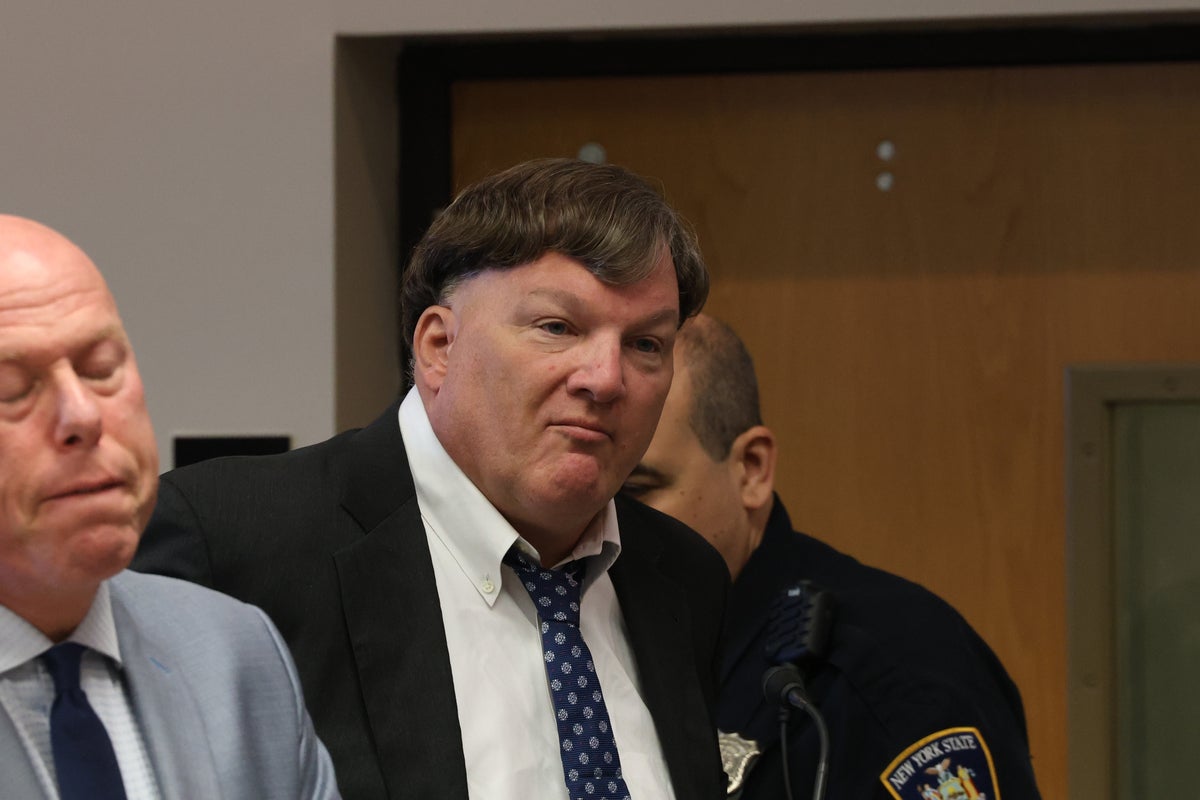
Rex Heuermann will spend the rest of his natural life behind bars without the possibility of parole, following a historic sentencing hearing in a Riverhead, New York courtroom that finally closed the book on the Gilgo Beach serial killings. The 62-year-old Manhattan architect, who pleaded guilty to seven counts of murder and admitted to an eighth, listened in silence as the families of his victims delivered devastating statements detailing the multi-decade wreckage of his crimes. Yet the ultimate finality of his sentence masks a much darker reality about how American law enforcement handles marginalized victims. Heuermann did not escape detection because he was a criminal mastermind. He escaped because the institutional machinery designed to protect the public suffered from prolonged, systematic blindness.
For nearly thirty years, Heuermann lived a bizarre double life. By day, he negotiated complex building codes in Manhattan, maintaining a reputable architectural firm. By night, he hunted vulnerable women, primarily sex workers, exploiting their isolation from traditional safety nets. When the first bodies were discovered wrapped in burlap along a desolate stretch of Ocean Parkway in late 2010, the public assumed a massive, coordinated manhunt would follow. Instead, the investigation stalled under a mountain of bureaucratic turf wars, local political corruption, and a pervasive indifference toward the victims. Expanding on this idea, you can find more in: The Killer Myth Why the Trump Modi Bromance is Pure Geopolitical Theater.
The timeline of missed opportunities is staggering. As early as 2010, a roommate of victim Amber Costello provided investigators with a precise description of the suspect, noting his towering, "ogre-like" physical frame. More crucially, the witness identified the killer’s vehicle as a distinctive first-generation Chevrolet Avalanche. That piece of information sat unexamined in a police database for twelve years. It was not buried in a secret file. It was simply ignored by leadership more concerned with internal department politics than fundamental detective work.
The Cost of Institutional Apathy
To understand how Heuermann operated with such brazen impunity, one must examine the specific vulnerabilities of his targets. The women he killed, including Melissa Barthelemy, Megan Waterman, and Maureen Brainard-Barnes, were young, economically precarious, and working in an underground economy that forces its participants into the shadows. When they went missing, their disappearances were not greeted with immediate high-level task forces. Observers at NBC News have shared their thoughts on this matter.
The early years of the investigation were crippled by the actions of former Suffolk County Police Chief James Burke. Burke actively blocked the FBI from assisting in the investigation, a decision that baffled seasoned investigators at the time. It was later revealed that Burke had his own extensive criminal liabilities, eventually serving time in federal prison for beating a suspect and orchestrating a massive cover-up. For years, the highest-ranking police official on Long Island was focused entirely on self-preservation, effectively freezing the hunt for the serial killer operating in his backyard.
This was not a failure of technology. It was a failure of will. The tools required to catch Heuermann in 2023, including cell tower data, burner phone tracking, and vehicle registration cross-referencing, were entirely available in 2010. The system failed because it categorised the victims as disposable, a common thread that unites almost every long-running serial killer case in modern history.
The DNA Breakthrough and the Blueprint of Terror
The breakthrough came only when a newly formed task force bypassed years of institutional inertia in 2022. Investigators finally pulled the old files, ran the search for the green Chevrolet Avalanche tied to a resident in Massapequa Park, and immediately zeroed in on Heuermann. From there, the evidentiary dominoes fell rapidly.
Surveillance teams tracked Heuermann through Manhattan, waiting for an opportunity to gather his genetic material. They found it when he discarded a pizza box into a sidewalk trash can. Analysts matched DNA from the pizza crust to a hair found on the burlap wrapping of Megan Waterman’s remains. The statistical probability of the hair belonging to anyone else was one in millions.
The Document in the Files
The true horror of Heuermann’s methodology came to light after his arrest, when digital forensics teams recovered a deleted file from his computer equipment. Prosecutors described this document as a literal blueprint for murder. It contained meticulous checklists detailing how to prepare a space, how to minimize noise, how to clean a crime scene, and how to effectively destroy evidence.
The document proved that Heuermann was not acting on sudden, uncontrollable impulses. He was running a highly organized logistics operation. He utilized his architectural knowledge of structures, layouts, and soundproofing to turn his suburban home into a chamber of horrors when his family was out of town. His ex-wife, Asa Ellerup, recently acknowledged that she unknowingly sleeps in the very basement where these atrocities were planned and executed.
A Legal Resolution and Unanswered Questions
Heuermann’s decision to plead guilty in April caught many legal analysts by surprise. It avoided a massive, emotionally draining trial that had been scheduled for late 2025. In exchange for his plea to seven murders, and his admission regarding the uncharged 1996 killing of Karen Vergata, Heuermann agreed to cooperate with the FBI’s behavioral analysis unit.
This cooperation is intended to help criminologists understand the psychological profiles of highly organized offenders. It provides little comfort to the communities that spent decades wondering if a monster was living next door. The plea agreement ensures he will never see the outside of a maximum-security facility, but it also prevents the public airing of decades of police mismanagement through cross-examination.
The legal finality achieved in the courtroom cannot erase the systemic flaws exposed by the case. If a witness statement about a rare vehicle can sit untouched for over a decade while a killer continues to hunt, the investigative framework itself is broken. New York state authorities have promised ongoing reviews of how cold cases are managed, but policy changes mean nothing without a fundamental shift in how the lives of vulnerable citizens are valued by the state.
The sentencing of Rex Heuermann brings down the curtain on a specific chapter of Long Island history, but the broader warning signs remain unaddressed. True justice requires more than locking away a single predator. It demands an overhaul of an investigative culture that allows the vulnerable to vanish without a sound.