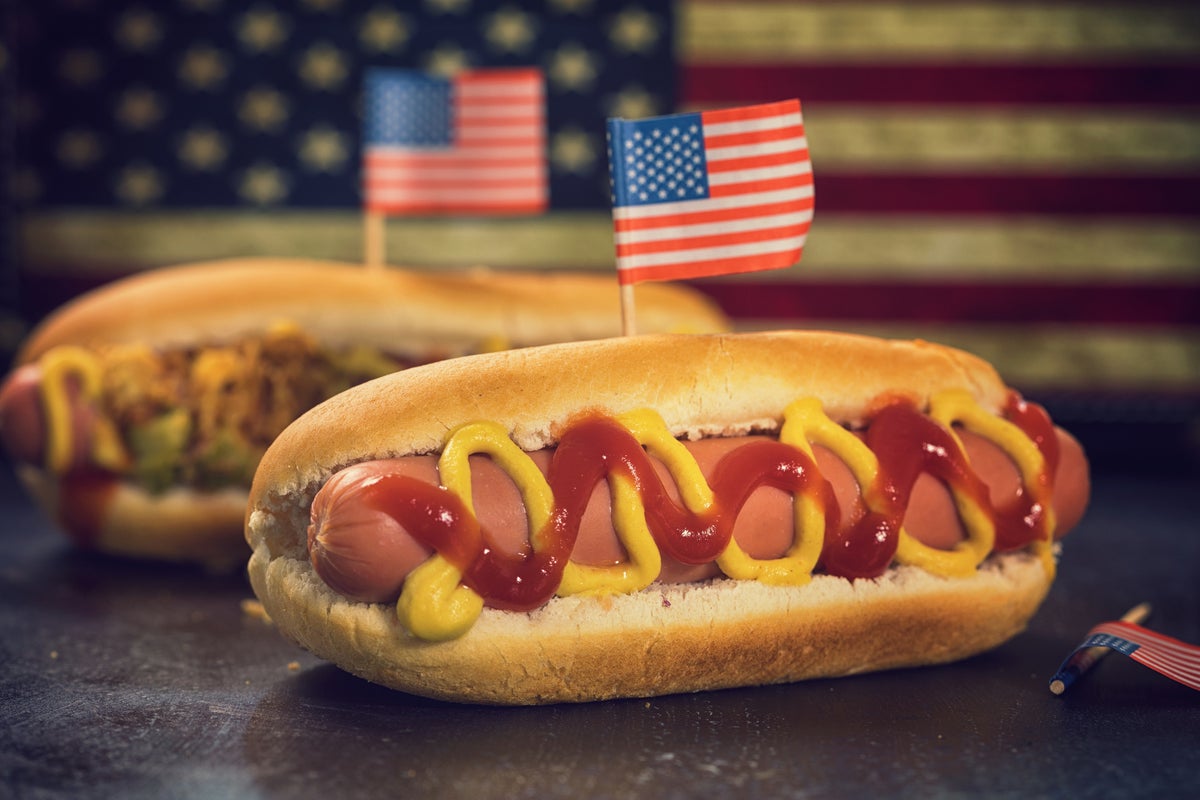
The American hot dog is not a product of casual backyard grilling culture, but a calculated engineering feat born from immigration struggles, industrial meatpacking, and global political staging. While popular mythology traces this street food staple to simple midwestern carts or New York boardwalks, its true rise relied on cutthroat urban commercialization and its surprising deployment as an ideological weapon during the Cold War. Understanding how a cheap sausage became a symbol of Western capitalism requires looking past the nostalgia and examining the shifting economics of processed meat.
The Meatpacking Engine of the Midwest
The hot dog did not just appear on the American plate. It was pushed there by the massive industrial scale of late nineteenth-century meatpacking operations centered in cities like Chicago and Indianapolis.
German immigrants brought traditional sausage-making techniques across the Atlantic, but the American environment fundamentally altered the production line. Traditional European sausages relied on local, small-scale butchery. In contrast, American producers utilized industrial assembly lines to process livestock at a speed never seen before.
This industrial shift changed everything.
- Massive surpluses: Industrial slaughterhouses generated massive quantities of trimmings that needed to be monetized quickly.
- The emulsion solution: High-speed mechanical choppers transformed these trimmings into a smooth, uniform paste, allowing factories to mask cheaper cuts of meat.
- The casing evolution: Producers transitioned from natural animal casings to cellulose and synthetic alternatives to keep up with automation.
By transforming varied regional recipes into a standardized, cheap, and easily transportable item, early industrialists created a food item uniquely suited for a rapidly urbanizing working class.
Cart Wars and Urban Survival
Before it reached backyard grills, the hot dog was an aggressive street food that sparked fierce regulatory battles in major American cities. Street vendors, often operating with minimal capital, used pushcarts to sell hot frankfurters to factory workers who needed a quick, high-calorie meal during short breaks.
This quickly drew the ire of established brick-and-mortar restaurant owners and city health officials.
| Era | Primary Vendor Challenges | Public Perception |
|---|---|---|
| 1890s | Lack of refrigeration, police extortion, licensing fights | Suspect street food of unknown origin |
| 1920s | Stricter municipal health codes, zoning restrictions | Cheap, reliable working-class fuel |
| 1950s | Suburbanization, rise of fast-food chains | Iconic, wholesome American classic |
The term "hot dog" itself likely grew out of a combination of college humor and genuine public anxiety regarding the actual contents of the sausages. Rumors floated constantly that less desirable meats were making their way into the grinders. To survive, vendors had to institutionalize transparency.
Entrepreneurs like Nathan Handwerker in New York fought back against this reputation by slashing prices and allegedly hiring men in white lab coats to eat at his stand, signaling to the public that the food was medically safe. This deliberate rebranding shifted the sausage from a risky street food to a trusted commercial staple.
Sausage Diplomacy on the Global Stage
The transformation from a working-class street food to a symbol of national identity reached its peak during the height of geopolitical tensions with the Soviet Union. The United States government actively used the hot dog to project an image of democratic abundance and casual prosperity abroad.
The 1959 American National Exhibition in Moscow
During the famous Kitchen Debate between Vice President Richard Nixon and Soviet Premier Nikita Khrushchev, the showcase of American consumer goods extended to food. The US pavilion served thousands of hot dogs to curious Soviet citizens.
The goal was clear. The State Department wanted to demonstrate that even the most basic American worker could afford high-quality, processed meat that was readily available across the nation.
White House State Dinners
President Franklin D. Roosevelt famously served hot dogs to King George VI and Queen Elizabeth at Hyde Park in 1939. This was not an accident or a casual hosting choice. It was a calculated move to strip away European aristocratic formality and establish a distinct, egalitarian American identity on the eve of World War II.
By forcing foreign monarchs and communist leaders to eat a food designed to be consumed with one's hands, American politicians used the hot dog to signal a rejection of old-world hierarchy.
The Modern Industrial Complex
The contemporary hot dog is a marvel of modern food chemistry. The simple pork and beef mixtures of the past have given way to highly optimized formulas designed for maximum shelf life, uniform color, and snap.
[Trimmings & Excess Meat] -> [High-Speed Blending] -> [Curing Agents & Sodium Nitrite] -> [Smokehouse Cooking] -> [Peeling & Packaging]
Sodium nitrite serves a dual purpose in the modern production line. It prevents the growth of deadly bacteria like Clostridium botulinum while simultaneously giving the meat its distinct pink color, preventing it from turning an unappetizing gray during the cooking process.
Additionally, the introduction of non-meat fillers and binders, such as soy protein concentrates and modified food starches, allows manufacturers to maintain structural integrity even when utilizing leaner or lower-cost meat bases. The modern hot dog is less an organic culinary tradition and more a triumph of chemical engineering designed to survive long supply chains and unpredictable storage conditions.
The commercial landscape continues to consolidate. A small handful of massive corporate conglomerates now control the vast majority of the brands found in supermarket aisles, dictating flavor profiles and price points across the entire continent. The illusion of endless regional variety masks a highly centralized manufacturing network that prioritizes efficiency above all else.