Books smell like dust and old ambition.
If you peel back the cover of a volume bought at a midnight station kiosk or pulled from the high shelf of a grandfatherly library, you smell it. That distinct cocktail of lignin breaking down, paper aging, and human oils staining the margins. We buy these objects by the ton. We stack them on nightstands like totemic columns meant to ward off the dark. We treat them as vitamins.
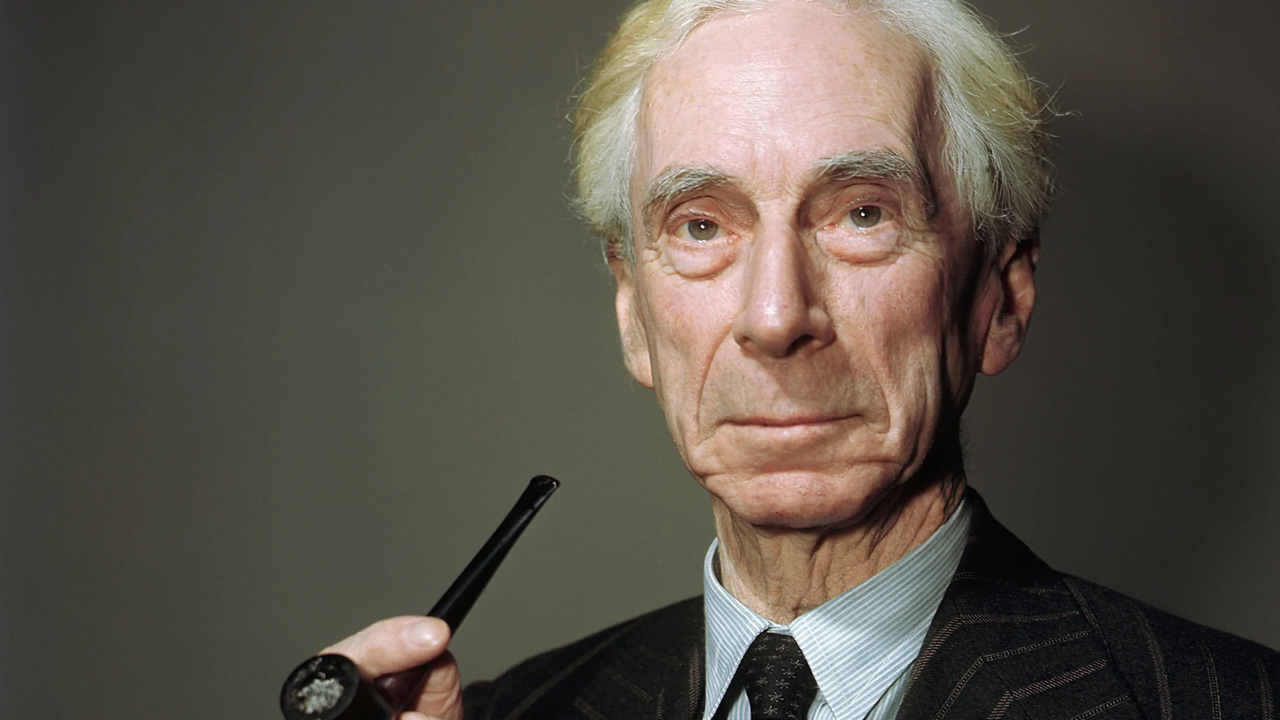
Bertrand Russell split the act down the middle with a surgeon's cold eye. He wrote that there are two motives for reading a book: one, that you enjoy it; the other, that you can boast about it.
He was being polite. He missed a third.
The third motive is the heavy one. It is the desperate, frantic push to fix a broken mind by pouring someone else's thoughts into the cracks. We read because we think we are unfinished. We read to weaponize our leisure. We read to become better, faster, smarter, sharper. We treat the written word as a software update for a failing machine.
Consider a man named Arthur. (This is a hypothetical scenario, but you know him; perhaps you share a mirror with him.) Arthur wakes up at five in the morning. His coffee is black and bitter. Before his eyes fully focus, he opens a biography of a nineteenth-century industrialist on his phone. He highlights sentences about morning routines and compound interest. He does not love the sentences. He does not taste the rhythm of the prose. He extracts them. He logs them into a digital database with the cold efficiency of a quartermaster charting rations during a siege.
Arthur is reading to improve his mind.
He is miserable.
The Ledger of Stolen Hours
There is an invisible ledger we keep when we read for utility. Every hour spent turning pages must yield a dividend. If we close a novel and cannot articulate a framework, a mental model, or an actionable takeaway, we feel a twitch of guilt. We feel as though we have burned cash.
This is a modern sickness. It is the industrialization of inner life.
Historically, books were rare enough to be revered and dangerous enough to be burned. When a monk sat in a scriptorium hunched over vellum, the act of reading was slow, monastic, and deeply sensory. It was a dialogue with a ghost. By the time the printing press flooded the markets with cheap paper, information became abundant. Suddenly, you could not read everything. You had to choose.
And because we had to choose, we optimized.
We brought the metrics of the marketplace into the sanctuary of the study. We began to measure books by ROI. How many pages per minute? What percentage of retention? Can this be summarized in a newsletter?
When you treat a book like a pill, you strip away the flavor. You also destroy the medicine.
Think back to the last time you read something purely because you could not put it down. It was probably late. The house was silent except for the hum of the refrigerator. You told yourself you would stop at the end of the chapter, but the characters were bleeding into your own reality. You did not care about the author's productivity habits. You did not care about key takeaways. You cared about what happened next in the alleyway, on the ship, in the quiet kitchen.
That was enjoyment. Russell's first motive.
And yet, our culture treats enjoyment as a guilty luxury. We feel we must justify our fiction with a nod toward empathy training. We pretend we read novels only to become more emotionally intelligent, as if every story is a subtle seminar on conflict resolution. We are terrified of admitting that we simply wanted to disappear for three hours into a world where things made sense.
The Cost of the Optimization Trap
Let us look at what happens when optimization wins.
When you read exclusively for self-improvement, you read defensively. You look for validation of your existing biases packaged as revolutionary insights. You gravitate toward bullet points, frameworks, and books that promise three simple steps to mastery. You want a checklist for the human condition.
The human condition refuses to be bulleted.
Real life is messy, contradictory, and stubbornly resistant to neat summaries. A great essay or a messy novel leaves you with more questions than answers. It sits in your stomach like an unbaked lump of dough. It bothers you. It keeps you awake at three in the morning not because you solved a problem, but because you suddenly realize you do not understand anything at all.
That confusion is the point.
When Russell talked about the second motive—reading so you can boast about it—he was pointing at the social currency of the library. We have all done it. We leave a heavy, difficult volume sitting face-up on the coffee table when guests come over. We drop the name of a nineteenth-century philosopher into a casual dinner conversation just to watch the air shift. We collect books like art collectors accumulate paintings they keep locked in a vault, seen by no one except the insurance adjuster.
The boasting motive is pathetic, but at least it acknowledges that reading is a social act. It connects us, however clumsily, to a hierarchy of culture.
The self-improvement motive isolates us. It turns reading into a lonely, joyless treadmill. You are running against your own ignorance, supervised drill sergeant style by a text written by someone who has been dead for a century.
The Sanctuary of Useless Pages
There is a quiet rebellion available to anyone willing to drop the ledger.
It is the radical act of reading purely for the texture of the sentence.
Stop reading to learn. Stop reading to grow. Stop reading to fix your broken habits, your poor focus, or your stagnant career. Read a book about the migration patterns of eels without ever planning to visit the ocean. Read a translation of an obscure medieval poetry collection that has no bearing on quarterly earnings. Read a trashy thriller with cardboard characters simply because the author knows how to build a sentence that drops off a cliff.
When you give up the demand for utility, something strange happens to the brain. The shoulders drop. The frantic clicking of the internal clock slows down.
The words stop being tools and start being rooms.
You walk into them. You look out the window. You smell the dust on the sills. You do not try to take the window home with you. You simply stand there, watching the rain hit the glass, knowing that the hour is entirely, wonderfully wasted.
That waste is where the soul actually lives.
We spend our lives trying to turn every minute into a brick for a tower we will never finish building. We are so terrified of being empty that we stuff ourselves with mental calories until we can no longer taste the food.
Put down the manual. Close the browser tab with the top ten habits of successful thinkers. Go find something weird, beautiful, and utterly useless. Open the cover. Inhale the dust.
And let yourself get lost in the dark.